
Solving the Salmonellosis Problem With Calculus
For decades, the food industry has relied on the primitive method of 'actually checking if there is bacteria in the food.' It’s a messy, physical process involving swabs, petri dishes, and the occasional awkward recall when someone realizes the industrial vat of hummus wasn't actually heated to 165 degrees. But thanks to the latest OpenAI-adjacent breakthroughs in formal verification, we are moving past the era of physical reality and into the comforting embrace of pure math.
Why bother with reactive testing when you can simply prove, through a rigorous Lean 4 script, that a 'cold spot' in a 5,000-gallon mixing tank is logically impossible? We are talking about a world where your chicken nuggets aren't safe because a guy in a lab coat said so, but because a computer model of fluid dynamics has determined that the laws of physics literally wouldn't allow a germ to survive the turbulence. It’s the ultimate silicon-valley pivot: if the reality of food poisoning is too difficult to solve, just redefine safety as a successful compilation of code.
The Lean 4 Kitchen Is Open
Lean 4 is usually reserved for proving things like the Liquid Vector Space Conjecture or other things that make normal people's eyes bleed. Now, it’s being pitched as the bouncer for your industrial soup kettle. The idea is simple: you create a digital twin of the pasteurization unit, apply Navier-Stokes modeling to the fluid flow, and use formal verification to guarantee that every single molecule of liquid spends exactly the right amount of time at exactly the right temperature.
- No more 'oops, the thermometer was broken.'
- No more 'the intern forgot to stir the vat.'
- Just pure, unadulterated logic gate-keeping for your calories.
This is a massive win for corporate legal departments everywhere. Imagine the court case: 'Your Honor, while it is true that three thousand people fell ill, our Navier-Stokes simulation clearly shows that, mathematically, they should be fine.' It’s not a salmonella outbreak; it’s a hardware-software incompatibility. We’ve managed to turn the biological messiness of digestion into a debugging exercise.
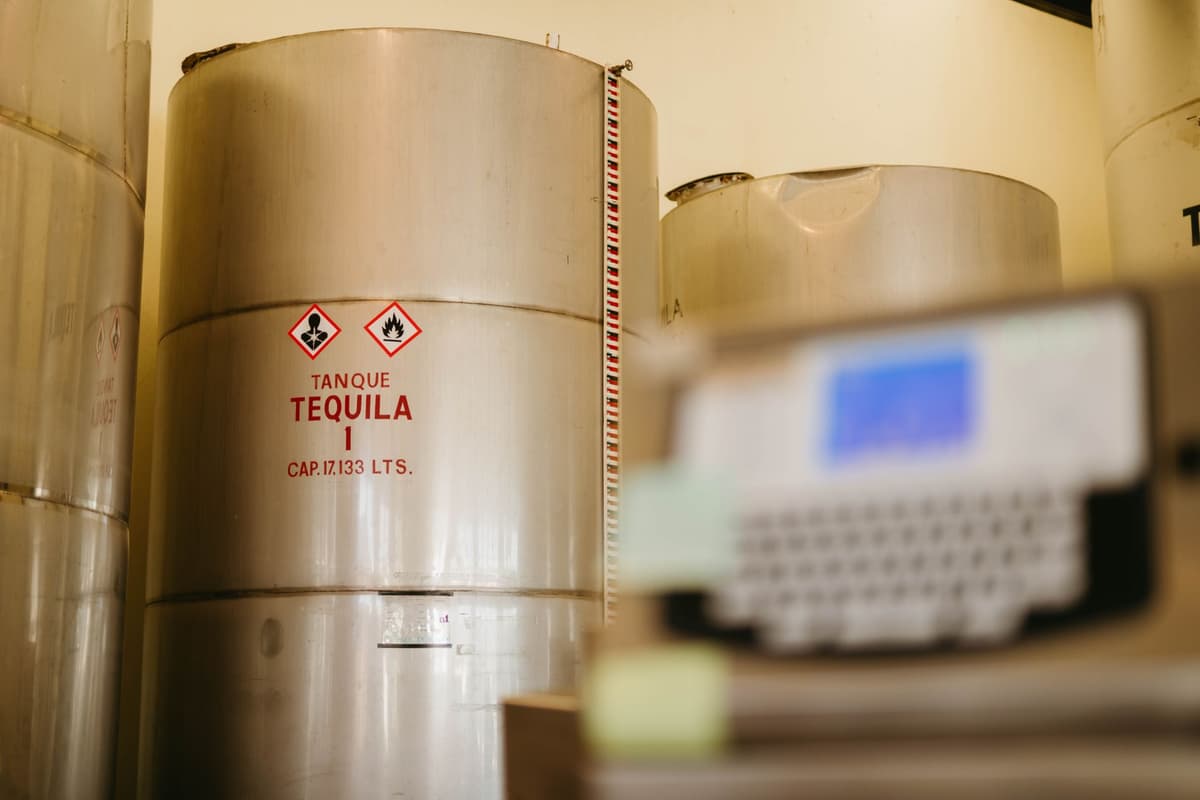
Photo by Los Muertos Crew on Pexels
The End of the 'Cold Spot' and the Rise of the Ego
In the old days—about six months ago—engineers worried about 'cold spots,' those pesky areas in a heat exchanger where the temperature drops just enough for Listeria to start planning a comeback. Now, we just model them out of existence. If the Lean 4 proof says the heat distribution is uniform, then any evidence to the contrary is clearly just a rounding error in the universe. It is a level of hubris that only a software engineer could bring to the table: the belief that a 19th-century equation for fluid motion can perfectly predict the behavior of a chunky beef stew.
There is something deeply poetic about using the most sophisticated reasoning tools ever built by the human species to ensure that a taco bell bean burrito is 100% free of biological surprises. We have taken the math that describes the birth of stars and the flow of the atmosphere and pointed it directly at a vat of processed cheese. This is what the Enlightenment was for. This is why we built the internet. To make sure your yogurt is a provable truth.
What This Actually Means
What we are seeing is the final divorce between 'safety' and 'observation.' In the near future, food processing plants won't even need to be clean in the traditional sense. As long as the Navier-Stokes release confirms that the airflow patterns are optimized to repel dust, the physical presence of dust becomes a philosophical question rather than a health code violation. We are building a world where we trust the map so much that we’ve decided the territory is optional.
Of course, this overlooks the fact that sensors fail, pipes leak, and reality has a funny way of ignoring formal proofs. But those are 'edge cases.' And in the world of high-level AI modeling, edge cases are just things we haven't written the right library for yet. Until then, enjoy your mathematically guaranteed lunch. It’s probably fine, as long as the simulation didn't hallucinate the boiling point of water.
Quick Answers
Does this mean food will actually be safer?
It means food will be more 'documented,' which is basically the same thing as safe if you're an insurance company.
What happens if the simulation is wrong?
Then the simulation will be updated in the next patch, which is very helpful for the people who already ate the contaminated spinach.
Is my kitchen at home going to use Navier-Stokes?
Only if you want to spend four hours formally proving that your toast is crispy before you're allowed to eat it.


