
Nature’s Way Of Telling You To Stop
There is a certain, refined irony in the fact that humans will spend thousands of dollars on organic kale and air purifiers, only to intentionally ingest grayanotoxin II because a guy in a linen shirt on YouTube said it would help them 'align their chakras.' Mad Honey is the ultimate biohack for people who find regular honey too boring and life too predictable. Produced by giant Himalayan honeybees that feast on the nectar of Rhododendron luteum, this substance has been used locally for centuries. Historically, it was a localized medicinal curiosity or a weapon of war; famously, King Mithridates used it to incapacitate Roman soldiers in 67 BC. Today, it’s a premium subscription service.
We have successfully democratized the experience of localized poisoning. You no longer need to invade the Pontus region to feel the sweet, sweet embrace of hypotension and nausea. You just need a credit card and a willingness to ignore the fact that 'traditional use' usually involved a village elder who knew exactly how much wouldn't kill you. Now, we have 'The Algorithm' instead of elders, and the algorithm really likes it when you film yourself sweating and vomiting for the views.
The Cardiology Department Welcomes Your Curiosity
Modern medicine is notoriously stuffy about things like 'consistent dosing' and 'not having a heart rate of 30 beats per minute.' When you buy a jar of Mad Honey from a digital storefront, you are participating in a delightful game of chemical roulette. Grayanotoxins work by binding to sodium ion channels and preventing them from closing. In layman's terms, your cells stay 'on' until they simply give up. It’s a full-body reboot that occasionally forgets to turn the power back on.
Cardiologists are currently seeing a fascinating uptick in healthy 28-year-olds presenting with symptoms usually reserved for people undergoing major cardiac events. The research gap here is wide enough to fly a private jet through. We have plenty of data on how these toxins affect a Himalayan honey hunter who has built a tolerance over decades. We have almost zero data on how it interacts with your daily Adderall prescription, three cups of cold brew, and the general existential dread of the 21st century. It turns out that 'natural' is not a synonym for 'won't make your heart stop in the middle of a Peloton class.'
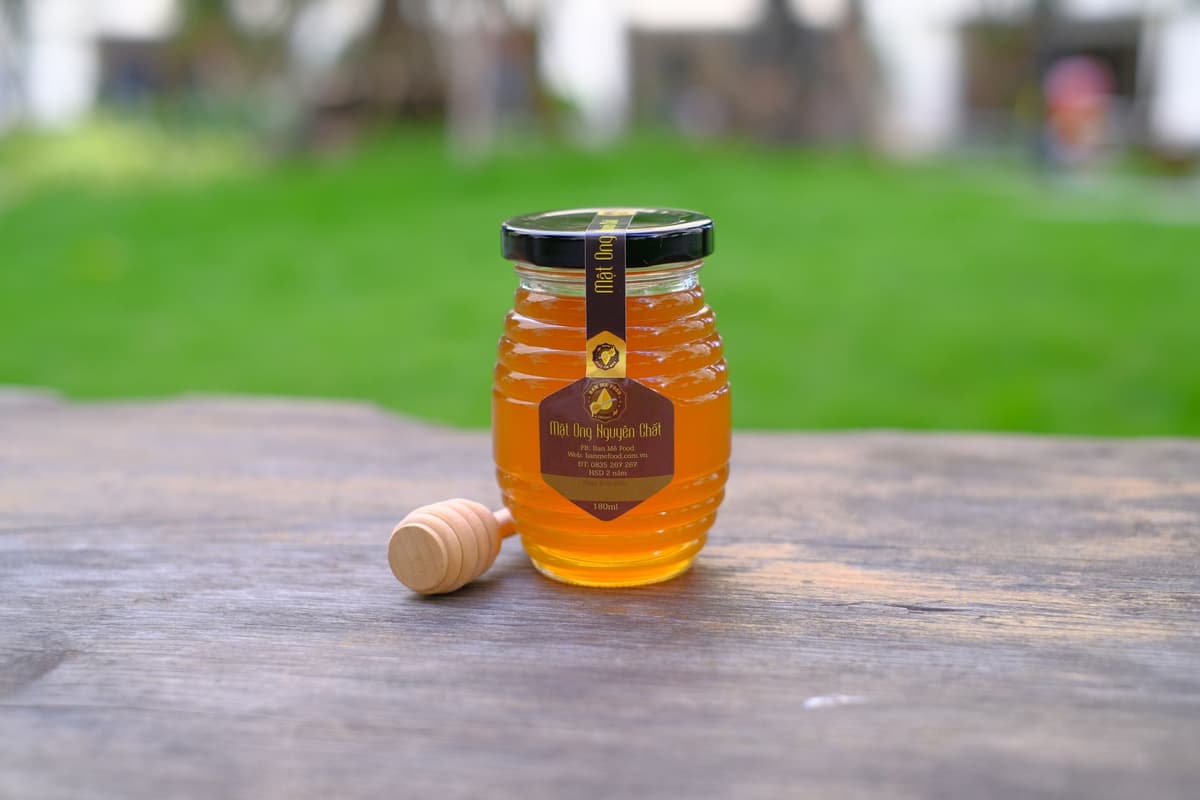
Photo by Pew Nguyen on Pexels
The Tradition Of Exporting Risk
The narrative surrounding Mad Honey is always wrapped in the cozy blanket of 'ancient wisdom.' It’s a beautiful story: the brave honey hunters, the vertical cliffs, the sacred tradition. But once you slap a QR code on the jar and ship it to a warehouse in New Jersey, the tradition ends and the liability begins. We aren't importing the tradition; we are importing the bioactive byproduct and stripping away the cultural guardrails that made it remotely safe to consume.
It is the peak of Western hubris to assume that every traditional substance is just a 'wellness hack' waiting to be discovered. Sometimes, a substance is traditional because the people who lived there learned exactly how much would make them see God and how much would make them meet Him. By treating neurotoxins as a niche hobby for the 'curated lifestyle' crowd, we’ve managed to turn a legitimate botanical curiosity into a potential public health footnote. But hey, at least the packaging looks great on a minimalist shelf.
What This Actually Means
We are living in the golden age of unmonitored self-experimentation. The digital trade of grayanotoxins is just the tip of a very dangerous, very sticky iceberg. As we continue to bypass regulatory bodies in favor of 'authentic' experiences, we are essentially turning the global population into a giant, unpaid clinical trial for substances we don't fully understand. The collision between ancient entheogens and modern physiology is going to keep getting messier as long as we value 'the vibe' over the actual chemistry.
Ultimately, if you decide to eat the heart-stopping honey, you are making a choice. You are choosing to believe that a random vendor's 'purity guarantee' is more reliable than a century of cardiac science. You are choosing the thrill of the neurotoxic gamble over the mundane safety of a normal breakfast. It’s a bold move. It’s a brave move. It’s also a move that might end with a very confused EMT trying to figure out why your heart is beating like a slow, rhythmic funeral march.
Quick Answers
Is Mad Honey legal?
In most places, yes, because regulators haven't quite caught up to the idea that people are mail-ordering Himalayan neurotoxins for fun. Japan and South Korea have banned it, mostly because they prefer their citizens to have functioning hearts.
What does a grayanotoxin overdose feel like?
Imagine the worst flu of your life, combined with a sudden drop in blood pressure that makes standing up feel like a suggestion rather than a reality. It’s very spiritual, if your version of spirituality involves blurred vision and excessive salivation.
Can I just take a little bit?
Sure, but since the concentration of grayanotoxin varies wildly from one batch to the next, 'a little bit' is a mathematical guess at best. You're basically asking a bee to be your pharmacist, and bees aren't known for their precise measuring skills.


