Breathing Is So Last Season
We have finally reached the pinnacle of human achievement: making the act of existing feel like a high-end concierge service. In the old days, luxury meant owning a gold-plated toilet or a car with doors that open like a confused bird. Today, the ultimate status symbol is having a nervous system that isn't vibrating at the frequency of a malfunctioning microwave. We’ve taken the fundamental pillars of human survival—sleep, air, and silence—and slapped a 'wellness' label on them with a price tag that would make a Victorian industrialist blush.
It turns out that if you want to breathe air that doesn't taste like a bus exhaust pipe, you need to invest in a HEPA-filtered ecosystem that costs more than a mid-sized sedan. Clean air used to be something you got for free by simply not living inside a coal mine. Now, it’s a tiered subscription model. If you’re at the 'Basic' level, you get the standard city smog; for the 'Platinum' tier, you get to inhale something that hasn't already been through six other people's lungs.
The Audacity of Wanting to Sleep
There is a certain comedic genius in the way we’ve commodified the unconscious state. Sleep, once the great equalizer that even the poorest peasant could enjoy for eight hours, is now a $432 billion global industry. We have smart mattresses that track your REM cycles with the precision of a Swiss watch, cooling pads that simulate the tundra, and weighted blankets designed to mimic the feeling of a hug for people who are too busy 'optimizing' to actually see another human being.
If you aren't wearing a $300 ring that tells you exactly how much you failed at sleeping last night, do you even deserve to feel rested? The paradox is delicious. We work 80-hour weeks in high-stress environments to afford the technology required to undo the damage of working 80-hour weeks. It’s a self-sustaining loop of absurdity. We are literally buying back our own biological peace of mind at a 500% markup.
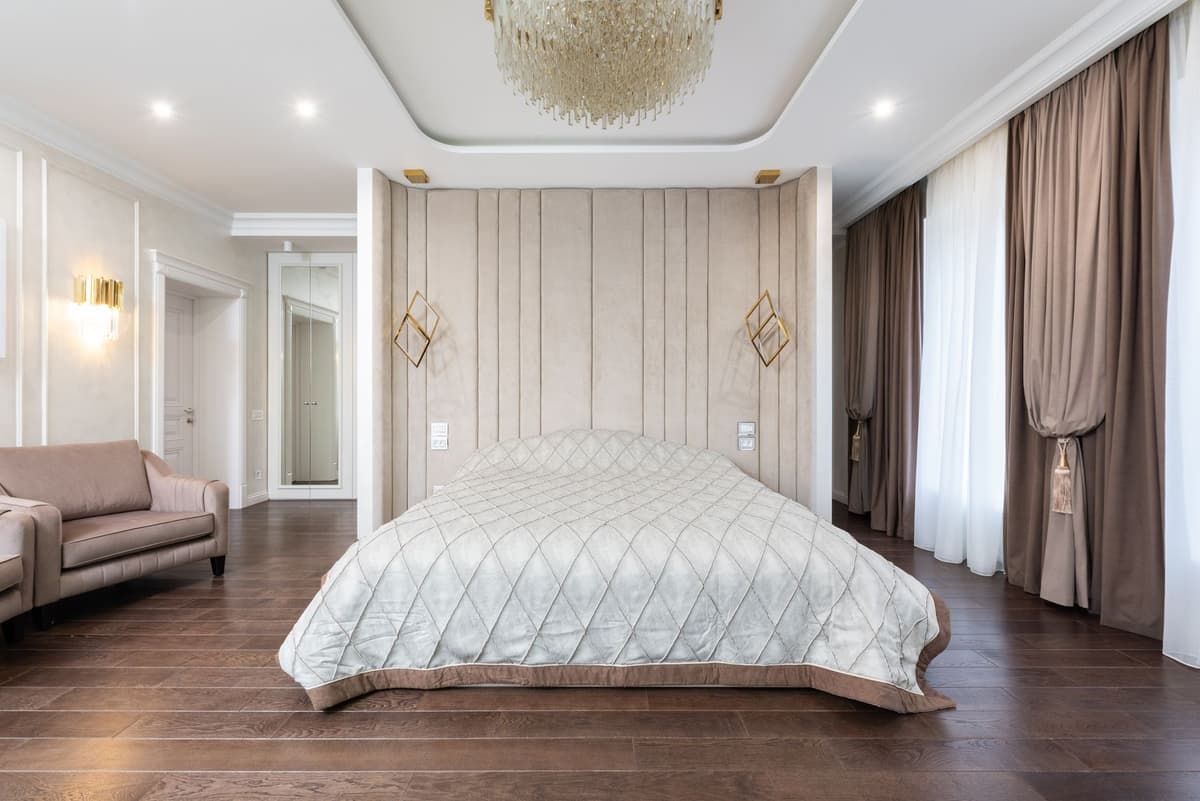
Photo by Max Vakhtbovych on Pexels
Silence Is for the Top One Percent
Silence used to be the default setting of the universe. Now, it’s an ultra-premium feature. If you want to experience three consecutive minutes without the sound of a leaf blower, a siren, or a targeted social media ad, you have to fly to a remote retreat in Utah where they charge you $2,000 a night to take your phone away. We’ve turned 'not being stimulated' into a luxury experience, which is a bit like charging someone for the hole in a donut.
This redefinition of luxury is creating a fascinating two-tiered biological reality. On one side, we have the 'Optimized Elite,' who are biohacking their way into longevity with vitamin drips and infrared saunas. On the other side, we have the 'Unoptimized Masses,' who are still using outdated legacy features like 'drinking tap water' and 'hoping for the best.' It’s not just a wealth gap anymore; it’s a cellular gap.
- The average luxury wellness retreat now costs $1,500 per day.
- High-end air purification systems for homes can retail for upwards of $5,000.
- 'Deep sleep' coaching services can cost $250 an hour to tell you to put your phone in another room.
The New Class War Is Intracellular
We used to worry about the digital divide; now we’re looking at the mitochondrial divide. When basic stress reduction becomes a product, then chronic cortisol becomes a mark of the lower class. It’s a brilliant strategy, really. If you can't afford the 'calm' subscription, your inability to focus is framed as a personal failure of discipline rather than a predictable result of living in a noisy, polluted, high-pressure environment.
We are witnessing the birth of a world where 'natural' is a boutique brand. You can have the 'Natural' experience—the one where you eat food grown in dirt and see the stars at night—but only if you have a net worth that rivals a small island nation. Everyone else gets the synthetic version, complete with blue light headaches and a sense of impending doom that no amount of 'mindfulness' apps can fix.
What This Actually Means
Ultimately, the 'wellness premium' is just a polite way of saying we’ve privatized the human baseline. When we treat the absence of toxins and the presence of rest as 'luxury,' we are conceding that a healthy life is no longer a standard expectation, but a reward for high-performance capitalism. It’s a neat trick: we break the environment and the schedule, then sell you the repairs in a sleek, matte-finish bottle.
We aren't actually buying 'wellness.' We are buying a temporary exemption from the exhausting world we’ve built. The irony is that the more we pay for these 'luxuries,' the more we have to work to afford them, ensuring we stay just stressed and tired enough to need the next upgrade. It’s the most successful pyramid scheme in history, and it comes with a lavender-scented eye mask.
Quick Answers
Is sleep actually a luxury?
Only if you want it to be restorative; otherwise, it’s just a four-hour nap on a train while dreaming about spreadsheets.
Why is clean air so expensive?
Because it’s much more profitable to filter the air inside a billionaire’s penthouse than it is to stop polluting the air everyone else breathes.
Can I be well without spending money?
Technically yes, but how will people know you’re healthy if you aren't wearing a piece of expensive plastic that syncs to your phone?


