
The Turtle Who Outlived Everyone
Jonathan was hatched around 1832. To put that in perspective, when this tortoise was a hatchling, Charles Darwin was still mid-voyage on the HMS Beagle and the lightbulb hadn't been invented yet. Most creatures follow a predictable curve of vitality: you grow, you peak, and then the slow, grinding tax of entropy starts collecting. But Jonathan is currently 192 years old, and according to the people who monitor him on the island of Saint Helena, he still has a libido and an appetite. He isn't just surviving; he is existing in a state of 'negligible senescence,' a scientific term that basically means he doesn't seem to get 'older' in the way we do.
I find myself staring at photos of his wrinkled, prehistoric face and wondering what it actually feels like to have cells that simply refuse to quit. In humans, aging is a cascade of errors. Our DNA gets frayed, our proteins misfold into sticky clumps, and our immune systems eventually get tired of the cleanup. Jonathan seems to have bypassed the entire mess. He is a living, breathing glitch in the matrix of evolutionary biology, and he’s doing it while eating cabbage and moving at 0.2 miles per hour.
The Genomic Fortress
When researchers look at the genomes of giant tortoises, they find something that looks less like a biological blueprint and more like a high-security vault. These animals have extra copies of genes related to DNA repair and immune response. While a human cell might see a double-strand break in its DNA and decide to just give up and become cancerous or senescent, a tortoise cell seems to have a dedicated repair crew on 24/7 standby. They have essentially mastered the art of proteostasis—keeping the proteins in their bodies folded correctly and functional for two centuries.
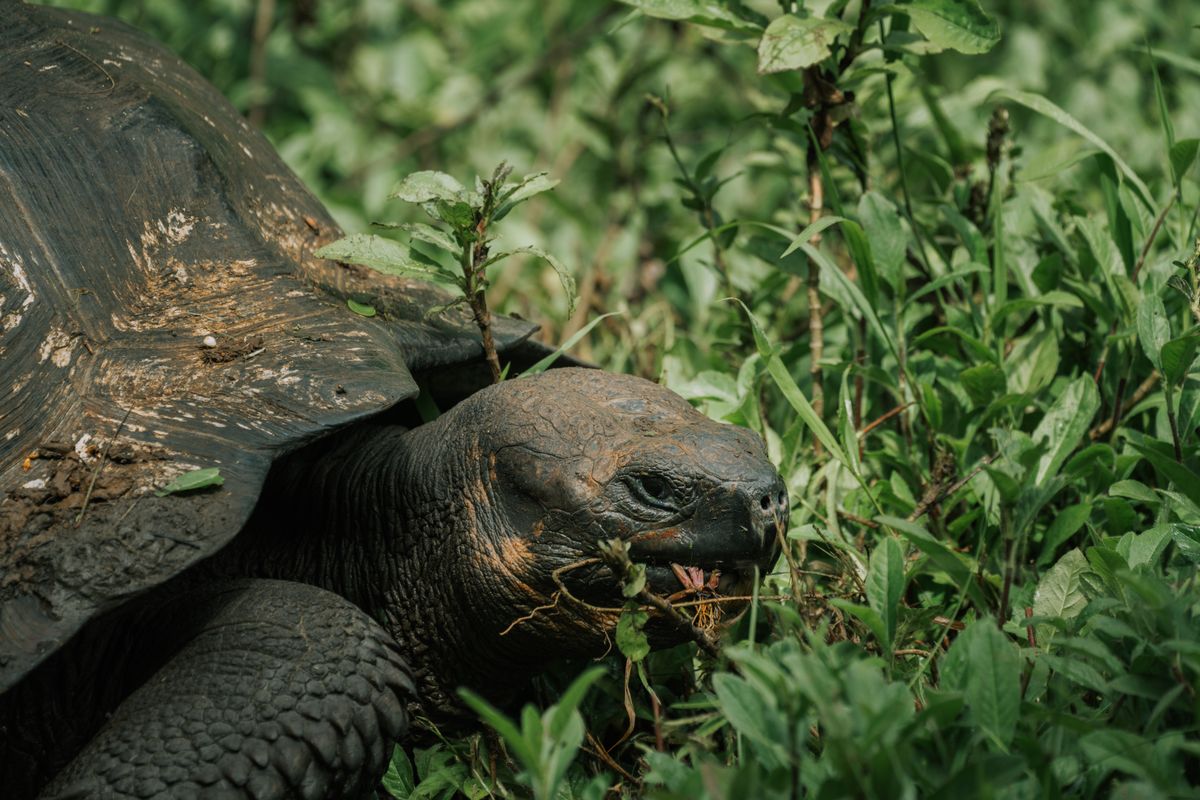
It makes me wonder if we’ve been looking at the problem of aging from the wrong direction. We treat aging as an inevitable rust, but Jonathan suggests it’s more like a software bug that his species patched out millions of years ago. Recent studies into these chelonians show they are incredibly resistant to 'proteotoxic stress.' This is the internal gunk that leads to Alzheimer’s and Parkinson’s in humans. In a tortoise, the machinery that clears out damaged proteins doesn't seem to lose its edge. They aren't just slow-moving; they are biologically disciplined.
Decoupling the Clock from the Body
There is this fascinating concept called the 'disposable soma' theory. It suggests that organisms have a limited energy budget: you can either spend it on reproducing quickly and dying young (like a mouse), or you can spend it on maintaining your body forever but reproducing slowly. Jonathan is the ultimate investor in the latter. Because giant tortoises have few natural predators and a low-metabolism lifestyle, evolution didn't see a reason to kill them off to make room for the next generation. They just kept... staying.
What’s truly wild is the idea that chronological age and physiological decline are not actually tethered together. We assume that being 90 means being frail because that’s the mammalian experience. But for Jonathan, 190 looks a lot like 90. He has lost his sense of smell and has cataracts, sure, but his core systems aren't failing. He isn't experiencing the systemic inflammatory collapse we call 'inflammaging.' If we could figure out how to flip the switch that triggers hyper-efficient DNA repair, would the human 'expiration date' simply vanish? Or is there something about our high-octane, warm-blooded metabolism that makes this level of stability impossible for us?
What This Actually Means
Jonathan isn't just a curiosity for the Guinness World Records; he is a proof of concept. He proves that biological immortality—or at least something very close to it—is physically possible within the laws of carbon-based chemistry. We aren't fighting a law of physics when we study aging; we are fighting a biological setting. If a creature can live through the entire industrial revolution, two world wars, and the birth of the internet without his cells giving up, then the limit on human life isn't a hard ceiling. It’s a design choice.
I don't think we'll all be living to 200 by taking a pill next year, but looking at Jonathan changes the conversation from 'how do we fix the elderly?' to 'how do we build better cells from the start?' We are learning that the secret to long life isn't about adding things to the body, but about perfecting the maintenance that’s already happening. We should be very humble about the fact that a 1,100-pound reptile is currently outperforming our best medical science just by existing.
There’s a certain peace in knowing that while we hurry around, obsessed with our short-term timelines, Jonathan is still there on his island, blinking slowly at the sun, carrying a biological secret we are only just beginning to decode. He isn't in a rush to tell us, and honestly, why would he be? He has all the time in the world.
Quick Answers
Is Jonathan actually the oldest animal?
He is the oldest known living land animal, though some deep-sea sharks and clams can live for 400-500 years.
Does he feel 'old' in the way humans do?
Not exactly; while he has some sensory loss like cataracts, he doesn't suffer from the systemic organ failure or muscle wasting typical of aged mammals.
Can we apply tortoise DNA to humans?
Not directly, but scientists are studying their 'longevity genes' to develop drugs that might mimic their hyper-efficient DNA repair processes.

