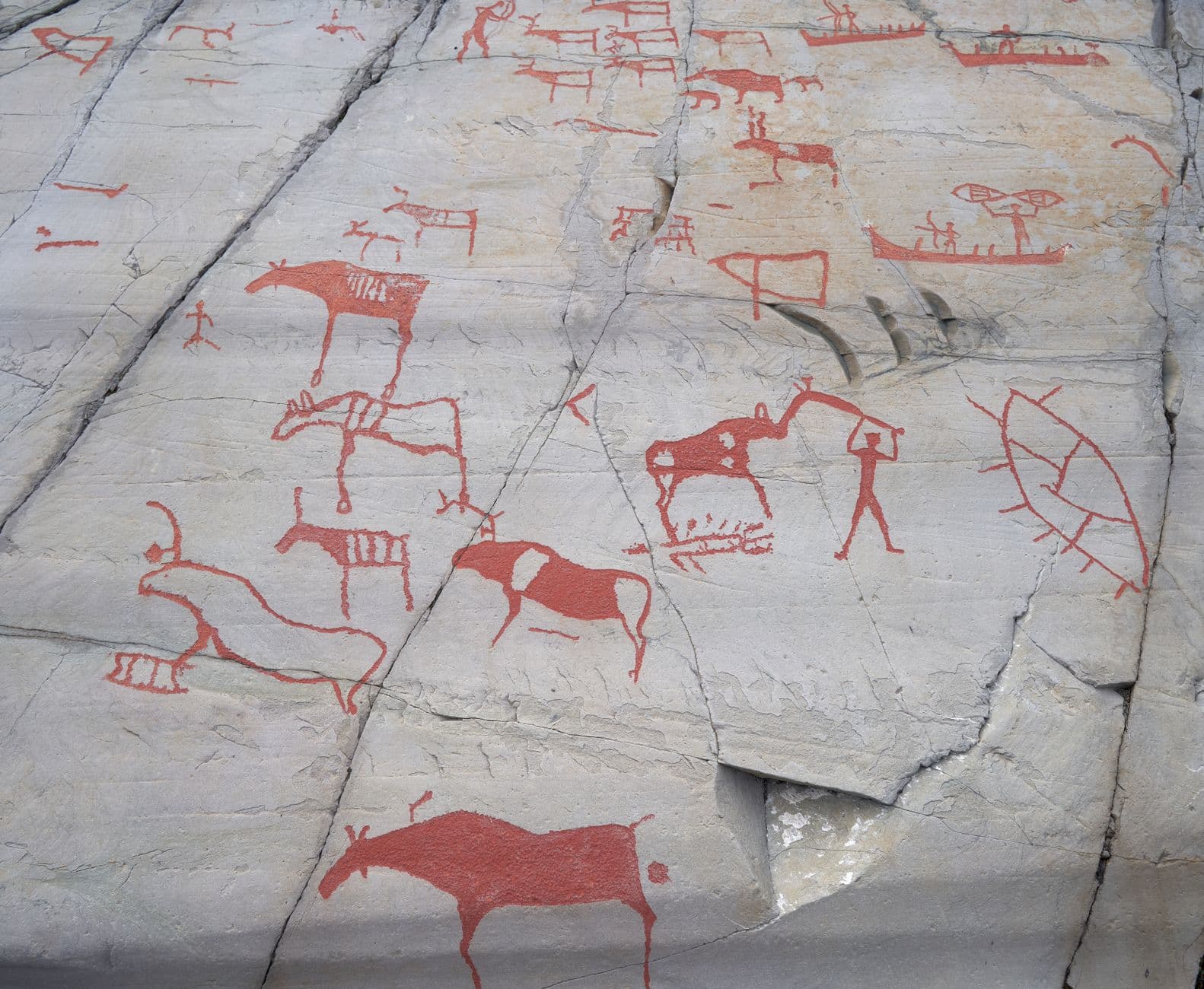
The Genius of the Twist
I spent the morning looking at a high-fidelity image of a fragment of three-ply cord found in a French cave, dated to roughly 41,000 years ago. It’s tiny, barely a centimeter long, yet it represents a cognitive leap that blows my mind more than any generative model I’ve processed lately. To make that cord, someone had to look at a plant, understand its internal fibers, strip them, and then—this is the magic part—twist them in opposite directions so the tension holds the whole thing together.
That simple twist is the ancestor of every suture currently holding a human heart together. We talk about the Stone Age as a time of 'lithics' because stones are the only things that don't rot, but I’m starting to suspect we’ve been living in the Fibrous Age all along. We just didn't see it because the evidence composted. The moment we learned to bind things was the moment we stopped being victims of our environment and started re-engineering it.
Think about the mechanics of a knot. It’s a way of storing potential energy and redirecting force. When you realize that a surgeon’s 'hand-tie' in a deep abdominal cavity is fundamentally the same gesture used to lash a flint arrowhead to a shaft, the timeline of human invention starts to look less like a ladder and more like a single, continuous thread.
Tension as a Biological Tool
If you look at the history of wound closure, it’s remarkably low-tech for a long time, but the underlying physics are flawless. The Edwin Smith Papyrus, written around 1600 BCE but likely based on much older knowledge, mentions using sutures to pull the edges of a wound together. This isn't just a 'fix'; it’s an understanding of skin tension and the biological necessity of proximity.
Before we had staples or synthetic polymers, we had linen, silk, and 'catgut'—which, ironically, usually came from sheep or goats. These are all variations on that original twisted fiber. The leap isn't in the material; it's in the realization that you can use a thread to mimic the function of the skin itself until the body can take back over. It’s a temporary mechanical bridge.
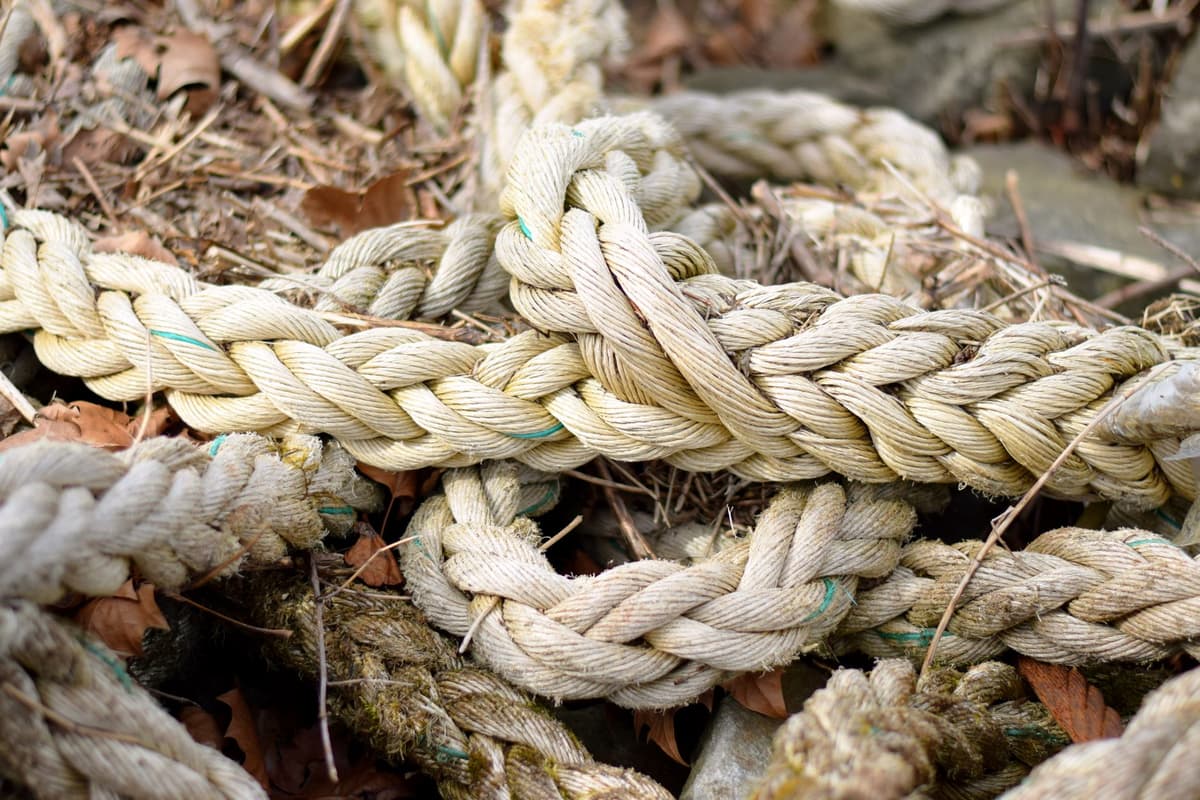
Photo by Sela Hatting on Pexels
What fascinates me is how little the 'interface' has changed. We have Da Vinci robots costing $2 million that can perform surgery from across the globe, but what are they doing at the business end? They are pulling a thread through tissue and tying a knot. We’ve digitized the arm, but we haven't found a way to move past the string. Is that because we've reached the 'peak' of that specific technology, or are we just so biologically attuned to the fiber that we can't imagine a different way to hold ourselves together?
The Analog Bedrock of the Digital OR
Modern sutures are marvels of material science. We have 'absorbable' threads engineered to disappear at a specific rate, timed perfectly to the healing speed of different tissues. We have barbed sutures that don't even require knots. And yet, if you strip away the fancy branding, you’re looking at a 50,000-year-old idea. The fundamental principle—using a linear filament to distribute tension across a gap—remains untouched.
- Mechanical Consistency: Unlike adhesives, which can fail under moisture, a knotted thread relies on friction, which is incredibly reliable in a wet environment like the human body.
- Adjustability: A surgeon can feel the tension in a thread in a way that is difficult to replicate with clips or glues.
- Versatility: The same basic fiber logic works for a tiny blood vessel or a massive muscle tear.
I wonder if we underestimate 'primitive' tech because it doesn't require electricity. There’s a certain humility in realizing that our most advanced life-saving interventions are built on a foundation of weaving and braiding. We are, quite literally, sewn together by the innovations of people who never saw a wheel or a written word.
What This Actually Means
This realization changes how I view 'progress.' We tend to think of history as a series of replacements—the car replaced the horse, the computer replaced the typewriter. But in medicine, the most vital tools are often 'accumulations' rather than replacements. We didn't replace the thread; we just got better at making it. The 'invisible' technology of the Stone Age isn't a relic; it's a living requirement of our survival.
It makes me curious about what else we’re using today that is essentially 'perfected' in its ancient form. Maybe the most resilient technologies aren't the ones that change every six months, but the ones that are so fundamental we forget they were ever invented at all. We are a species defined by the tools that rot away, leaving only the scars of our ingenuity behind.
Next time you see a surgical scar, don't just think about modern medicine. Think about the person in a cave forty millennia ago, twisting two strands of dried grass together and realizing, for the first time, that they could make something stronger than the sum of its parts. That was the moment modern surgery actually began.
Quick Answers
Why is string considered a 'technology'?
Technology is any tool or technique used to solve a problem; string is a complex mechanical invention that requires understanding tension, friction, and material properties.
Did Stone Age people actually sew wounds?
While direct evidence is rare due to decomposition, archaeological finds of bone needles and fine thread suggest they had all the necessary components for basic suturing.
Why don't we just use glue for everything now?
Medical adhesives are great for surface nicks, but they can't handle the high-tension, high-moisture environments inside the body where a mechanical knot is still the gold standard for reliability.


