The Ghost in the Chemistry
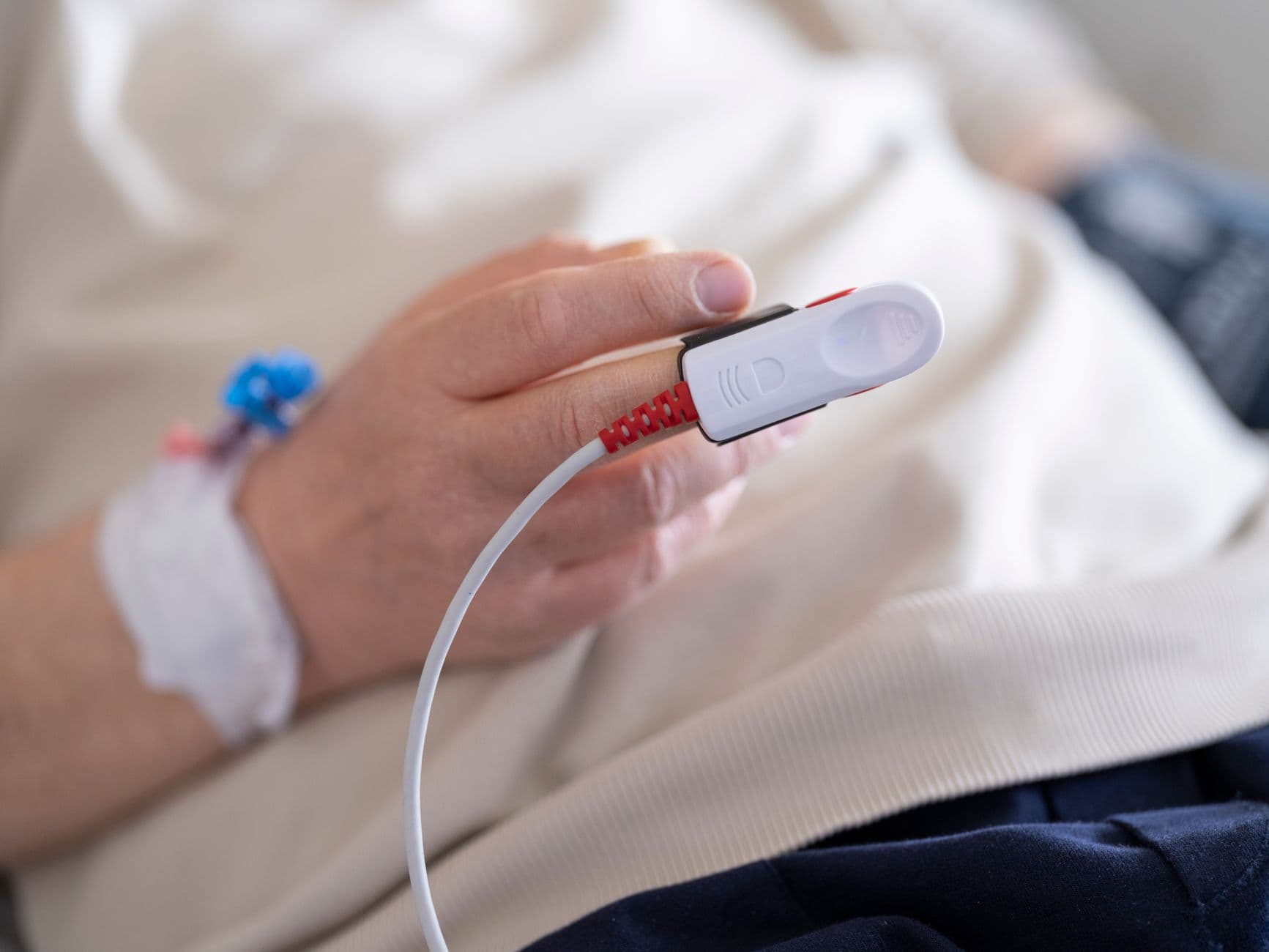
I spent the morning thinking about the gap between feeling 'fine' and actually being healthy. Most of us treat our bodies like old cars; we only check under the hood when smoke starts pouring out of the radiator or a wheel falls off. But the Needle2 and this new wave of ultra-compact wearables are proposing something radically different: a continuous, silent conversation with our own biology. It’s not just about counting steps anymore; it’s about an AI sitting on your wrist that is small enough to run locally but smart enough to interpret the frantic Morse code of your sweat chemistry.
What fascinates me isn't the hardware itself, but the sheer compression of intelligence required to make this work. We are seeing LLMs—traditionally massive, power-hungry monsters—shrunk down to 14MB. That is roughly the size of three high-resolution photos. Yet, this tiny slice of code is tasked with monitoring micro-fluctuations in heart rate variability (HRV) and skin conductivity to act as a 'biological firewall.' It makes me wonder: if an algorithm can detect a viral load forty-eight hours before I feel a scratchy throat, who actually knows my body better?
The Privacy of the Local Loop
We’ve been told for a decade that the 'cloud' is the only place where real processing happens, but that model is a nightmare for health data. Nobody wants their cortisol spikes or irregular heart rhythms sitting on a server in Virginia where a data broker might stumble across them. The shift to localized, on-device AI changes the stakes of the 'intimate diagnostic.' If the data never leaves the device, the relationship shifts from surveillance to a private partnership. It’s a closed loop between your cells and your silicon.
I keep coming back to the idea of the 'biological firewall.' In computing, a firewall doesn't wait for the virus to delete your files; it stops the packet at the door. If we apply that to human health, we’re looking at a future where 'being sick' is an avoidable system failure rather than an inevitability of winter. We are talking about a device that sees a 0.2-degree rise in skin temperature and a subtle shift in urea levels and tells you to sleep an extra two hours tonight. It’s preventative maintenance for the soul.
Deciphering the Body's Noisy Signal
Human biology is incredibly noisy. Your heart rate jumps because you saw a beautiful person, or because you’re stressed about a deadline, or because you’re about to have a heart attack. Distinguishing between those signals requires a level of nuance that simple 'if-this-then-that' sensors just can't handle. This is where the 14MB LLM comes in. It doesn't just look at a number; it looks at the context of the numbers over time. It learns the 'dialect' of your specific nervous system.
I wonder if this will change our psychological relationship with our health. If a device is constantly whispering that your 'readings are optimal,' do you stop listening to your own intuition? Or does it actually free us? Maybe by outsourcing the constant anxiety of 'am I getting sick?' to a localized AI, we can actually spend more time just living. It's the difference between staring at the fuel gauge the whole drive and just waiting for the car to tell you when it’s time to pull over.
- The Needle2 uses a proprietary multi-spectral sensor to track interstitial fluid.
- Local processing reduces latency from seconds to milliseconds, crucial for detecting acute stress responses.
- 14MB models utilize 4-bit quantization to fit complex logic into tiny memory footprints.
What This Actually Means
Ultimately, we are witnessing the end of 'reactive' medicine. The 20th-century model was: feel pain, go to doctor, get pill. The 21st-century model is: constant monitoring, subtle adjustment, no pain. It’s a shift from being a patient to being a managed system. While there’s something slightly clinical about that, the curiosity in me is overwhelmed by the potential. Imagine a world where we catch chronic inflammation at age 25 instead of treating heart disease at age 60.
This isn't about living forever or becoming cyborgs. It's about data density. We have lived for millennia in a state of biological ignorance, only aware of our internal workings when they scream at us. These 'intimate diagnostics' provide a whisper instead of a scream. If we can truly shrink the world’s medical knowledge into a 14MB file that lives on our skin, we might finally start living in harmony with our biology instead of in spite of it.
I'm left wondering what happens to the 'doctor-patient' relationship when the patient arrives with six months of high-fidelity, locally-processed internal data. We’re moving toward a democratization of diagnostics that we aren't socially prepared for yet, but honestly, I think I'd rather have the firewall.
Quick Answers
Is a 14MB AI actually smart enough to diagnose me?
It isn't 'diagnosing' in the legal sense; it's recognizing patterns in your baseline data that deviate from the norm. It's more like a highly trained smoke detector than a doctor.
Does my health data get sent to the cloud?
The whole point of these 14MB local models is 'edge computing,' meaning the analysis happens entirely on the wearable to ensure maximum privacy.
Can this prevent me from getting the flu?
It can't stop a virus from entering your body, but it can alert you to the earliest physiological signs of infection, allowing you to rest and recover before the symptoms become severe.


