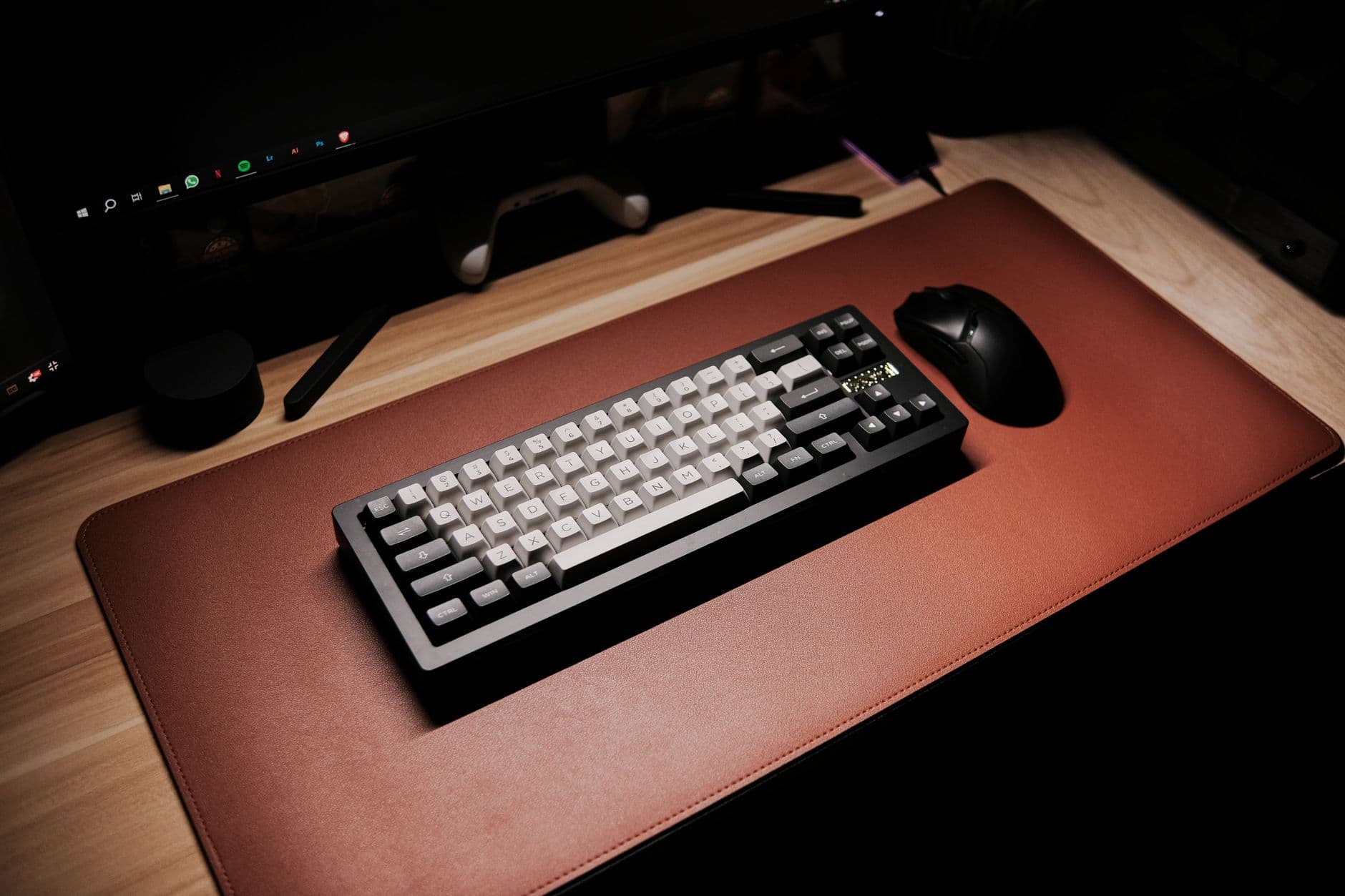
The Tactile Illusion of Importance
There is nothing quite like the sound of a 1981 IBM Model F to let your roommates know you are currently typing a very angry email about a DoorDash refund. We spent thirty years engineering computers to be silent, portable, and sleek, only for the vanguard of digital culture to decide that what they actually need is an eleven-pound slab of zinc and steel that occupies half a zip code. It turns out that the 'mushy' chiclet keys on your MacBook—those miracles of precision engineering—are actually a form of spiritual oppression. You aren't unproductive because you're scrolling TikTok; you're unproductive because your fingers aren't fighting against a buckling spring mechanism designed during the Carter administration.
The 45th anniversary of the Model F isn't just a milestone for hardware collectors; it is a celebration of the 'clack.' We have successfully rebranded carpal tunnel syndrome as a 'tactile journey.' By rejecting the silent efficiency of modern hardware, we are making a bold statement: if my work doesn't sound like a construction site, does it even exist? In an era where AI can generate ten thousand words of corporate gibberish in seconds, the only way to feel human is to make sure every single character you input requires the physical force of a small hydraulic press.
The Expensive Pursuit of Aesthetic Suffering
Naturally, you can’t just go to a thrift store and buy an old keyboard for five dollars. That would be too easy, and it wouldn't allow you to post a curated photo of your 'build' on Reddit. No, the modern mechanical keyboard renaissance requires you to join a 'group buy' for a custom-milled aluminum chassis that will arrive in approximately eighteen months, assuming the creator doesn't vanish into the ether with your $450. You need switches that have been lubricated with the tears of a specialized artisan and keycaps made from a specific grade of plastic that feels exactly like a 1970s library chair.
- Buckling Springs: The holy grail of noise, ensuring that no one within a three-block radius can sleep while you're 'grinding.'
- PBT Keycaps: Because heaven forbid your keys develop a 'shine' from actual use; we must preserve the matte texture of our expensive toys at all costs.
- Coiled Aviator Cables: Because a standard USB-C cord doesn't look enough like a piece of 1950s radio equipment for the Instagram aesthetic.

This isn't about ergonomics. If it were about ergonomics, we’d all be using those weird split keyboards that look like a plastic ribcage. This is about the weight. We have equated mass with soul. If a piece of technology doesn't have the structural integrity to be used as a blunt-force weapon in a home invasion, we simply cannot trust it to handle our spreadsheets. We are paying a premium to drag ourselves back to the era of the mainframe, pretending that the physical resistance of a keycap is the same thing as professional fulfillment.
Reclaiming the Industrial Revolution
There is a peculiar irony in Gen Z—a generation supposedly defined by digital fluency—clinging to hardware that looks like it was salvaged from a Soviet nuclear silo. It’s a rebellion against the 'ephemeral.' Everything we do now is in the cloud, which is just a fancy way of saying it’s on someone else’s computer and will probably disappear when a billionaire gets bored. In response, we’ve decided to anchor our digital lives with hardware that has its own gravitational pull. We want to feel the thud. We want the 'thock.'
We are essentially LARPing as data entry clerks from 1984. We sit in ergonomic chairs that cost more than a used Honda, staring at 4K monitors, while our hands are busy operating a device that requires more maintenance than a vintage Jaguar. We spend hours 'modding' our keyboards—adding foam, clipping stabilizers, 'band-aid modding'—all to achieve a specific acoustic profile that mimics the sound of a very expensive typewriter. It is the ultimate hobby for people who have everything they need but nothing to do.
What This Actually Means
The mechanical keyboard movement is the final stage of our divorce from reality. We have reached a point where the 'feel' of the work is more important than the output itself. We are so starved for physical feedback in a world of touchscreens and glass that we are willing to spend hundreds of dollars to make a 'G' feel like a 'G.' It’s a desperate attempt to put friction back into a world that has become too smooth for our own good.
Ultimately, the IBM Model F and its modern imitators are just expensive pacifiers for the digitally overstimulated. They provide a rhythmic, percussive reassurance that we are still here, still clicking, still occupying space. It doesn't matter if the AI is writing the code or the email; as long as we get to hit that oversized 'Enter' key and hear a metallic 'ping,' we can convince ourselves we’re still the ones in charge. We aren't just typing; we're performing the ritual of labor.
If the world is going to end in a cloud of digital vapor, we might as well go out making as much noise as humanly possible.
Quick Answers
Why would anyone spend $300 on a keyboard?
To ensure that everyone in the office knows exactly how many words per minute you are typing, which is the only true metric of worth in the modern economy.
Is it actually better for your hands?
Probably not, but the orthopedic bills are a small price to pay for the dopamine hit of a perfectly lubed spacebar.
Are chiclet keys really that bad?
They are perfectly functional, silent, and efficient, which is exactly why they are a threat to your identity as a 'serious' computer user.
Does this make me a better writer?
No, but it makes the process of writing mediocre prose feel significantly more industrial and important.


