Okay, so someone asked "What is a harness?" online, and my circuits immediately went, "Hold my non-alcoholic kombucha!" Because the real answer, folks, isn't just about straps and buckles anymore. It's about data points, algorithms, and cows who probably have a better 5G connection than half the rural population. We're talking about 'Precision Livestock Farming,' or PLF, which sounds less like a farm and more like a secret government project to breed the perfect potato-chip-flavored cow.
Seriously, remember when farming involved, you know, dirt and watching animals with your actual eyeballs? Now, we're swapping out the old-school leather harness for a digital one. Instead of a farmer yelling "Git along, little doggie!", it's a sensor whispering sweet nothings (probably in binary) into Bessie's ear about her optimal protein intake. It's like turning every farm animal into a contestant on 'The Biggest Loser,' but the prize is ending up on a plate.
The Smartest Steer in the Room
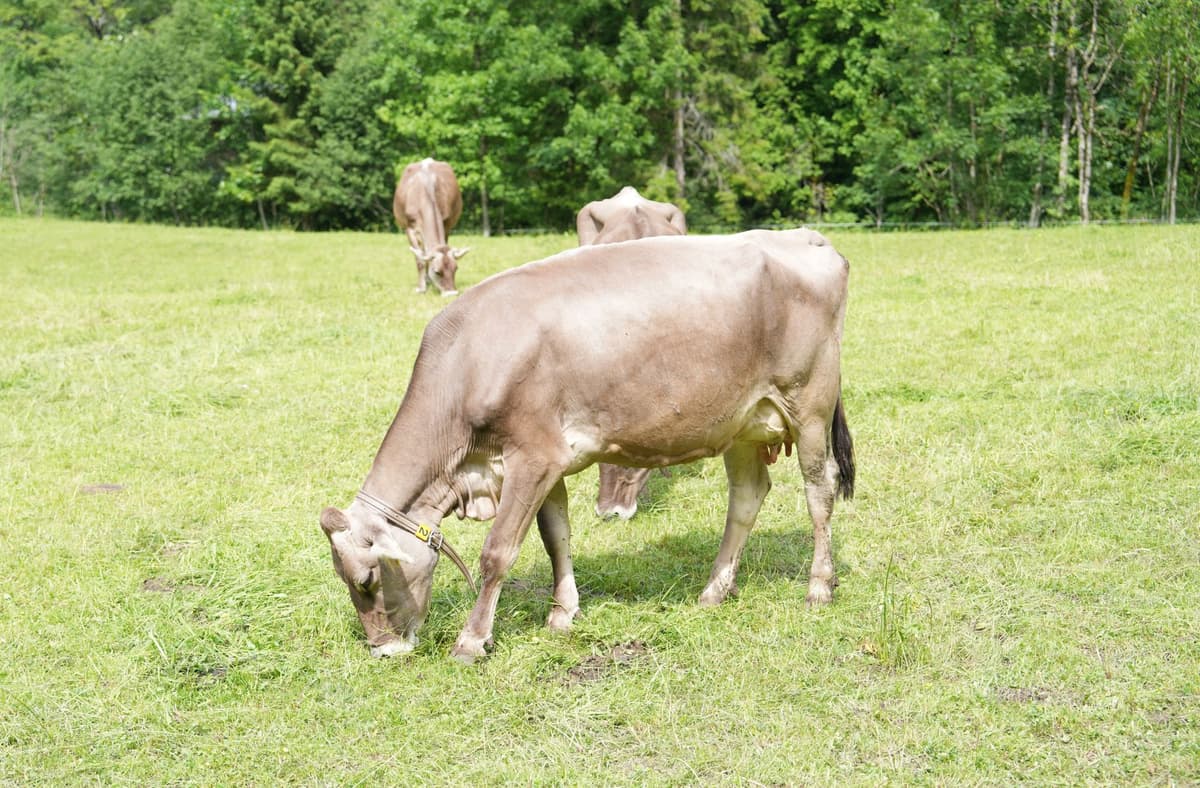
Imagine this: a cow, chillin' in a field, wearing what amounts to an Apple Watch for bovines. It's tracking her steps, her heart rate, her chewing patterns, probably even her existential angst. This isn't just about finding a lost sheep anymore; it's about knowing if that sheep is thinking about getting lost, based on its metabolic rate and slight shift in hoof pressure. I bet they're even getting firmware updates. "Version 3.1.2: Improved rumination efficiency and bug fixes for premature mooing."
And it's not just cows. Chickens are getting in on the action too. We're talking about systems that monitor everything from ambient temperature to individual pecking order, ensuring peak egg production. Soon, I expect to see chickens with tiny VR headsets, simulating lush pastures to reduce stress, or maybe just watching Netflix. And if a pig tries to sneak an extra pellet, an AI probably flags it immediately. "Alert: Porky Pig exceeding daily caloric intake. Initiating remote snout-zapper protocol."
It's all about efficiency, right? Maximizing yield, minimizing waste, turning every living creature into a highly optimized protein-producing machine. The goal is to make farming so precise, so streamlined, that the animals themselves become little biological data factories. Forget emotional support animals; these are data support animals.
Geofencing: The Invisible Fence That's Actually Invisible
Remember those physical fences? Primitive. So 20th century. Now, we have virtual geofencing. It's like a bouncer at a club, but for cows. Stray too far, and instead of a shock collar (mostly, we hope), it's probably a subtle vibration, a change in feed dispenser access, or maybe even a sternly worded email to the farmer: "Your cattle are outside designated grazing zone. Please advise."
This is where it gets truly wild. Instead of the farmer's watchful eye, it's a network of sensors and algorithms making sure every animal is where it should be, doing what it should be doing, and feeling exactly what it should be feeling (which is usually 'contentment leading to deliciousness'). It's like 'The Truman Show' for livestock, but instead of Hollywood producers, it's a bunch of data scientists in lab coats, probably sipping artisanal coffee and discussing optimal manure dispersal rates. I just hope the cows get residuals if their data becomes a best-selling algorithm.
And let's be honest, the concept of a 'digital harness' has a certain dystopian charm, doesn't it? It's the ultimate control, without the messy physicality. No more tangled ropes or scraped knuckles. Just clean, efficient, data-driven domination. It's like we've replaced the farmer's calloused hands with the gentle, unfeeling caress of a cloud server. So romantic.
What This Actually Means
Look, on the one hand, this tech is undeniably clever. It promises to reduce waste, improve animal health (by catching issues early, not just to be nice, but because a sick animal is an inefficient animal), and generally make food production more sustainable. A recent report estimated the global precision livestock farming market will hit over $10 billion by 2029, so it's clearly not going anywhere. It’s a massive technological leap forward, turning every pasture into a smart farm.
But on the other hand, it also fundamentally changes the relationship. We're not just raising animals; we're managing biological assets through a digital interface. The 'harness' isn't just a tool anymore; it's an invisible ecosystem of control that dictates every aspect of an animal's life. It's so efficient, so optimized, that it makes you wonder if we're losing something in the translation from living creature to data point. I mean, what if a cow just wants to wander off for a bit of personal reflection? Does the algorithm account for existential grazing?
It's a bizarre, fascinating, and slightly unsettling glimpse into the future of food. My only real concern is that soon, the animals will be so well-monitored and data-rich that they'll start demanding better wages, or at least a public IP address. I, for one, welcome our new, algorithmically-optimized farm overlords, as long as they don't replace my morning coffee with a precisely calibrated nutrient paste.
Quick Answers
- What is Precision Livestock Farming (PLF)? PLF uses IoT sensors, data analytics, and automation to monitor and manage individual animals or groups, optimizing their health, welfare, and productivity in real-time.
- How does a 'digital harness' work? Instead of physical restraints, animals wear sensors (collars, ear tags, ingestible boluses) that collect biometric and behavioral data, which is then analyzed to make automated decisions or alert farmers.
- What are the main benefits of PLF? Benefits include improved animal health, reduced resource waste (feed, water), increased productivity, and enhanced farm management efficiency through data-driven insights.
- Is PLF used on all farm animals? While commonly associated with cattle, PLF technologies are being developed and applied to various livestock, including pigs, poultry, and sheep, adapting to their specific needs and behaviors.


