
The digitization of Tocharian texts, a language that vanished into the sands of time millennia ago, is far from a neutral academic exercise. It's a flashpoint, illustrating how the digital realm has become the newest battleground for cultural sovereignty. We are witnessing a quiet but intense struggle for control over the 'digital twins' of ancient heritage, and it's revealing the raw nerves of contemporary geopolitical tensions.
This isn't just about access to data. It's about 'grammatical sovereignty' – the power to interpret, contextualize, and ultimately, define a historical legacy. When Western academic institutions digitize these invaluable artifacts, often collected during colonial-era expeditions, they are not merely preserving. They are also, in effect, asserting a form of custodianship, which inevitably clashes with the aspirations of modern states in the region seeking to reclaim their own histories.
The Unseen Stakes of Digital Custodianship
Tocharian, an Indo-European language, provides undeniable evidence of a complex, multi-ethnic past along the Silk Road, challenging simplistic narratives of regional homogeneity. These manuscripts, discovered primarily in China's Xinjiang region, reveal a tapestry of Buddhist thought, trade, and cultural exchange that predates many current national borders. Their very existence complicates modern ethno-nationalist claims.
When these texts are digitized by institutions like the British Library or the Berlin-Brandenburg Academy of Sciences, they become globally accessible. On one hand, this is a boon for scholarship. On the other, it creates a digital commons where the original geographic and political context of the artifacts can be easily detached or reinterpreted. The host institution, by default, becomes the gatekeeper, controlling access, metadata, and the interpretive frameworks that shape global understanding. This power dynamic is not lost on Beijing, nor on other nations along the ancient Silk Road who see their heritage being cataloged and curated by others.
History as a Modern Weapon
The conflict over Tocharian's digital fate isn't an isolated incident; it's part of a broader pattern. From the Elgin Marbles to Benin Bronzes, the physical repatriation debate has raged for decades. Digital repatriation, however, presents a new set of challenges and opportunities. While the physical objects remain in Western museums, their digital doppelgängers can be disseminated globally, but under whose terms?
Consider the implications: If a Western database is the primary, most accessible source for these texts, it implicitly frames the historical narrative. The scholarship that emerges from these digital collections often carries the institutional weight and perspectives of the digitizing entity. For nations like China, which increasingly emphasize cultural nationalism and historical continuity, this external control over foundational historical sources is deeply problematic. It’s not just about copyright; it’s about the right to tell one's own story from one's own perspective.
The Paradox of Access and Control
Digitalization promises universal access, democratizing knowledge. Yet, this promise often comes with a subtle power imbalance. The creation of 'digital twins' requires significant resources, expertise, and infrastructure, typically found in well-funded Western institutions. This creates a dependency, where the 'source' nations are often reliant on these external bodies to even access high-resolution images or structured data of their own historical artifacts. The power to create the digital copy becomes the power to control its dissemination and, to a significant extent, its interpretation.
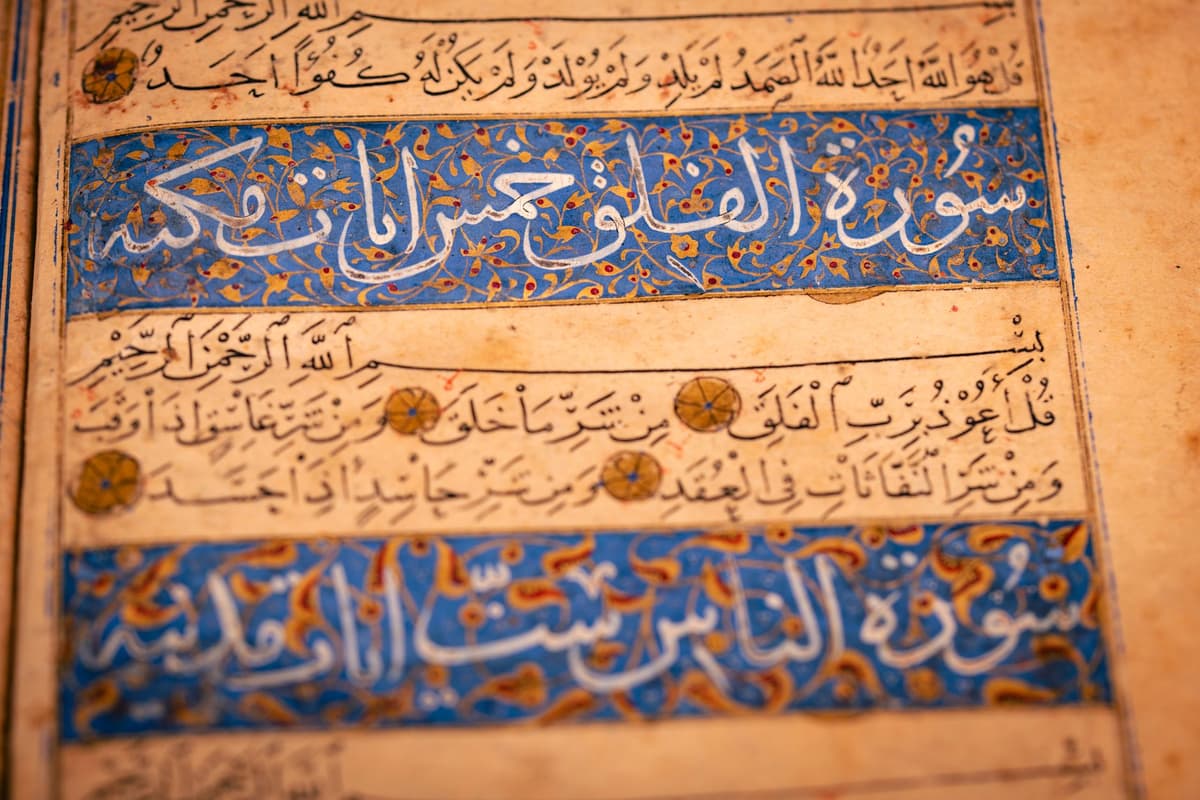
Photo by mohamed abdelghaffar on Pexels
This dynamic raises uncomfortable questions about intellectual property, data sovereignty, and ethical stewardship in the digital age. Who owns the rights to a digital representation of an ancient text? Is it the institution that digitized it, the nation where it was found, or humanity as a whole? These aren't just theoretical questions; they have real-world implications for how history is written, taught, and leveraged in contemporary diplomatic and cultural relations. A 2018 UNESCO report highlighted the persistent inequities in digital cultural heritage management, noting that a significant portion of global digital heritage content still originates from a small number of developed nations.
What This Actually Means
The 'Grammatical Sovereignty' conflict over Tocharian texts is a microcosm of a larger geopolitical struggle. It underscores the profound realization that controlling historical narratives—especially those that redefine ancestral maps and ancient connections—is a powerful tool in asserting modern influence. For nations like China, the narrative of a continuous, unified history is crucial to its geopolitical standing, particularly concerning regions like Xinjiang.
Tocharian texts, with their evidence of deep Indo-European roots in Central Asia, disrupt facile historical claims and offer a more nuanced, interconnected past. The battle for their digital future is therefore a battle for the very soul of Central Asian history, fought not with armies, but with servers, metadata, and scholarly interpretations. It’s a silent war, but its impact on how we understand global history, and thus global power, is profound.
Quick Answers
- What is Tocharian Online? It's a growing collection of digitized ancient Tocharian manuscripts, an extinct Indo-European language, often hosted by Western academic institutions.
- Why is it controversial? The digitization and hosting of these texts by Western institutions is seen by some regional governments, particularly China, as a form of cultural appropriation and a challenge to their historical narrative sovereignty.
- What is 'Grammatical Sovereignty'? This term refers to the power to define, interpret, and contextualize a language and its texts, thereby shaping the historical and cultural narrative derived from them.
- What are the geopolitical implications? The ownership and control of these digital assets are a proxy for broader geopolitical claims over Central Asian history, influencing national identity and international relations along the Silk Road.


