
The Failure of Pure Logic
For decades, the security industry has labored under the delusion that math alone could protect our most intimate secrets. We built layers of encryption, rotating keys, and multi-factor authentication, yet every one of these defenses exists in the realm of logic, making them inherently vulnerable to logical bypasses or the sheer brute force of quantum computing. When a medical device—an insulin pump, a portable MRI, or a diagnostic tablet—is physically stolen, the game changes entirely. If a bad actor has the hardware, they eventually find a way to the data.
Spaghettifying DRAM represents a fundamental shift from logical security to physical impossibility. This isn't a clever algorithm written by a coder in a dark room; it is a byproduct of high-performance hardware architecture that scrambles data at the molecular level. In these high-density memory modules, the physical path a bit of data takes is so convoluted and specific to that individual chip's topography that the information becomes gibberish to anyone trying to read it through traditional forensic imaging.
The End of the Forensic Gold Standard
Traditional digital forensics relies on the assumption that data is stored in a linear, predictable fashion. If you can bypass the OS, you can dump the RAM and reconstruct the state of the machine. Spaghettifying DRAM breaks this methodology. Because the data is physically fragmented across the silicon in a non-linear 'spaghetti' pattern, extracting a coherent file from a stolen chip requires knowing the exact physical mapping of that specific piece of hardware. This mapping isn't a key stored in a file; it is a physical reality of the chip's manufacturing.
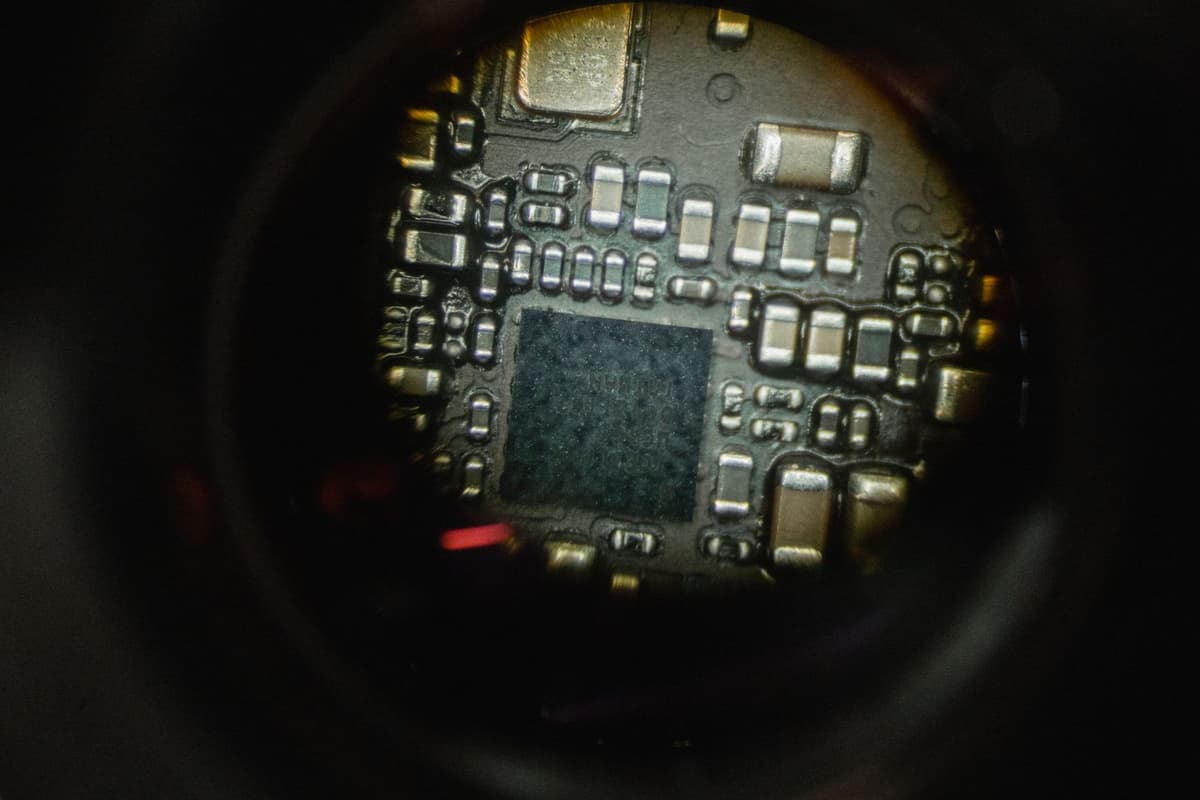
Photo by Tima Miroshnichenko on Pexels
This development is particularly critical for medical AI. We are currently deploying devices that process massive amounts of Sensitive Personal Information (SPI) at the edge. A single diagnostic tool might hold the biometric signatures and medical histories of hundreds of patients. In 2023 alone, healthcare data breaches affected over 100 million individuals. The majority of these were remote hacks, but as we move toward more decentralized, portable medical hardware, physical theft becomes the primary threat vector.
- The physical layout acts as a secondary, non-digital layer of protection.
- It eliminates the 'single point of failure' inherent in software encryption keys.
- It forces attackers to solve a unique physical puzzle for every individual device they compromise.
Sovereignty Over the Silicon
We must view this as a necessary evolution in the 'Memory Forensics' arms race. When we talk about 'natural encryption,' we are describing a system where the medium is the message. By the time a bit of data reaches the physical capacitor in a spaghettified DRAM module, it has been so thoroughly dissociated from its logical neighbors that it loses all meaning outside of its original context. This creates a high-friction environment for data thieves. They no longer need just a password; they need a map of a microscopic maze that was never meant to be navigated.
There is a profound ethical imperative here. Patients do not choose to have their data processed; it is a requirement for modern care. Therefore, the industry has a debt to those patients to provide the highest possible tier of protection. If we can make data extraction physically impossible, we remove the profit motive for hardware theft in the medical sector. We move from a state of constant vigilance to a state of structural security.
What This Actually Means
The emergence of spaghettifying DRAM means that the era of 'security by design' has finally reached the molecular level. We are no longer just building better locks for the door; we are changing the physical properties of the room so that anyone who breaks in finds themselves in a void. For medical practitioners and patients, this provides a level of assurance that software updates and patches never could.
However, this breakthrough also necessitates a change in how we handle device lifecycles. If data is physically tied to the hardware architecture in such a complex way, the recovery of data from damaged or malfunctioning medical devices becomes significantly harder for legitimate technicians. We are trading ease of recovery for absolute privacy. In the context of medical ethics, that is a trade we should be willing to make every single time.
Ultimately, this technology proves that the most effective way to secure the digital world is to lean into the complexities of the physical one. We are entering a period where the hardware itself is the most powerful guardian of our privacy. It is a sobering reminder that in an age of ephemeral code, the most enduring protections are still found in the cold, hard reality of silicon.
Quick Answers
Is this the same as standard encryption?
No. While standard encryption uses mathematical formulas to hide data, spaghettifying DRAM relies on the physical, non-linear layout of the hardware to scramble information at the bit level.
Can this protect against remote hacking?
It primarily protects against physical data extraction. If a hacker gains remote access while the device is powered on and running, they may still access data, but the physical 'spaghettification' prevents forensic recovery from a stolen or lost device.
Does this make medical devices more expensive?
Initially, yes, as it requires high-performance, high-density DRAM modules, but the cost is expected to stabilize as this architecture becomes the standard for secure edge computing.


