The scanner is the beige minivan of the technology world. It is loud, it is slow, it is prone to inexplicable mechanical failure, and nobody under the age of 45 has ever bought one willingly. For decades, the best we could hope for was a PDF that looked like a grainy photo of a UFO taken through a screen door. But Mistral OCR 4.1 has arrived, and suddenly, the silicon valley nerds are pivoting from 'The Metaverse' to 'Look at this crisp transcription of my second-grade diary.' It’s the physical-to-prompt shift, and it’s turning our junk drawers into high-octane data fuel.
We aren't just taking pictures of paper anymore. We are performing an exorcism on physical media. Mistral 4.1 doesn't just see a coffee-stained napkin; it understands that the frantic scribbling on it is a failed startup idea for a cat-sharing app. It’s semantic digitization. It means your computer finally knows the difference between a grocery list and a death threat, which is a huge win for my personal organizational system and my legal defense team.
The Return of the Handheld Plastic Nonsense
Because the software is now hyper-efficient, we are seeing a terrifying resurgence of 'gadgets.' I’m talking about handheld wands that you drag across a page like you’re trying to shave a book. I’m talking about desk lamps that are secretly high-resolution cameras with an ego. We are one month away from a 'Smart Monocle' that transcribes menus in real-time so you don't have to experience the crushing social anxiety of mispronouncing 'charcuterie.'
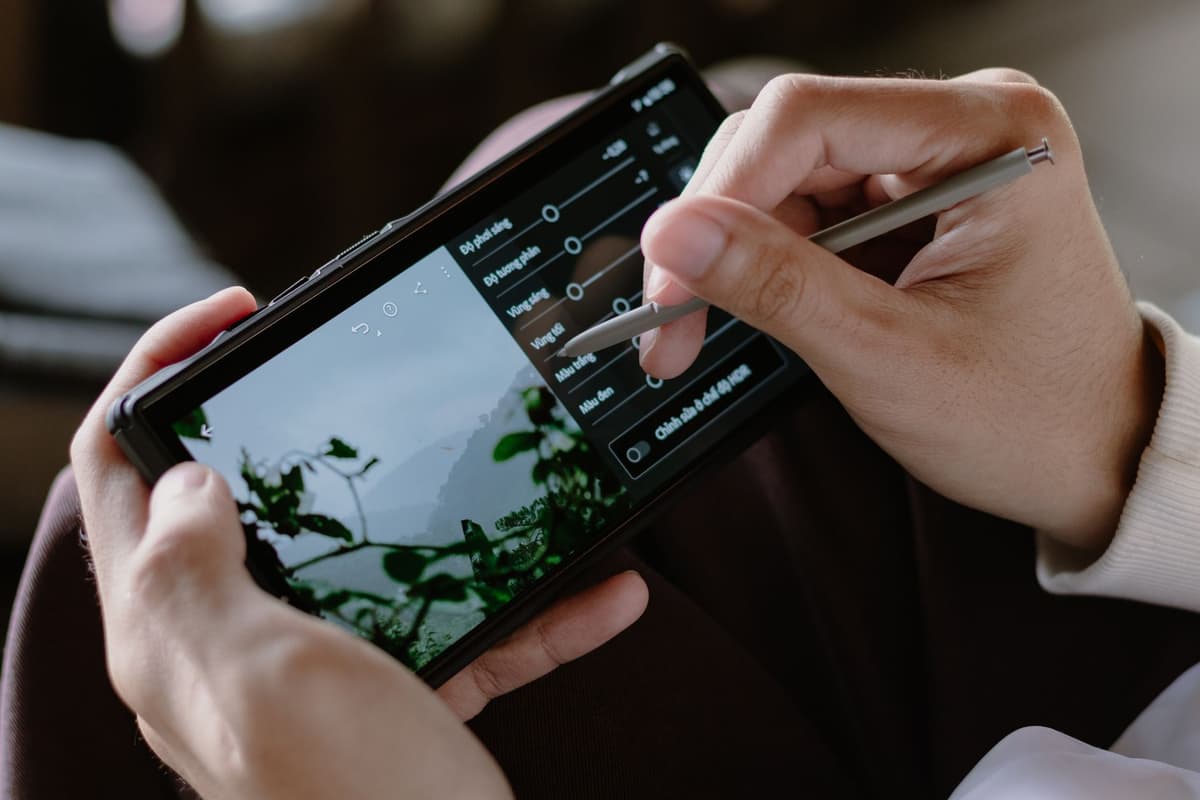
Hardware manufacturers are vibrating with excitement because they finally found a reason to put a battery and a Bluetooth chip in a stick again. The new crop of scanners doesn't just store an image; they process the text locally and feed it directly into your personal LLM. You can now point a plastic stick at a 1984 manual for a Commodore 64 and then ask your phone, 'Hey, why did people live like this?' and get a thoughtful, structured response. It’s $200 for the privilege of not having to use your eyes to read.
This is the ultimate evolution of digital hoarding. Previously, my clutter was limited by the physical dimensions of my apartment. Now, thanks to Mistral’s ability to parse even the most chaotic handwriting, I can digitize my entire collection of 'takeout menus from restaurants that closed in 2019' and store them in a searchable database. I am building a library of Alexandria made entirely of trash and bad ideas.
Semantic Scanning vs. My Father’s Flatbed
Old-school OCR was like a toddler trying to read a license plate through a fogged-up window. If the paper was slightly wrinkled, the computer assumed you were writing in ancient Sumerian. Mistral 4.1, however, has the contextual awareness of a bored librarian. It sees a smudge and says, 'Ah, that’s clearly a thumbprint from someone eating a powdered donut while filing their taxes,' and it ignores it to find the actual data.
This shift to 'Physical-to-Prompt' means the physical object is just a shell. The value is the 'context.' You can scan a stack of vintage technical manuals and suddenly you have a custom AI that knows exactly how to fix a 1950s toaster, even if the manual is currently being used to level a wobbly table. We are strip-mining the physical world for its information, leaving behind nothing but empty husks of paper and a lot of very confused trees.
- It can read your doctor's handwriting (even the parts where he calls you 'difficult').
- It converts 400 pages of legal jargon into a three-bullet-point summary that says 'You're screwed.'
- It recognizes that a drawing of a dog is, in fact, a very bad drawing of a dog.
- It turns your shoebox of receipts into a depressing pie chart of your spending habits in under four seconds.
The Great Paper Purge of 2025
There is a specific kind of madness that takes over when you realize you can digitize everything. I spent three hours yesterday scanning the backs of cereal boxes because I wanted to be able to search for 'the exact nutritional value of a marshmallow shaped like a hat.' Mistral 4.1 is so fast that the bottleneck is no longer the processor; it’s how quickly I can flip pages without getting a paper cut.
We are entering an era where 'analog' is just a synonym for 'unindexed data.' If I can't Ctrl+F my physical life, does it even exist? I’m currently looking at my cat and wondering if there’s a way to scan his fur pattern to see if he’s hiding any encrypted messages. He seems nervous. He should be. I have a 1200dpi portable wand and a dream of total data saturation.
Photo by 🇻🇳🇻🇳 Việt Anh Nguyễn 🇻🇳🇻🇳 on Pexels
What This Actually Means
The 'Physical-to-Prompt' shift is the final nail in the coffin for the 'I’ll file that later' lie we’ve all been telling ourselves since 1998. When hardware gets this small and software gets this smart, the friction between the physical world and the digital world disappears. We aren't just scanning documents; we are liquidating our physical history to feed the insatiable hunger of our personal AI models.
It means that in five years, 'searching your house' won't involve moving the couch cushions; it will involve typing a query into a search bar. You’ll find your car keys because you scanned the coffee table three days ago and the AI remembers seeing a metallic object with a 'World's Best Dad' keychain. It’s incredibly convenient and deeply, deeply weird.
Ultimately, Mistral 4.1 and this new wave of gadgets are turning us into information alchemists. We are taking the leaden, heavy weight of physical clutter and turning it into the digital gold of searchable data. Or, in my case, a very high-resolution archive of why I should never be allowed to own a credit card at a 24-hour CVS.
Quick Answers
Do I really need a dedicated scanning gadget?
Technically no, your phone can do it, but buying a $150 'Smart Wand' makes you feel like a wizard rather than a person taking a photo of a bill.
Can Mistral 4.1 actually read my terrible handwriting?
Yes, it has been trained on millions of samples of human chaos and can likely decipher your 'cursive' better than your own mother can.
Is this just another way to give more data to AI companies?
Yes, but this time you get a very organized folder of your old middle-school poetry in return, so it’s a fair trade for your soul.


