
The Collapse of Digital Intuition
Modern computing has become an exercise in faith rather than understanding. We interact with glass slabs that offer no mechanical resistance and no visual evidence of the billions of logic gates firing beneath the surface. This total decoupling of action and result has created a vacuum of comprehension. When everything is code, nothing is tangible. The sudden, intense interest in analog computer simulators and modular hardware like the HAA (Hybrid Analog Accelerator) isn't a nostalgic gimmick; it is a structural response to the alienation caused by digital opacity.
In a digital system, a single bit flip is catastrophic and binary. In an analog system, variables exist as continuous voltages. You can see the curve; you can feel the resistance of a potentiometer as you steer a differential equation toward a solution. We are moving back toward these systems because humans are not binary creatures. Our sensory inputs are continuous, and the 'black box' of modern software has finally hit a wall where its efficiency no longer compensates for its utter lack of soul.
The Physics of the Patch Cord
There is a specific, sobering weight to a physical patch cord that no software GUI can replicate. When engineers in the 1950s programmed the EAI 580, they weren't typing instructions into a void; they were physically mapping the flow of electricity to mimic the flow of a physical process, like the vibration of an aircraft wing or the cooling of a reactor. By reintroducing these physical interfaces, even in high-fidelity browser simulations, we are restoring the link between the mathematical model and the physical world.
Digital logic is an abstraction of an abstraction. It relies on the pretense that the world can be perfectly sliced into ones and zeros. Analog computing, by contrast, embraces the noise, the heat, and the drift of real-world physics. The revival of modular hardware gadgets—devices where the user must physically bridge components to create a circuit—forces a level of intentionality that 'copy-paste' coding has largely destroyed. You cannot ignore the hardware when the hardware is the program.
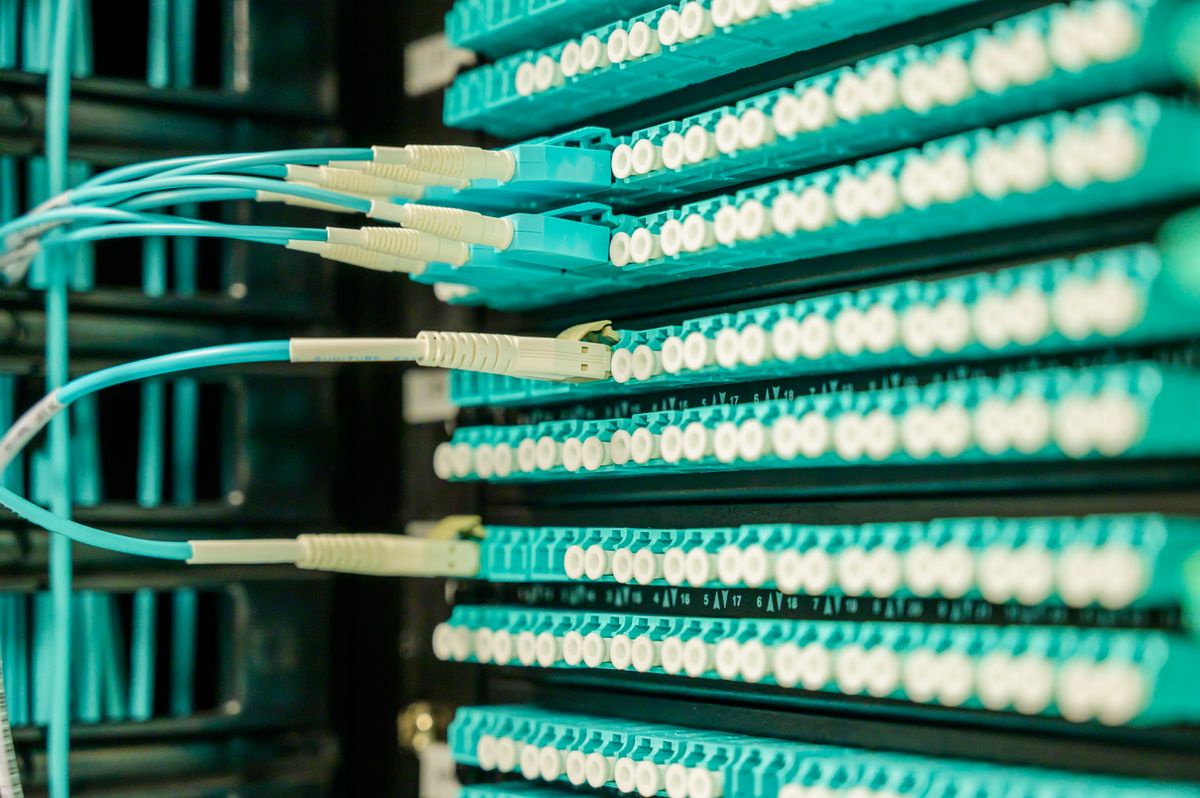
Photo by Brett Sayles on Pexels
Computational Sovereignty and the Black Box
Control is the central issue at stake. In our current ecosystem, a software update can render a device useless or fundamentally change its behavior without the user's consent. Digital systems are inherently permission-based; you operate within the parameters the developer has allowed. Analog systems are inherently sovereign. If you have the components and the electricity, the machine does exactly what its physical configuration dictates. There is no hidden telemetry, no forced cloud sync, and no proprietary API standing between the user and the calculation.
This shift is particularly evident in the growing $1.5 billion modular synthesizer market, which serves as the vanguard for this movement. While these are primarily used for music, they are, in fact, sophisticated analog computers. Users are spending thousands of dollars to perform tasks that a $20 software plugin could do more accurately. They do this because the physical feedback loop—the literal heat of the vacuum tubes and the tactile tension of the knobs—provides a cognitive engagement that a mouse click cannot match. It is a demand for a return to craftsmanship in an era of disposable automation.
What This Actually Means
We are reaching the limits of what purely digital interfaces can provide for the human spirit. The 'Return of the Continuous' is a signal that we have over-indexed on abstraction and under-indexed on agency. As we move deeper into an era of AI and automated decision-making, the desire for 'glass-box' computing—where the logic is visible, tactile, and interruptible—will only grow. People want to see the gears turn, even if those gears are made of electrons rather than brass.
This movement isn't about rejecting progress; it is about demanding a more honest relationship with our tools. A gadget that you can't understand by looking at it is a gadget that eventually owns you. By returning to analog principles, we are reclaiming the right to understand the internal logic of our world. We are choosing the messy, beautiful reality of the slope over the sterile, invisible wall of the bit.
Quick Answers
Is analog computing actually faster than digital?
For specific tasks like solving complex differential equations, analog systems can be significantly more efficient because they process information in parallel through physical laws rather than sequential steps.
Why use a simulator if the point is physical hardware?
Simulators act as a low-barrier entry point, allowing users to master the logic of signal flow and continuous variables before investing in expensive, space-consuming physical modules.
Is this just a trend for hobbyists and collectors?
No, researchers are increasingly looking at analog and neuromorphic computing to solve the massive power-consumption issues currently facing digital AI data centers.
Does this mean digital computers are becoming obsolete?
Not at all; it suggests a future of hybrid systems where digital handles storage and precision while analog handles simulation, intuition, and real-time interaction.

