
Your Appendix is Now a Graphics Card Issue
For decades, if you wanted a 3D map of a human body that didn't look like a potato-quality Minecraft mod, you needed a $100,000 workstation that consumed enough electricity to brown out a small suburb. These machines were massive, beige, and hummed with the existential dread of a cooling fan about to give up. But thanks to AI-native graphics and neural rendering, we’re moving that entire compute-heavy circus onto devices that people usually use to filter their faces into sentient hot dogs.
We are talking about real-time, high-fidelity surgical overlays running on consumer-grade mobile GPUs. This isn't just a marginal upgrade; it’s the difference between navigating a forest with a hand-drawn map on a napkin and having a literal GPS drone hovering over your shoulder screaming 'Turn left at the gallbladder!' It turns out that the same tech used to make digital dragons look slightly more scaly is actually quite good at showing a doctor exactly where a tumor ends and a vital artery begins.
The Rural Surgeon’s New Best Friend
Imagine you’re a doctor in a rural clinic. Your budget for 'advanced robotics' is currently three rolls of duct tape and a very determined nurse named Barb. You aren't getting the $2 million Da Vinci robot. But you do have a tablet. With neural rendering, that tablet can now perform the heavy lifting of a dedicated medical imaging suite. It’s the democratization of precision, or as I like to call it, 'Bringing a Bazooka to a Knife Fight, but the Bazooka is an iPad.'
Neural rendering is the secret sauce here. Instead of trying to calculate every single photon of light bouncing off a liver—which is what old-school rendering tried to do—AI-native graphics basically 'hallucinate' the details based on a few data points. It’s like how you can recognize your ex from three blocks away just by the aggressive way they walk; the AI recognizes the geometry of an internal organ and fills in the high-res blanks instantly. It’s fast, it’s light, and it doesn't require a liquid-nitrogen-cooled server rack in the closet.
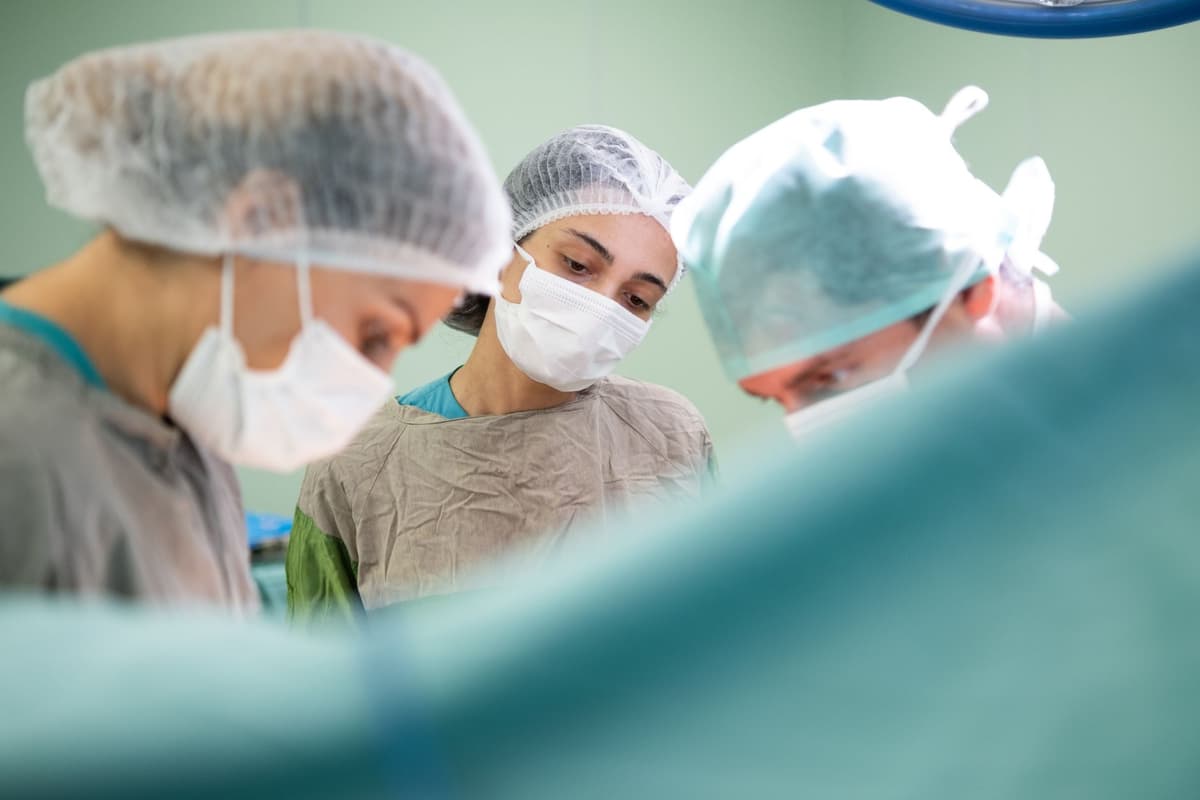
Photo by Javid Hashimov on Pexels
Why This Beats the Old Way
Traditional surgical navigation was a logistical nightmare. You had to calibrate sensors, pray to the IT gods, and wait for the render lag to catch up. Nothing says 'confidence' like a surgeon waiting four seconds for the screen to refresh while they’re holding a sharp object inside your chest. That lag is gone. We’re moving toward sub-millimeter accuracy at 60 frames per second. That’s smoother than my transition from 'productive worker' to 'nap enthusiast' on a Friday afternoon.
- No more $100,000 anchor weights disguised as computers.
- Real-time feedback that doesn't stutter when the Wi-Fi gets spotty.
- The ability to perform complex visualizations in a tent, a van, or a very fancy treehouse.
This shift means that the 'Handheld Operating Room' isn't just a buzzword; it’s a hardware reality. The same mobile chips that allow teenagers to play Genshin Impact at max settings are now the backbone of life-saving medical interventions. If we can use this power to render 4K textures on a digital sword, we can certainly use it to make sure Dr. Stevens doesn't accidentally nick something important while he's distracted by the hospital's subpar cafeteria mystery meat.
What This Actually Means
This is the end of the 'Elite Tech' wall in medicine. When precision surgery requires a literal mainframe, only the wealthiest zip codes get precision surgery. When it requires a high-end mobile chip, suddenly the playing field levels out. We are shifting the burden of cost from specialized hardware to clever software. It’s the ultimate hack: using the consumer electronics supply chain to solve a specialized healthcare crisis.
Of course, there’s a psychological hurdle. People might feel weird knowing their life-saving spinal surgery was guided by the same processor that powers a device mostly used for doom-scrolling. But results are results. If an AI-native render can give a rural doctor the same visual clarity as a Harvard-affiliated surgical suite, who cares if the device has a cracked screen and a 'World's Best Dad' sticker on the back?
Ultimately, we’re looking at a future where the 'operating room' is wherever the doctor happens to be standing. It’s portable, it’s powerful, and it’s remarkably efficient. Just make sure the surgeon remembers to turn off their notifications before they start. Nobody wants a GroupMe alert popping up over their vena cava right at the finish line.
Quick Answers
Will my surgeon be playing Flappy Bird during my bypass?
No, the GPU will be entirely occupied with rendering your internal geography in stunning 4K, leaving no room for 8-bit birds.
Is this actually as good as the expensive machines?
In many cases, yes; neural rendering is so efficient that it can actually outperform older dedicated hardware by using 'smart' shortcuts to generate images.
Does this mean surgery will get cheaper?
In theory, yes, because the overhead for specialized visualization equipment drops from six figures to the price of a high-end tablet and a software license.


