
I spent twenty minutes yesterday staring at the specs for a high-end toothbrush, and I realized I wasn't looking for better dental health. I was looking for a reason to feel like my Tuesday morning mattered more than it actually did. We have entered an era where the mundane is no longer something to be finished, but something to be optimized, and Dyson—a company that built its empire on the aesthetics of suction and airflow—is the perfect protagonist for this shift. Their foray into the bathroom isn't just about plaque; it’s about the strange, beautiful, and slightly desperate way we are trying to reclaim our time through ritualized maintenance.
There is something inherently fascinating about the engineering overkill of it all. We are talking about devices that cost more than a mid-range television, designed to do a job that a $4 piece of plastic and nylon has handled sufficiently for decades. Yet, the appeal is undeniable. When you pick up a tool that feels like it was designed by aerospace engineers, the act of brushing your teeth stops being a chore you squeeze in before a Zoom call. It becomes a performance. It becomes a moment where you are the pilot of your own biological upkeep.
The Architecture of the Micro-Ritual
I wonder if we’re gravitating toward these luxury tools because the rest of our lives feel increasingly abstract. Most of us spend our days moving digital pixels around or attending meetings that could have been emails; there is no tactile sense of completion. But when you use a high-tech tool to clean your teeth, the feedback is immediate and physical. You hear the frequency change as the pressure sensor kicks in. You see the haptic glow. You are, for exactly 120 seconds, successfully managing a complex system.
This is 'ritualized maintenance' in its purest form. We are taking the repetitive, boring parts of being alive and dressing them up in the language of high performance. It’s not just a toothbrush; it’s a 'cleanliness system.' It’s not just a routine; it’s a 'protocol.' By elevating the tool, we elevate the task, and by elevating the task, we convince ourselves that we are in total control of our environment. It’s a small, expensive fortress of solitude built into the master bathroom.
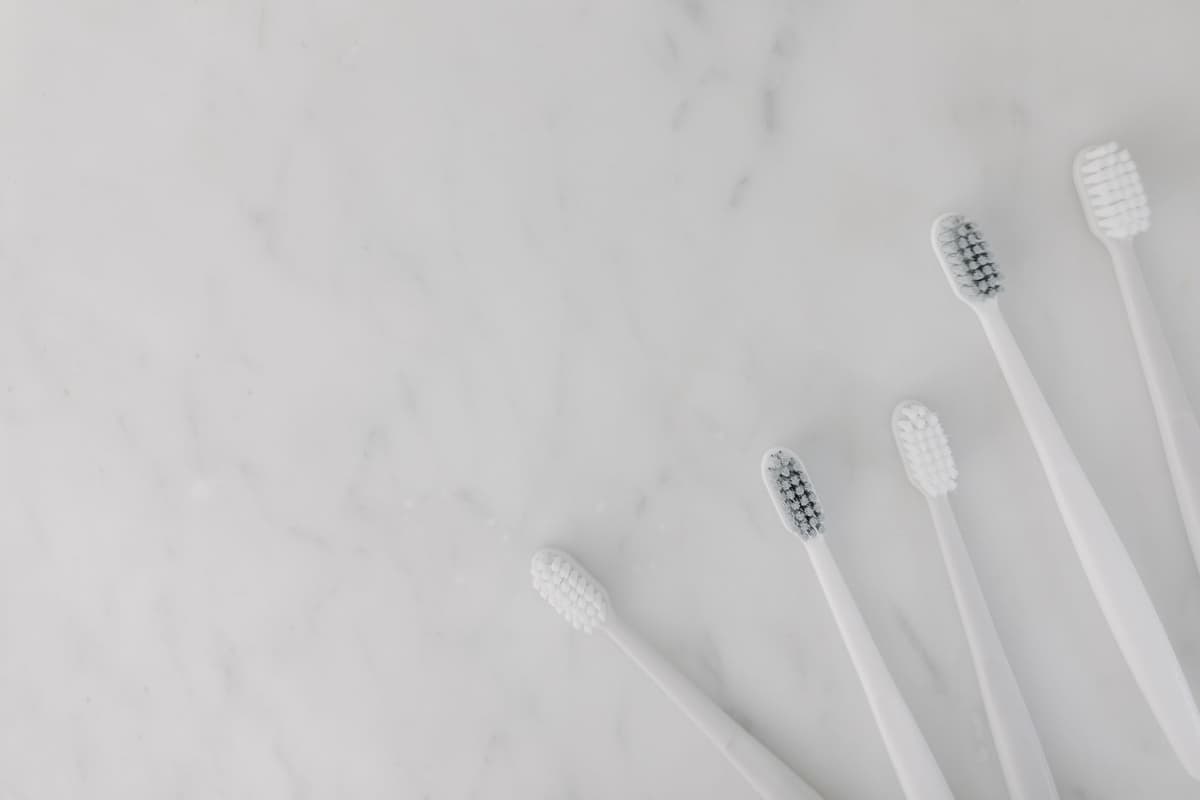
Photo by Tara Winstead on Pexels
Is it possible that we’re just lonely for quality? In a world of planned obsolescence and flimsy plastic, there is a deep psychological comfort in a device that feels over-engineered. We want to believe that if we buy the best possible version of a mundane object, we have solved that specific corner of our lives forever. It’s the 'buy it once, buy it right' mentality taken to a logical extreme where we are now applying it to things that used to be disposable.
The Gamification of Being Awake
There’s a specific kind of dopamine hit that comes from seeing a digital interface tell you that you did a good job. Many of these high-end brushes now sync to apps that map your mouth like a topographical survey. I find myself asking: who are we performing for? Are we trying to impress our dentists, or are we just looking for a gold star from an algorithm because we feel unobserved in the rest of our lives?
- We track our steps to prove we moved.
- We track our sleep to prove we rested.
- Now, we track our brushing to prove we cared for ourselves.
This gamification turns a basic hygiene requirement into a winnable level. If the app says I hit 100% coverage, I have objectively succeeded at being a human for two minutes. In an unpredictable economy and a chaotic political climate, that 100% score is a rare, tangible victory. It’s a way to turn the 'maintenance' of a body—which is usually a losing battle against time—into a series of daily high scores.
What This Actually Means
Ultimately, the rise of the 'luxury routine' suggests that we are willing to pay a massive premium for the feeling of intentionality. We aren't just buying a Dyson or a high-end sonic device; we are buying a defense mechanism against the blur of modern existence. If I have to spend thirty years of my life performing basic maintenance on this carbon-based vessel I inhabit, I might as well do it with a tool that makes me feel like a scientist instead of a janitor.
I don't think this is about vanity, or at least, not entirely. It’s a search for friction in a world that is becoming too smooth and too digital. We want objects that have weight. We want routines that feel like ceremonies. If a $500 toothbrush is what it takes to make someone stand still and be present with themselves for two minutes without looking at a phone, maybe the engineering isn't as 'over' as we think.
We are essentially decorating the hallways of our lives. We know we have to walk down them every day, so we’re putting up expensive wallpaper and high-end lighting. It doesn’t change the destination, but it certainly changes how we feel during the walk. And in a world that feels increasingly out of our hands, maybe the bathroom counter is the only place left where we can truly play God with the details.
Quick Answers
Is a $500 toothbrush actually better for your teeth?
Clinically, the margin of improvement over a standard electric brush is usually minimal, but the psychological 'compliance'—actually brushing for the full two minutes because the tool is fun—is where the real health benefit happens.
Why is Dyson specifically moving into this space?
They specialize in 'prestige engineering,' taking unglamorous airflow problems (vacuums, hair dryers) and turning them into status symbols through high-end industrial design and steep price points.
Is this just a trend for wealthy people?
While the price tag is high, the 'ritualized maintenance' mindset is everywhere, from 10-step skincare routines to the obsession with artisanal coffee gear; it's a broad cultural move toward finding meaning in repetitive tasks.


