
The Eruption That Forgot to Cool the Earth
We are taught that the Earth responds to violence with a predictable, icy silence. When a volcano like Tambora exploded in 1815, it gave us the 'Year Without a Summer,' filled with crop failures, riots, and the bleak inspiration for Mary Shelley’s Frankenstein. But when Mount Paektu, straddling the border of modern-day North Korea and China, let loose in AD 946, it should have been worse. We are talking about the 'Millennium Eruption,' a VEI-7 event that ejected roughly 100 cubic kilometers of tephra into the sky. It was one of the most violent sulfurous events in recorded human history, and yet, the global thermometer barely budged.
I keep staring at the data from recent geochemical analyses, and the math just doesn't add up to the reality we live in. Researchers have confirmed that Paektu released massive amounts of sulfur—estimates suggest around 45 megatons—which is significantly more than Tambora. By every rule in our current climatology handbook, the Northern Hemisphere should have plunged into a volcanic winter that lasted years. Instead, the tree rings from that era show a shrug. The historical records from the Goryeo dynasty and the Byzantine Empire don't mention a world-ending frost. It is a geological paradox that makes me wonder if our atmosphere has a secret defense mechanism we haven't discovered yet.
The Sulfur Trap Theory
One of the most fascinating possibilities being floated by researchers is that the sulfur didn't behave the way it usually does. Normally, sulfur dioxide hits the stratosphere, turns into sulfate aerosols, and acts like a giant shiny umbrella reflecting sunlight back into space. But Paektu was different. New studies of the pumice and glass shards suggest the eruption was incredibly rich in water vapor. This might have caused the sulfur to 'wash out' of the atmosphere much faster than anticipated.
Think about the sheer scale of that atmospheric chemistry. You have a mountain literally turning itself inside out, screaming gas into the sky at supersonic speeds, and then... the rain just takes it away? If the sulfur was trapped in large ash particles or scavenged by hydrometeors, it wouldn't have stayed aloft long enough to cause a global chill. It’s a humbling thought. We spend so much time modeling the 'big one' and its catastrophic cooling effects, but Paektu suggests that the specific cocktail of gas and moisture can completely nullify a planet-wide disaster.
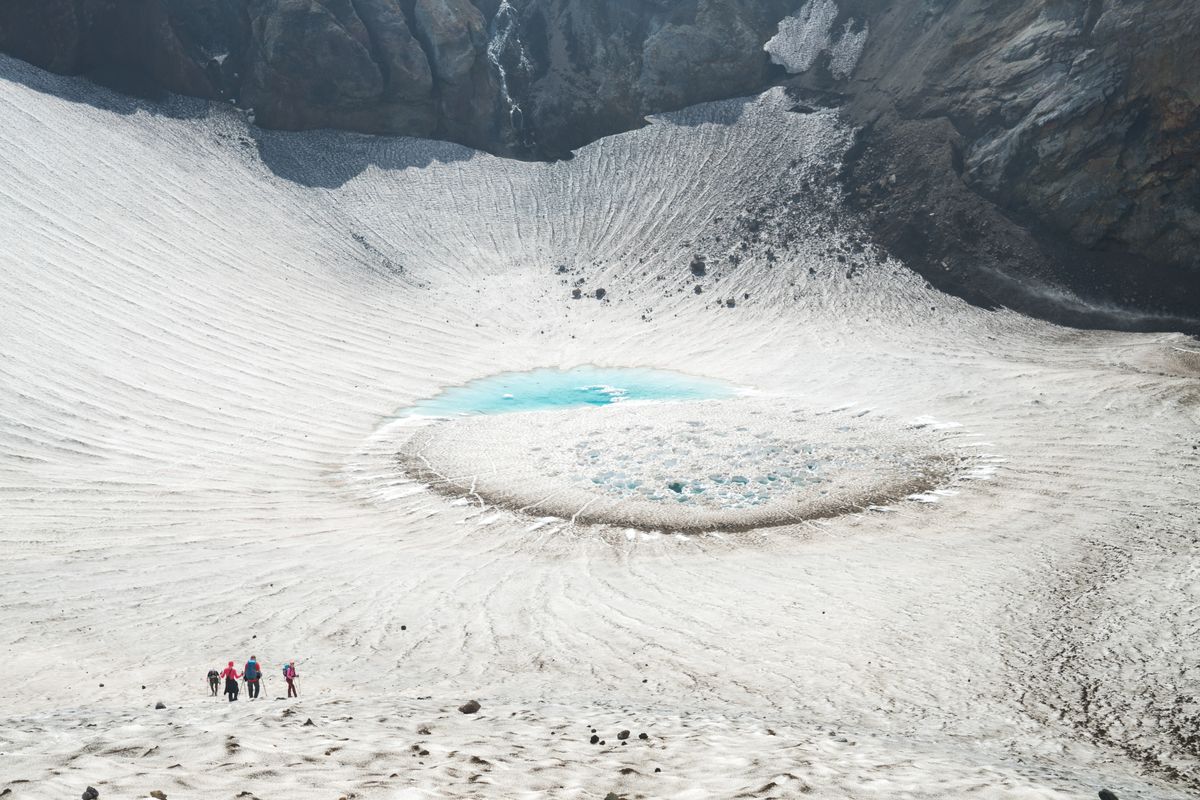
Photo by ArtHouse Studio on Pexels
Rethinking Atmospheric Resilience
This discovery forces us to look at the atmosphere not as a static ceiling, but as a dynamic, perhaps even resilient, system. If a VEI-7 eruption can happen without collapsing global agriculture, what does that say about our sensitivity models? We often view the climate as a house of cards, where one big nudge sends the whole thing tumbling. Paektu feels more like a heavy-duty suspension system. It took a massive hit, groaned, and then leveled back out before anyone really noticed the bump.
There is also the timing to consider. The Millennium Eruption happened in the winter, around November or December of 946. Some scientists argue that the polar vortex might have trapped the volcanic plume, preventing it from spreading across the mid-latitudes where it would do the most damage to global temperatures. It’s a bit like a chimney fire—terrifying if you’re in the room, but the smoke stays contained. But even that doesn't fully explain why the sulfur concentrations found in Greenland ice cores from that year are so high, yet the temperature proxies remain so stable. We are missing a piece of the puzzle.
What This Actually Means
This isn't just a win for historical trivia; it’s a massive blinking light for modern climate science. If our models can't explain why the largest eruption of the last two thousand years failed to cool the planet, we have to ask what else we are miscalculating. It suggests that the 'sulfur-to-cooling' ratio isn't a linear equation. There are tipping points, chemical sinks, and seasonal variables that we are only beginning to grasp.
I find a strange comfort in the Paektu paradox. It reminds me that the Earth is infinitely more complex than the digital simulations we build to understand it. We live on a planet that survived a direct hit from a geological shotgun and kept right on spinning without missing a harvest. It doesn't mean we're safe from future eruptions, but it does mean that 'inevitable' climate catastrophes might have exit ramps we don't know about yet.
The mystery of Mount Paektu is a call for intellectual humility. We see the scars of the blast, we measure the sulfur in the ice, and we see the steady growth of the trees that lived through it. Somewhere in that gap between the data and the reality lies a fundamental truth about how our world breathes. We just haven't learned to read it yet.
Quick Answers
Was the Paektu eruption bigger than Krakatoa?
Yes, by a significant margin. The AD 946 eruption was a VEI-7, while the 1883 Krakatoa eruption was a VEI-6, meaning Paektu released about ten times more tephra.
Why didn't people starve after the eruption?
Because the expected 'volcanic winter' never materialized, crop cycles remained largely normal across Asia and Europe, preventing the typical famines associated with large eruptions.
Does this mean volcanoes don't cause cooling?
No, they definitely do—Tambora and Pinatubo proved that. It just means that sulfur volume isn't the only factor; the height, moisture content, and season matter just as much.

