History as a Territorial Weapon
When archaeologists brought the first shards of 9th-century ceramics to the surface near Vietnam’s Binh Chau coast, they weren't just recovering artifacts; they were excavating a legal argument. The discovery of a Late Tang dynasty shipwreck under the sands of the South China Sea provides a physical anchor for claims that have, until now, been largely rhetorical. In the contemporary struggle for maritime control, a thousand-year-old hull is worth more than a thousand diplomatic cables.
This isn't about the intrinsic value of the pottery or the tragic end of a merchant crew. This is archaeological diplomacy—the process by which nations use the physical remnants of the 'Ceramic Silk Road' to claim historical precedence over waters that are currently the subject of intense international dispute. By proving that these waters were their historical backyard, nations seek to bypass modern international law in favor of ancient 'rights.'
The Strategic Utility of the Ceramic Silk Road
The Binh Chau wreck is specifically significant because of its location and its era. Dating back to the 800s, it represents one of the oldest and most intact examples of regional trade before the age of European exploration. For Vietnam, the ship serves as a stationary sentinel. It suggests that their ancestors were the primary custodians of these shipping lanes long before modern borders were drawn or the United Nations Convention on the Law of the Sea (UNCLOS) was drafted in 1982.
Control over these waters is not a matter of pride; it is a matter of survival and wealth. Approximately one-third of global shipping—valued at over $3 trillion annually—passes through these corridors. When a nation can point to a 9th-century wreck and say, 'We were here first,' they are attempting to build a moral and historical framework that justifies their presence and their patrol of these strategic lanes.
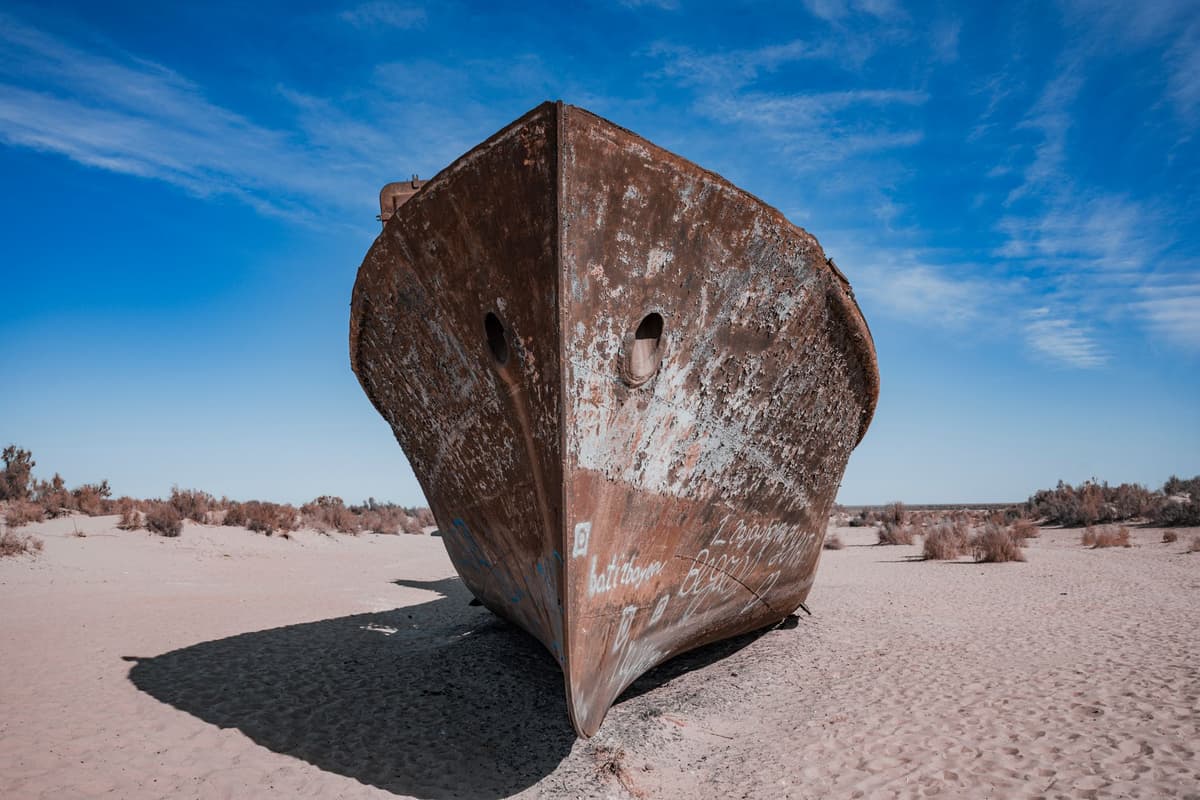
Photo by Khusen Rustamov on Pexels
The Failure of International Legal Norms
We are witnessing a shift where physical history is being used to undermine established international legal norms. UNCLOS was designed to provide a clear, math-based framework for Exclusive Economic Zones (EEZs), usually extending 200 nautical miles from a coast. However, the discovery of ancient wrecks allows states to argue for 'historic titles.' They use these finds to suggest that their influence predates the current legal system and should therefore be exempt from its limitations.
This creates a dangerous precedent where archaeology is no longer a neutral pursuit of knowledge. Instead, it becomes a state-sponsored race to find the most 'convenient' history. If a shipwreck can be used to justify an expanded maritime border, then every archaeological dig in the South China Sea is effectively a military operation by other means. The scientists on these boats are often accompanied by coast guard vessels, not just for protection, but as a display of administrative control over the site.
The Erasure of Shared Heritage
The tragedy of archaeological diplomacy is that it treats the ocean as a set of distinct, owned properties rather than a shared medium of exchange. The Late Tang period was defined by its fluidity; the 'Ceramic Silk Road' was a network of Arab, Indian, Chinese, and Southeast Asian actors. By nationalizing a shipwreck, modern governments erase the multicultural reality of the past to serve a mono-nationalist agenda in the present.
When we look at the Binh Chau site, we should see the interconnectedness of 9th-century globalism. Instead, we see a marker on a map intended to keep others out. This selective memory ignores the fact that ancient trade routes were rarely the exclusive domain of a single empire. They were zones of overlapping influence where no one held total sovereignty because no one had the technology to enforce it.
What This Actually Means
The Binh Chau discovery signals a new era where the seabed is the front line of territorial expansion. We should expect to see an increase in state-funded underwater exploration, not out of a sudden passion for Tang dynasty glaze techniques, but as a method of 'lawfare.' Every new find will be heralded by state media as 'indisputable proof' of ancient ownership, further complicating an already volatile region.
Ultimately, utilizing 9th-century shipwrecks to settle 21st-century border disputes is a recipe for perpetual conflict. History is too layered and too complex to serve as a clean legal boundary. If we allow archaeology to be fully co-opted by geopolitics, we lose the truth of our shared maritime history and replace it with a series of competing, state-sanctioned myths designed to justify the next generation of warships.
Quick Answers
Why is the Binh Chau shipwreck so important to modern governments?
It provides physical evidence of ancient activity that nations use to claim 'historic rights' over disputed waters, bypassing modern maritime laws.
Does international law recognize shipwrecks as territorial markers?
Generally, no; UNCLOS bases territory on coastal distance, but nations use 'historic titles' as a loophole to challenge these standard boundaries.
Is this just happening in Vietnam?
No, several nations in the South China Sea and Mediterranean are increasingly using underwater archaeology to bolster maritime claims and influence.


