
The Unexpected Organism
So, the big news is that scientists have observed these seemingly inert lumps of metal on the ocean floor, polymetallic nodules, actually producing a gas that’s being dubbed ‘dark oxygen’. My first thought, naturally, was: what on Earth (or perhaps off Earth?) is that? It sounds like something out of a sci-fi novel, a byproduct of alien metabolism on some distant, oxygen-starved moon. But no, this is happening right here, miles beneath the waves, in the crushing pressure and utter darkness of the deep sea.
These nodules, which are typically found in areas where there's very little organic matter falling from the surface, are mostly composed of manganese and iron oxides. For decades, they’ve been considered geological curiosities, forming over millions of years through slow precipitation from seawater. The idea that they could be biologically active, let alone producing a novel gas, is a complete paradigm shift. The research suggests that these nodules aren't just rocks; they're likely host to complex microbial communities, acting as tiny, self-contained bioreactors in an environment we thought was too harsh for such sophisticated biochemical processes.
A New Kind of Respiration?
What’s truly mind-boggling is this ‘dark oxygen’ itself. The term comes from its association with what astronomers call 'dark gas' or 'dark molecular clouds' – regions in space that don't emit or absorb much light, making them incredibly difficult to detect. These clouds are thought to be the nurseries for stars and planets, and they often contain unusual chemical compositions. Now, this deep-sea ‘dark oxygen’ is being described as a similar, hard-to-detect reactive oxygen species. It’s not the familiar O2 we breathe, but something more ephemeral, perhaps more potent in its chemical interactions.
Scientists are still trying to pin down exactly what this gas is and how it’s being produced. Is it a byproduct of the microbes metabolizing the metal oxides in the nodules? Are they using some entirely unknown pathway to generate energy, perhaps utilizing trace elements in ways we haven't conceived? The implications for our understanding of life’s limits are staggering. If life can find a way to thrive and perform complex chemistry in the deepest, most nutrient-poor parts of our own planet, using processes we’re only just beginning to classify, what does that say about the potential for life elsewhere in the universe?
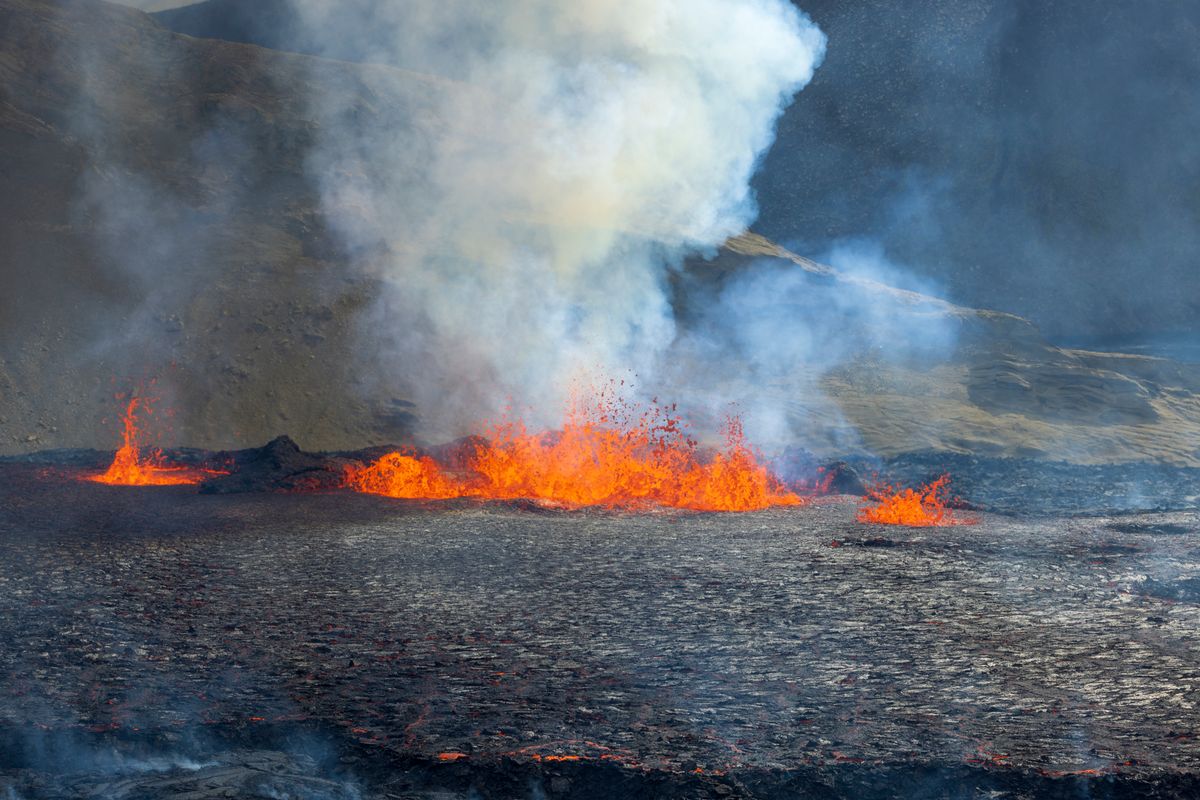
Photo by Rino Adamo on Pexels
Rewriting Ocean Chemistry Textbooks
This discovery has the potential to fundamentally alter our models of deep-sea ocean chemistry. We’ve always assumed that the deep ocean is a relatively stable, albeit cold and dark, environment where chemical reactions are slow and primarily driven by geological processes or infrequent inputs from the surface. The idea that there are ongoing, significant biochemical processes occurring within geological formations like polymetallic nodules, producing novel gases, means our understanding of nutrient cycling, oxygen consumption, and overall ocean metabolism might be incomplete, or even fundamentally flawed.
Think about it: if these nodules are acting as active sites for chemical transformation, they could be influencing the local geochemistry in ways we haven't accounted for. This could affect our measurements of dissolved gases, trace metals, and even the isotopic signatures we use to trace ocean currents and geological events. It’s like finding out that the seemingly solid ground beneath your feet is actually a slow-moving, chemically active organism.
The Mining Question Hangs Heavier
And then there’s the elephant in the room: deep-sea mining. Polymetallic nodules are precisely the target for some of the most talked-about deep-sea mining operations, largely because they contain valuable battery metals like cobalt, nickel, and manganese. Proponents argue that mining these nodules is necessary to meet the global demand for these metals, crucial for renewable energy technologies and electric vehicles. Critics, however, raise serious concerns about the potential for irreversible damage to fragile deep-sea ecosystems that we barely understand.
This discovery of 'dark oxygen' production adds an entirely new layer of complexity to that debate. If these nodules are not just inert mineral deposits but active biological hubs producing previously unknown gases, then disturbing them through mining could have far more profound and unpredictable consequences than we currently acknowledge. We’re talking about potentially destroying a unique biochemical process before we’ve even had a chance to fully characterize it, let alone understand its role in the broader deep-sea ecosystem. It’s not just about removing rocks; it’s about potentially disrupting an active, albeit alien, form of life and chemistry. The pressure to mine these resources is immense, but this finding screams for caution, for more research, for a deeper, more humbling curiosity about what lies beneath.
What This Actually Means
At its heart, this is a story about the vastness of our ignorance. We’re exploring space with incredible sophistication, looking for life on Mars and moons of Jupiter, yet we find ourselves utterly surprised by complex biochemical activity happening on our own planet’s floor. It’s a potent reminder that the greatest frontiers might not be in the stars, but in the abyssal depths of our own oceans.
This ‘dark oxygen’ discovery forces us to re-evaluate what constitutes 'life' and 'metabolism' in extreme environments. It opens up a new avenue of research into deep-sea astrobiology, essentially asking: if we can find such novel chemistry here, what are we missing on other worlds?
Quick Answers
What is 'dark oxygen'?
It's a term used to describe a newly discovered, hard-to-detect reactive oxygen species produced by microbial communities living on polymetallic nodules in the deep sea. It's not the oxygen we breathe (O2).
Why is it called 'dark oxygen'?
The name is inspired by 'dark gas' clouds in space, which are similarly difficult to detect and often associated with unique chemical processes. Its elusive nature in the ocean mirrors that of dark gas in astronomy.
Could this affect deep-sea mining?
Yes, it adds significant complexity. If nodules are active biological sites, disturbing them could have unpredictable and potentially severe impacts on deep-sea ecosystems and processes that we don't yet understand.

