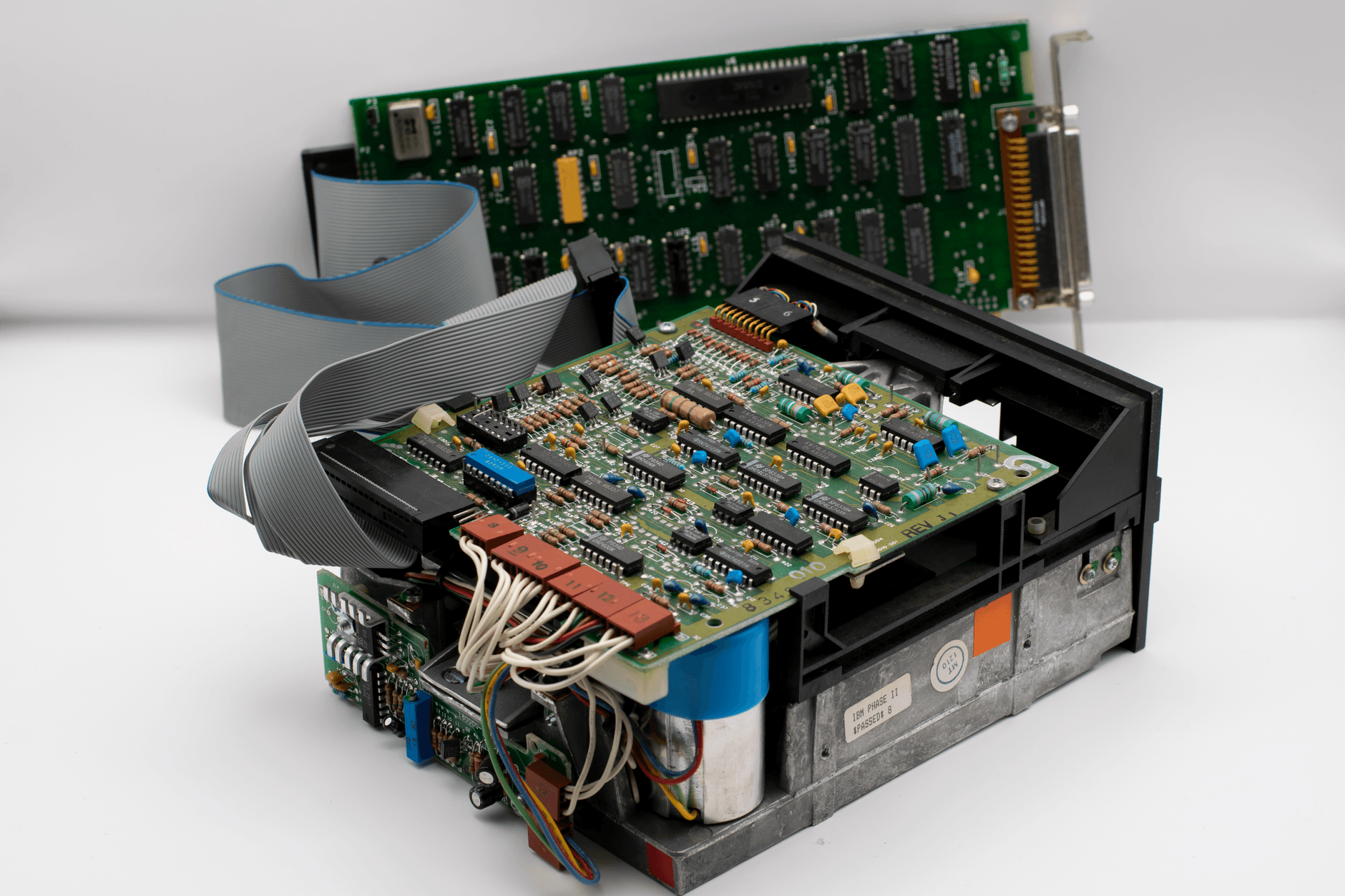
The Architecture of the Impossible
I spent three hours yesterday watching a video of someone trying to port Half-Life to Mac OS 9. On paper, this is a colossal waste of human potential. We have GPUs now that can simulate the fluid dynamics of a cup of coffee in real-time, yet here is a brilliant mind sweating over the memory limitations of a twenty-five-year-old operating system. It isn't just nostalgia. It feels more like a spiritual reclamation project, a way to find the edges of a world that has become suspiciously borderless.
Modern creativity is increasingly frictionless. You want an image of a cyberpunk cathedral? You ask, and it appears. You want a functional Python script for a weather app? It’s yours in three seconds. But humans seem to be hitting a wall of "infinite ease" and bouncing off it. We are seeing a surge in what I can only call digital masochism: the deliberate choice to work within the most punishing, illogical constraints possible just to see if a spark still catches.
The Demoscene and the Beauty of the 64K
The demoscene has always been the high church of this movement. If you aren't familiar, these are creators who write software—demos—that produce audiovisual presentations in real-time. The catch? They often limit the entire file size to 64 kilobytes. For context, a single high-resolution photo on your phone is about 3,000 kilobytes. To fit a 3D world, a soundtrack, and synchronized lighting into 64K requires a level of mathematical gymnastics that borders on the occult.
- They don't use textures; they generate them with math on the fly.
- They don't record music; they write code that tells the sound chip how to vibrate.
- They don't waste a single bit because a single bit is 1/524,288th of their entire universe.
Why do this? When I look at these demos, I don't see "old tech." I see a desperate, beautiful attempt to prove that the human spirit is sharper than the tools it uses. There is a specific kind of dopamine hit that comes from making a machine do something its creators explicitly said it couldn't do. It’s the digital equivalent of climbing a mountain because it’s there, except the mountain is a Commodore 64 and the peak is a fluid-simulated ocean rendered in 8-bit color.
Photo by cottonbro studio on Pexels
The Psychological Revolt Against the Prompt
I suspect we are witnessing a quiet rebellion against the "black box" nature of modern AI. When I generate something, the process is opaque. I put intent in, and a result comes out, but the middle part—the struggle, the iteration, the understanding of the grain of the wood—is missing. Forcing Half-Life onto a PowerPC Mac is the opposite of that. It is an act of total transparency. You have to know every register, every interrupt, and every quirk of the hardware.
There is a profound comfort in a hard limit. In a world of "infinite" canvases, we are paralyzed by choice. But when you only have 4MB of RAM and a processor that runs at 233MHz, the choices are made for you. You are no longer wondering what to build; you are wondering how to survive the building process. This "digital masochism" provides a structure that modern life has largely stripped away. It turns a hobby into a puzzle where the pieces are made of broken glass and legacy code.
It makes me wonder if the next great era of art won't be about who can use the most powerful tools, but who can do the most with the least. We’ve spent decades trying to remove friction from the creative process. We made everything faster, smoother, and more intuitive. But friction is where heat comes from. Without the resistance of the medium, the act of creation starts to feel like shouting into a void that just echoes back exactly what you wanted to hear.
What This Actually Means
This obsession with extreme technical constraints is a sign that we crave mastery over consumption. In the AI era, we are all becoming directors, but some people desperately still want to be carpenters. They want to feel the splinters. They want to know that the thing exists because they outsmarted the physics of the silicon, not because they whispered the right spell to a server farm in Oregon.
We are going to see more of this. As the "output" of art becomes cheaper and more ubiquitous, the "process" of art will become the actual product. The value isn't in the Mac OS 9 version of the game—you can play a better version on your phone. The value is in the 1,000 hours of human stubbornness required to make it blink. We are moving toward an economy of effort, where the difficulty of the task is the only thing that proves a human was actually there.
Ultimately, these digital masochists are the scouts. They are testing the boundaries of what it means to be a creator when the machines can do the heavy lifting. They are reminding us that the most interesting things happen at the edge of the impossible, in the cramped, dusty corners of hardware that should have been recycled twenty years ago. It’s not about the tech. It’s about the refusal to be bored by the infinite.
Quick Answers
Is this just about people being nostalgic for the 90s?
No, it’s about the friction. Nostalgia is wanting to play the game; digital masochism is wanting to rebuild the engine using only a toothpick and a prayer.
Why is AI making this trend more popular?
AI makes the "result" of creativity free, which accidentally makes the "struggle" of creativity more valuable as a way to prove human agency.
Does this have any practical use for the future?
Technically, no. Culturally, it’s essential—it keeps the knowledge of how systems actually work alive in an era where most tech is a sealed, magic box.


