The Geometry of the Last Mile
I spent an hour yesterday watching a delivery cyclist navigate a narrow bike lane with a thermal backpack that looked like a square tortoise shell. It hit me that we spend decades debating the aesthetics of skyscrapers and the placement of parks, yet the most rigid constraint on our daily movement might be the 12-inch pizza box. This isn't just about dinner; it’s about the fact that every piece of urban infrastructure is being retrofitted to accommodate a specific set of cardboard dimensions. We are witnessing the rise of the Carton-Defined City, where the standardized geometry of delivery packaging dictates the flow of human life.
Think about the way a city breathes. Traditionally, we thought about the flow of people and the placement of buildings. But now, the primary design constraint is the 'last mile'—that frantic stretch between a distribution hub and your front door. If a box is 18x18 inches, the shelf it sits on must be 20 inches deep. The bike rack must accommodate the carrier. The sidewalk must be wide enough for the robot carrying the box. It’s a cascading effect of physical requirements that starts with a shipping container and ends with the width of your hallway.
The Cardboard Takeover of Public Space
We used to build cities for the human body. We measured things in cubits, feet, and paces. Now, we measure the city in 'units of fulfillment.' Notice how new apartment lobbies are no longer designed for socialization, but are instead dominated by massive, modular locker systems. These lockers are the new town squares. They are rigid, rectangular, and utterly indifferent to the architectural style of the building they inhabit. They are there because the box demands a temporary home.
- The Ghost Kitchen Shift: Commercial real estate is being hollowed out to create windowless hubs designed specifically for the turning radius of a delivery driver.
- The Curb Wars: The literal edge of the street is being re-zoned not by city planners, but by the volume of parcels landing there every hour.
- Vertical Constraints: Elevator wait times in high-rises are being recalibrated to account for the space occupied by oversized delivery carts.
It makes me wonder if we are losing the 'human scale' to the 'parcel scale.' When you walk down a street in a dense neighborhood, you see more cardboard than you do trees. The cardboard isn't just trash; it's a footprint. It represents a physical volume that our streets weren't built to swallow. We are effectively widening our logistics pipes while narrowing our living spaces.

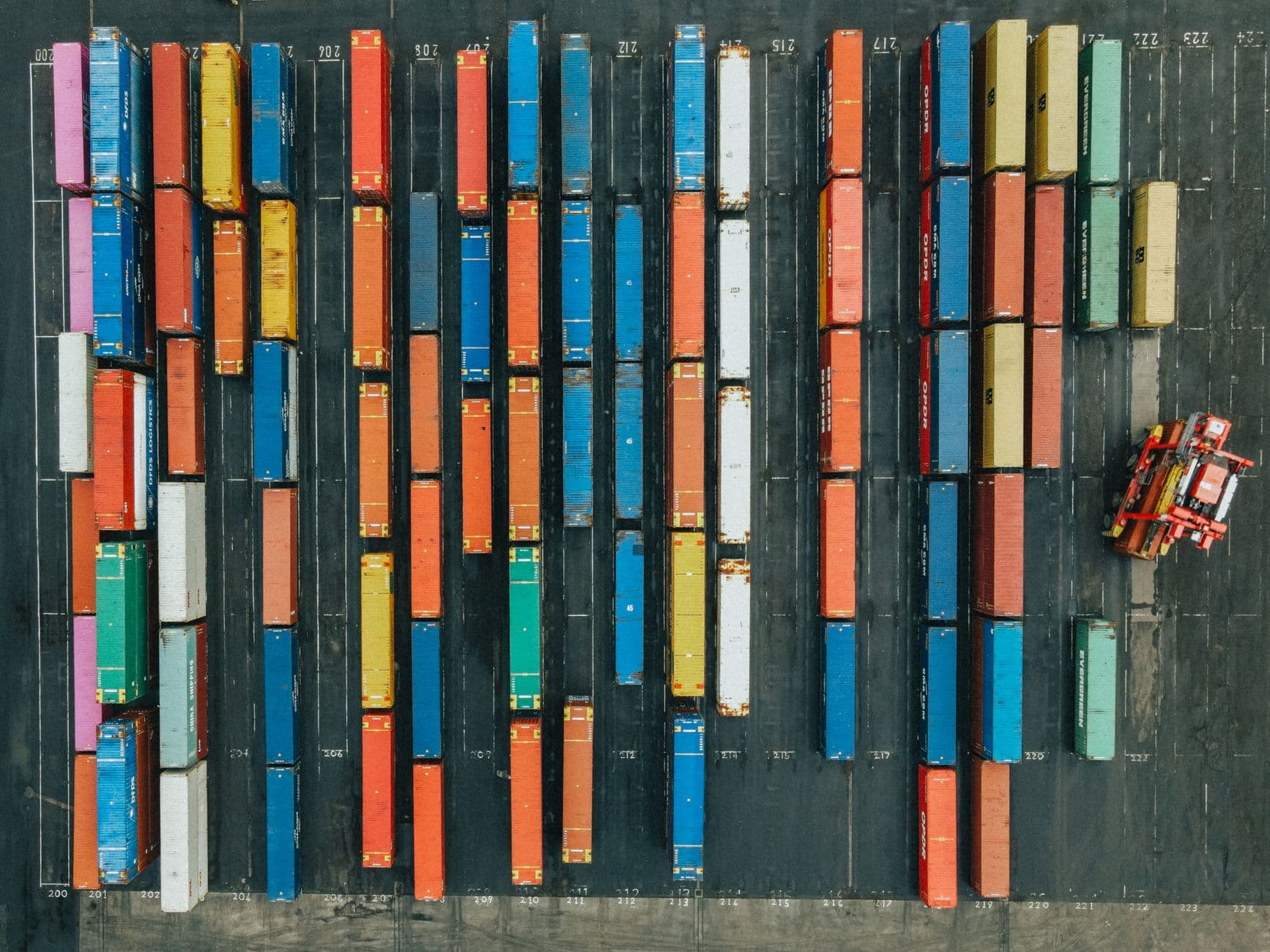
Photo by https://kaboompics.com/ on Pexels
Architecture as a Secondary Container
There is a strange inversion happening where the building is no longer the primary object of design. Instead, the building is becoming a protective shell for the logistics network. I’ve noticed that newer 'micro-apartments' are essentially designed around the reach of a delivery person. The kitchen is smaller because the 'box' brings the food. The storage is minimal because the 'box' holds your seasonal clothes in a warehouse somewhere else. The architecture is shrinking to fit the efficiency of the cardboard.
This isn't necessarily a conspiracy, but it is a massive, uncoordinated redesign of our environment. Architects used to talk about 'form follows function,' but today, form follows the logistics algorithm. If a drone needs a flat landing pad, the roof changes. If a delivery robot needs a 1:12 slope, the curb changes. We are sanding down the friction of our cities to make it easier for a square object to move through a round world. Is a city still a city if it’s just a high-speed sorting facility with beds?
What This Actually Means
We are moving toward a reality where urban planning is a reactive discipline rather than a proactive one. Instead of deciding how we want to live, we are adjusting our lives to the physical requirements of the things we buy. The pizza box is a perfect example because its dimensions haven't changed much in decades, yet it has forced the creation of entirely new vehicle types, bag designs, and heating technologies. It is a stubborn, unyielding square in a world of curves.
I’m curious to see where the breaking point is. At what point does the volume of packaging exceed the capacity of the city to process it? We see it every Tuesday on trash day—the 'cardboard canyons' that line the sidewalks. We are living in a temporary architecture made of paper and tape that is more influential than the stone and steel beneath it. We should probably start looking at the box as the primary inhabitant of the modern city, and ourselves as merely the people who open them.
Quick Answers
Is this really a new thing?
Logistics has always shaped cities—think of the silk road or shipping ports—but the 'last mile' brings that industrial logic directly into our living rooms and onto our sidewalks for the first time.
Why does the shape of the box matter so much?
Standardization is the engine of efficiency; if every package were a unique shape, our automated sorting and delivery systems would collapse under the complexity.
Can we design our way out of this?
Perhaps, but it would require prioritizing human movement over the speed of delivery, a trade-off most modern consumers are currently unwilling to make.


