The Fragility of the Bleeding Edge
We have traded structural integrity for density. In our terrestrial pursuit of Moore’s Law, we shrunk transistors to the point where a single stray subatomic particle can flip a bit and crash a system. This is a manageable inconvenience when you are holding a smartphone in a coffee shop; it is a death sentence for a probe crossing the heliopause. The recent full-exploit of the PlayStation 2’s security chip—a piece of silicon older than many of the engineers currently working at NASA—underscores a terrifying paradox. The very architecture we now consider a solved puzzle for hackers is the only hardware robust enough to survive the radiation belts of Jupiter.
The 128-bit Emotion Engine and the MIPS-based R5900 architecture were not designed for the stars, but they share a lineage with the hardened processors that are. Modern 3-nanometer processes are marvels of engineering, yet they are physically too delicate for the high-energy environment of deep space. When a cosmic ray strikes a transistor that is only a few dozen atoms wide, the result is catastrophic failure. Legacy chips, with their larger feature sizes and simpler logic gates, offer a physical cross-section that can withstand the bombardment of galactic cosmic rays without the constant need for error correction that plagues modern high-density flash memory.
The Architecture of Immortality
Space agencies do not use old chips because they are nostalgic; they use them because the cost of failure is absolute. The James Webb Space Telescope, a $10 billion instrument, runs on a RAD750 processor—a radiation-hardened version of the PowerPC 750 chip found in the original 1998 iMac. This is not a lack of ambition. It is a cold, calculated assessment of risk. The recent breakdown of the PS2's final security barriers proves that while software security eventually erodes under the pressure of time, the physical logic remains operational long after its creators have retired.
This "silica-based immortality" creates a massive divergence in how we define progress. On Earth, progress is measured in cycles per second and gigabytes per dollar. In the vacuum, progress is measured in decades of continuous uptime. The PlayStation 2 security breach matters because it reveals the absolute transparency of legacy systems. We now understand every gate, every timing attack, and every flaw in that 26-year-old hardware. For a hacker, that means total control. For a mission specialist, that means total predictability. You cannot fix a bug on a spacecraft 14 billion miles away if that bug is caused by a proprietary, black-box optimization in a modern AI-accelerated chip.
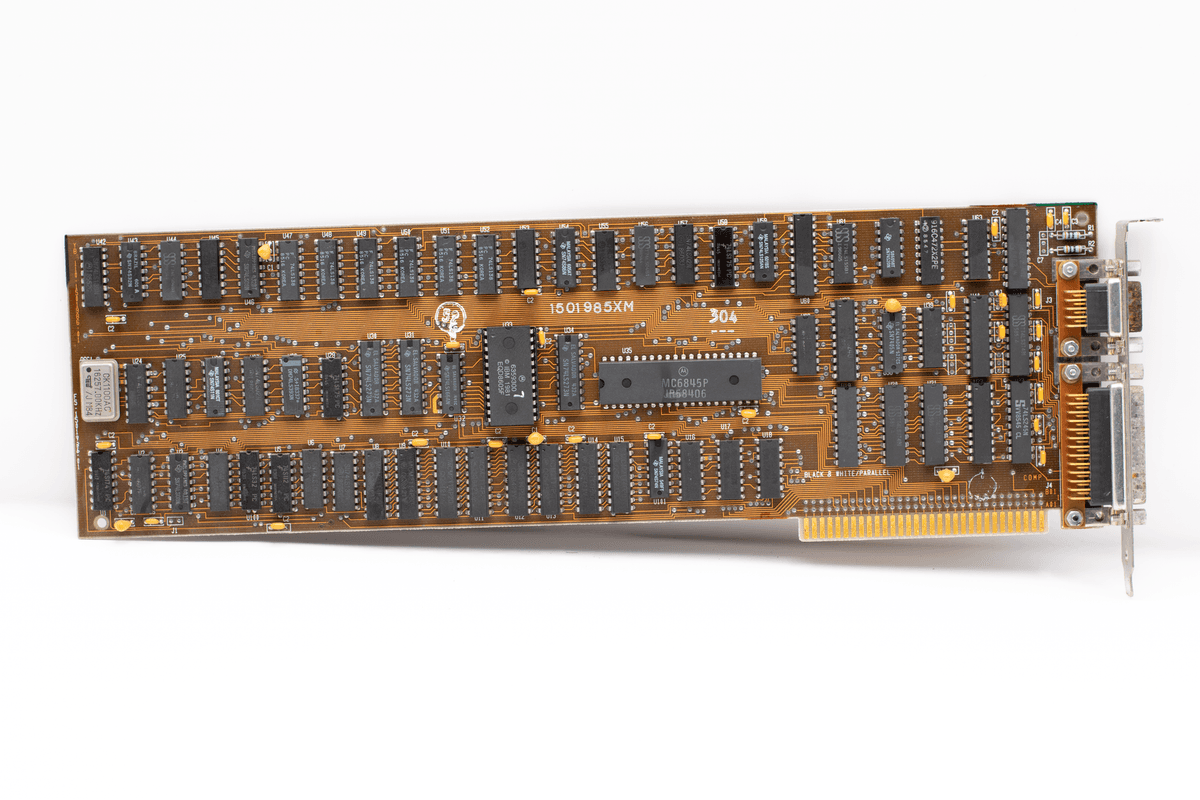
Photo by Nicolas Foster on Pexels
The Looming Crisis of Sophistication
We are approaching a bottleneck where the hardware required for advanced autonomous space exploration—the kind needed for real-time landing on Europa or navigating the asteroid belt—requires more processing power than radiation-hardened legacy chips can provide. Yet, we cannot simply send an NVIDIA H100 into a high-radiation environment and expect it to last a week. The industry is currently bifurcated: we have the fragile, ultra-fast silicon of the present and the robust, glacial silicon of the past. There is no middle ground being manufactured at scale.
As we look toward multi-decade missions, the "breaking" of the PS2 chip serves as a testament to the longevity of the MIPS era. If a console can sit in a closet for a quarter-century and still function perfectly enough to be exploited by modern tools, it possesses a mechanical integrity that modern devices lack. We are building a digital world on shifting sands, while our reach for the stars depends on the solid rock of 1990s logic. The crisis isn't just that we are running out of old chips; it's that we have forgotten how to build things that last long enough to be truly understood.
What This Actually Means
The survival of our species' presence in the solar system depends on hardware that the consumer market has deemed trash. We are entering an era where the most critical infrastructure in human history is powered by architectures that are no longer in mass production. The security exploit of the PS2 proves that we have reached the end of the line for this era of computing; we have fully mapped its genome.
However, the successor to this reliability does not exist. We are currently launching missions that will be expected to operate in 2050 using logic designed in 1996. If we do not find a way to bridge the gap between the ruggedness of the past and the power of the present, our exploration of deep space will hit a hard ceiling. We will be limited not by our fuel or our imagination, but by the physical fragility of our own intelligence.
Quick Answers
Why can't we just use modern chips in lead boxes?
Shielding adds immense weight and cost to a launch, and high-energy particles can still penetrate lead, creating secondary radiation showers that are sometimes more damaging than the original strike.
Does the PS2 exploit mean space probes are at risk?
No, because these systems are air-gapped by millions of miles of vacuum, but it means the "security through obscurity" of old hardware is officially over for any Earth-bound legacy systems.
Will we ever have fast, radiation-hard chips?
Research into gallium nitride and silicon carbide offers hope, but these materials are significantly more difficult to manufacture into complex processors than standard silicon.