
The Vertical Fortress is Calling
I spent three hours yesterday scrolling through a viral thread of Syd Mead’s original sketches and the 2015 production stills from Villeneuve’s Blade Runner sequel. Usually, looking at sci-fi art feels like window shopping for a dream, but this time it felt like looking at a real estate brochure for 2028. We are witnessing a quiet, expensive pivot in how we design cities, moving away from the sprawling horizontal public squares of the 19th century toward something I can only call "Fortress Urbanism."
It’s a shift where the sky is no longer a shared resource but a tiered commodity. When I look at the new developments in places like Singapore or the planned megastructures in the Middle East, I don't see the 'garden cities' of old. I see atmospheric control. I see architecture that treats the outside world as a hostile environment to be managed through high-tech filtration and vertical layering. Is it possible we’ve stopped trying to fix the climate and started trying to build our way out of it?
Why We Stopped Building Sidewalks
Horizontal space is messy, public, and increasingly hot. In a climate-stressed 2024, the traditional street level is becoming a liability. I wonder if this is why the 'Cyberpunk Urbanism' aesthetic is trending again—not because we like the dystopia, but because we’re subconsciously preparing for it. We are seeing a rise in 'podium' architecture, where the first five floors are a self-contained ecosystem of retail, air conditioning, and security, completely detached from the actual ground.
- The Line in Saudi Arabia is the ultimate expression of this: 170 kilometers of vertical isolation.
- Singapore’s 'Cloud Forest' architecture integrates nature, but only within a climate-controlled glass skin.
- Luxury residential towers in New York now feature 'wellness floors' that simulate outdoor light and air, rendering the actual New York air unnecessary.
This isn't just about wealth; it's about a fundamental change in our relationship with the horizon. If you can control the humidity, the temperature, and the light within a 1,000-foot tower, why would you ever design a park that requires a rain check? The 'Art of Blade Runner' isn't a warning anymore; it’s a manual for how to survive a planet that’s getting harder to breathe in.
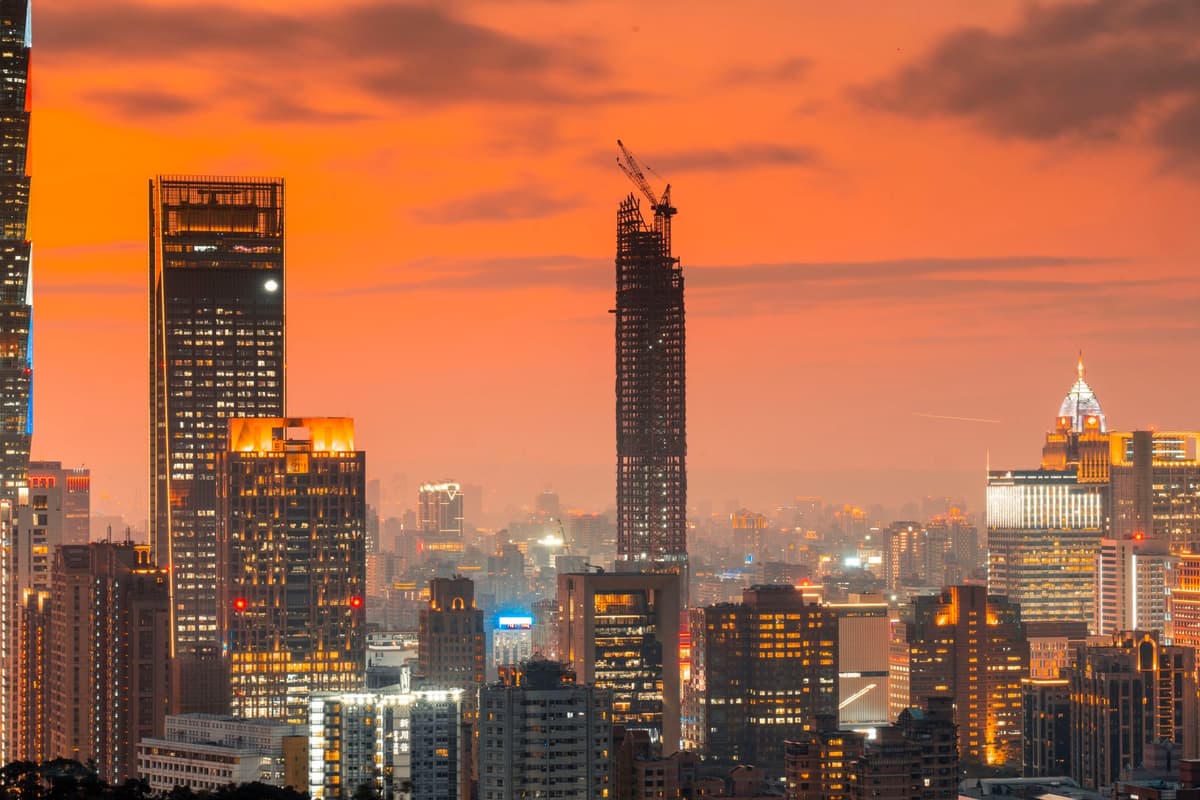
Photo by Jimmy Liao on Pexels
The Psychology of the Internalized City
What happens to our brains when the 'outside' becomes a visual background rather than a place we actually go? In the 2015 Blade Runner aesthetic, the characters are always framed by massive windows looking out at a world they can't touch. I’m seeing this reflected in modern interior design trends—huge, floor-to-ceiling glass walls in 'smart' apartments that offer a 4K view of a city the inhabitant rarely walks through. We are becoming spectators of our own environments.
There is a strange beauty in this isolation, which is why those concept art threads go viral. There’s a comfort in the idea of a high-tech cocoon. But I can't help but wonder what we lose when we stop designing for the 'chance encounter' on a street corner. If every path is a programmed elevator ride between climate-controlled zones, the city stops being a living organism and starts being a machine. Are we okay with living in a machine as long as the lighting is moody and the air is filtered?
I keep thinking about the $500 billion being poured into 'Neom' and similar projects. These aren't cities in the way London or Tokyo grew—organically, over centuries, responding to human feet. These are finished products, delivered like a software update. They prioritize vertical density because it’s easier to defend against the elements. It’s efficient, it’s beautiful in a cold way, and it’s deeply lonely.
What This Actually Means
We are entering an era where the 'quality of life' is being redefined as the 'quality of your enclosure.' The trending obsession with the Blade Runner aesthetic suggests we are finally admitting that the open-air, democratic city of the 20th century might be a luxury the 21st century can't afford. Architecture is becoming a form of life-support, and our aesthetic tastes are shifting to find beauty in that necessity.
I don't think this is a conspiracy, but I do think it's a surrender. We are trading the unpredictability of the horizontal world for the curated safety of the vertical one. It’s gorgeous to look at in a concept render, bathed in neon and artificial mist, but I wonder if we’ll miss the dirt. I wonder if, once we’re all tucked away in our high-tech fortresses, we’ll realize the view from the top is just a very expensive way to watch the world disappear.
Quick Answers
Is 'Cyberpunk Urbanism' actually happening?
Yes, but without the cool cyborgs; it's mostly appearing as vertical, self-contained luxury developments that use technology to bypass local climate issues.
Why is the Blade Runner aesthetic trending now?
It mirrors our current anxieties about climate change and urban density, offering a visual language for a world where we live 'indoors' even when we're outside.
What is the biggest downside to this style of building?
It destroys the 'public' in public space, creating a tiered society where the quality of your air and light depends entirely on your floor number.


