
The Persistence of the Unfinished War
Modern European cities are built on a layer of potential kinetic energy that most residents choose to ignore. We treat the end of World War II as a clean break in the timeline, but for urban planners and civil engineers, the war never actually ended; it just went dormant. An estimated 10% to 15% of the bombs dropped by Allied and Axis forces failed to detonate upon impact, sinking into the soft clay and silt of urban centers to wait for a catalyst.
This isn't a rare occurrence or a rural anomaly. In Germany alone, authorities defuse roughly 5,000 pieces of unexploded ordnance (UXO) every year. That is nearly 14 bombs a day. When we discuss the housing crisis or the slow pace of infrastructure development in the Eurozone, we rarely account for the fact that every major brownfield project begins with a literal minefield. The soil is not a neutral foundation; it is a repository of industrial-scale failure that demands millions in private and public investment before a single brick can be laid.
The Financial Architecture of Risk
The cost of modern urban development is inextricably tied to the cost of clearance. Before a developer can secure insurance for a high-density residential project in the Ruhr Valley or East London, they must undergo a non-negotiable process of magnetometry and borehole testing. This is not a bureaucratic hurdle. It is an existential financial requirement. A single 500-pound SC500 bomb found mid-excavation can halt a multi-million-euro project for weeks, requiring the evacuation of tens of thousands of people and the mobilization of specialized police units.
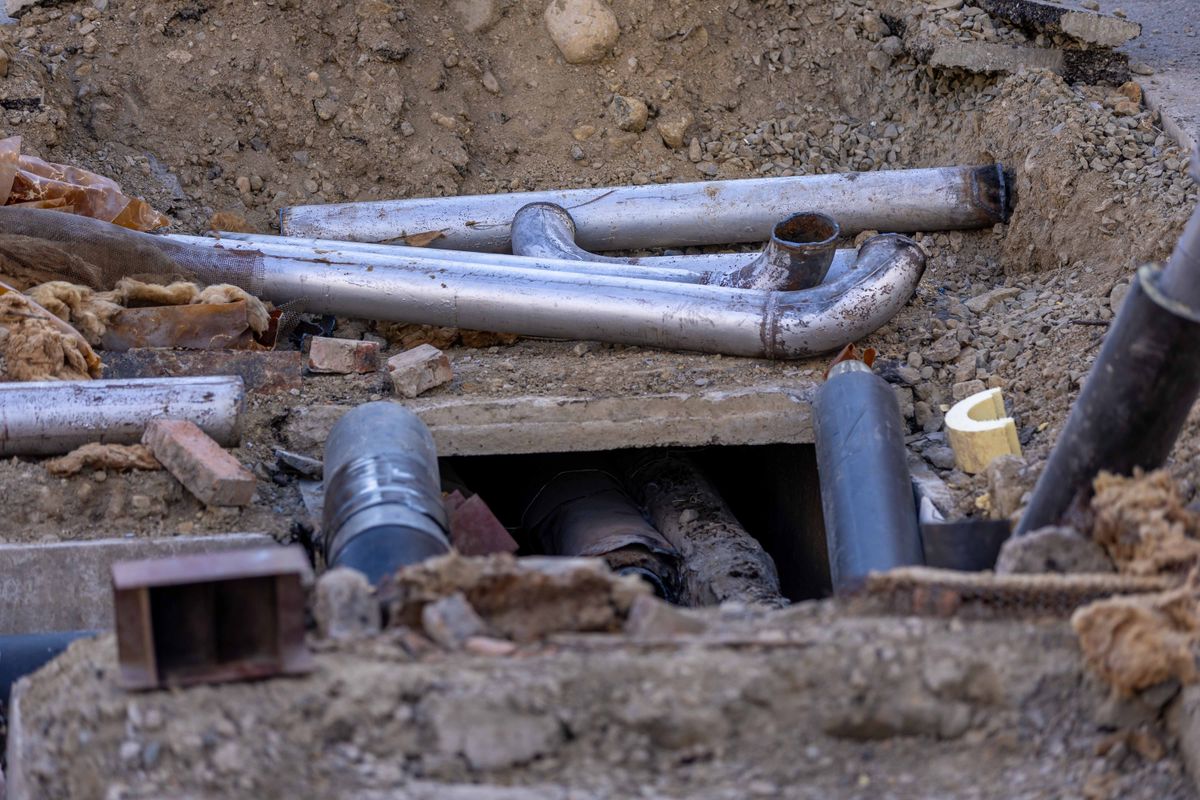
Photo by Sergei Starostin on Pexels
Because of this, the feasibility of high-speed rail and subway expansions is often dictated by the historical density of aerial bombardment. Planners must map the "bombing carpets" of 1944 against the transit needs of 2024. If a proposed route traverses a heavily bombed industrial zone, the projected cost per kilometer skyrockets to account for the slow, methodical pace of UXO mitigation. We are literally building our future around the missed targets of the past, allowing the flight paths of Lancasters and Heinkels to determine where our children will live.
The Engineering of Displacement
When a bomb is discovered, the response is a masterclass in logistical friction. On May 23, 2023, the discovery of a 250-kilogram British bomb in Düsseldorf forced the evacuation of 13,000 residents and disrupted the entire regional rail network. This is the hidden tax of the 20th century. We pay for it in lost productivity, diverted traffic, and the massive overhead of specialized explosive ordnance disposal (EOD) teams who operate with a level of precision that makes traditional construction look like child's play.
This reality creates a tiered system of urban development. Land that is "clean" or previously developed fetches a premium, while the high-risk brownfields—the very areas cities need to revitalize to combat sprawl—remain stagnant. The sheer weight of the risk modeling required to touch these sites scares away all but the largest institutional investors. Small-scale developers cannot afford the $50,000 to $200,000 initial survey costs, let alone the catastrophic liability of an accidental strike. The result is an urban landscape where the ghosts of the Blitz determine the density of our skyline.
What This Actually Means
We must stop viewing unexploded ordnance as an emergency and start viewing it as a permanent environmental condition. Much like seismic activity in California or flooding in the Netherlands, UXO is a foundational constraint of the European built environment. It is a physical manifestation of the fact that the consequences of total war are measured in centuries, not decades. We are living in a long-tail recovery period that requires a more sophisticated integration of historical data into modern GIS (Geographic Information Systems).
Ultimately, the "archaeological landmine" serves as a brutal reminder of industrial efficiency. These devices were manufactured by the millions to destroy cities, and eighty years later, they are still succeeding by paralyzing development and draining municipal budgets. True urban resilience in the 21st century requires us to acknowledge that the ground beneath our feet is still a theater of war. We are not just building on top of history; we are negotiating with it, one fuse at a time.
Quick Answers
How many unexploded bombs are still in the ground?
Estimates vary, but in Germany alone, experts believe over 100,000 unexploded bombs remain buried, with thousands more across the UK, France, and Belgium.
Why don't we just find them all at once?
Ground-penetrating radar and magnetometry have depth limits, and urban density makes wide-scale scanning impossible without tearing up existing infrastructure.
Who pays for the removal when a bomb is found?
Responsibility varies by jurisdiction, but it usually involves a complex split between the landowner for the survey and the state for the actual disposal and evacuation costs.

