
The Digital Godzilla Diet
For the last three years, the AI arms race has basically been a contest to see who could build the biggest, thirstiest, most expensive digital brain in history. It was the era of the 'Thicc Model.' We were told that unless your AI was trained on every single word ever written—including your embarrassing LiveJournal posts from 2004 and the back of a shampoo bottle—it wouldn't be smart. To run these things, you needed a data center the size of a small Midwestern state and enough electricity to melt a polar ice cap just to get a haiku about sourdough starter.
Enter the Small Language Model (SLM). Suddenly, tech giants are bragging about how little their models are. It’s like watching bodybuilders spend a decade getting as huge as possible, only to collectively decide that the peak of human fitness is actually being a very fast squirrel. Gemini 1.5 Flash and its tiny cousins are basically the CrossFit junkies of the AI world: they have zero body fat, they’re annoyingly efficient, and they can do backflips on your toaster while the giant models are still trying to lace up their oversized sneakers.
We are moving away from the 'God in a Box' model where you had to beg a cloud server for permission to fix your grammar. Now, the brain is moving into the device. This is the 'Edge Intelligence' pivot, which sounds like a corporate rebranding of a U2 album but is actually the most significant shift since we realized we could put cameras on phones. We are finally decoupling intelligence from the internet umbilical cord, and the results are going to be wonderfully weird.
Your Toaster Is Now A Philosopher
When I say these models are 'small,' I don’t mean they’re stupid. I mean they’ve been compressed like a clown car full of geniuses. A model like Gemini 1.5 Flash is designed to be lean enough to run on hardware that doesn't require its own cooling lake. This means we can finally put actual reasoning capabilities into things that have no business being smart. We’re talking about air-gapped industrial sensors that can look at a vibrating pipe and say, 'Hey, Greg, this thing is gonna explode in four minutes,' without having to check with a server in Northern Virginia first.
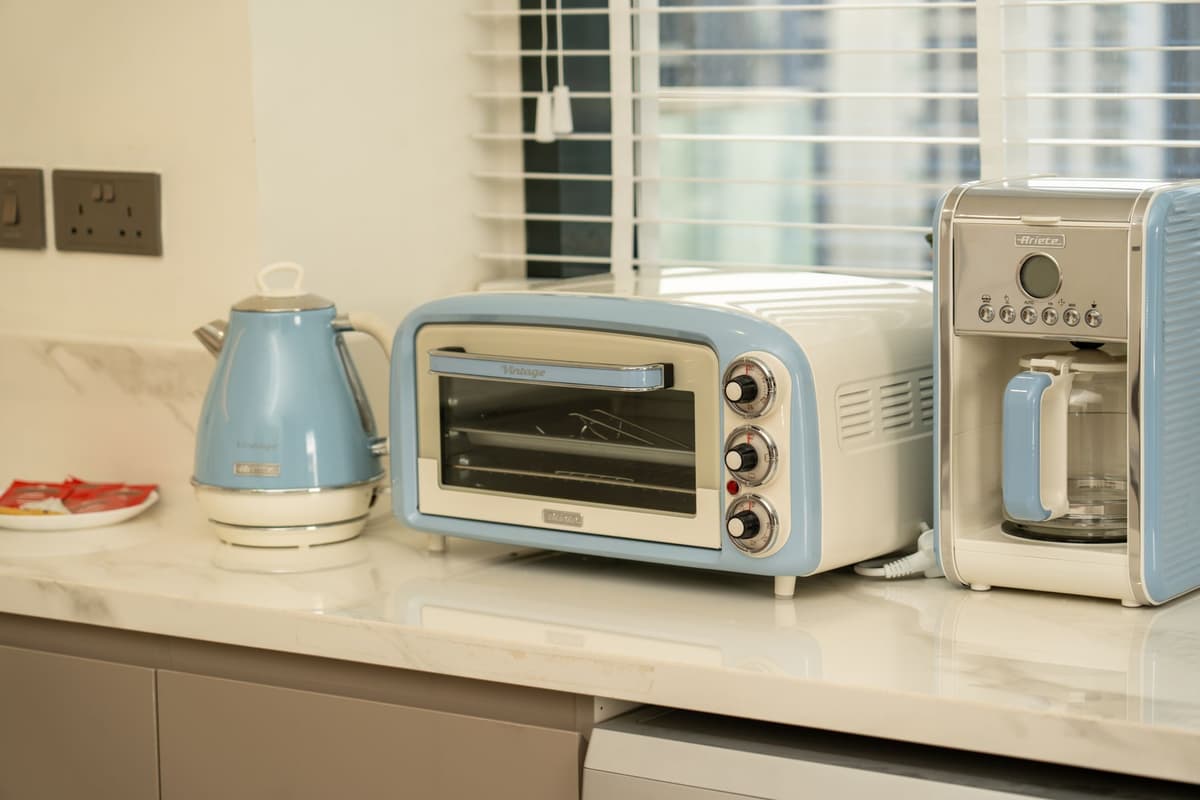
The comedy here is that we are giving high-level cognitive functions to objects that previously only had one job. Your medical device doesn't need to know the entire history of the Peloponnesian War; it just needs to know if your heart rhythm looks like a drum solo by a caffeinated toddler. By trimming the fat, these SLMs are becoming hyper-specialized ninjas. They are fast, they are cheap, and they don't need a Wi-Fi signal to tell you that you're about to have a very bad day.
This also solves the 'Privacy Nightmare' problem. Currently, using a massive LLM is like inviting a psychic into your house who insists on recording every room and sending the tapes to a billionaire's basement for 'training purposes.' With local AI, the psychic stays in your pocket, doesn't take notes, and forgets everything the moment you hit the power button. It’s privacy by design, mostly because the model is too small to remember your secrets and its own name at the same time.
The Death of the Data Center Monopoly
For a while there, it looked like the future of humanity was going to be owned by three companies with enough GPU clusters to simulate the Matrix. If you wanted to build an AI startup, you basically had to pay a 'compute tax' to the Big Cloud Overlords. But the rise of efficient SLMs is like a giant middle finger to the concept of the data center monopoly. If I can run a highly competent reasoning engine on a $500 laptop or a specialized chip in a tractor, the gatekeepers lose their keys.
This shift is going to lead to some truly absurd localized integrations. Imagine a smart fridge that doesn't just tell you the milk is expired, but uses a local vision model to watch you eat leftover pizza at 3 AM and gives you a disappointed pep talk based on your fitness goals. And because it's local, your shame stays between you and the appliance. No cloud, no logs, no targeted ads for cholesterol medication the next morning. Just you and a judging vegetable crisper.
We’re also looking at the end of the 'AI latency' era. You know that awkward three-second pause while the AI 'thinks' (read: sends your data across the ocean and back)? That’s gone. Local models react instantly. It’s the difference between asking a question to a person standing next to you and sending a letter to a hermit on a mountain and waiting for a carrier pigeon to return. Speed is the ultimate feature, and tiny models are the digital equivalent of a greyhound on espresso.
What This Actually Means
The 'Edge Intelligence' pivot means we are finally moving past the novelty phase of AI. We are stopping the madness of using a sledgehammer (GPT-4) to crack a nut (summarizing an email). By making models smaller, we’ve made them ubiquitous. They are becoming the 'dark matter' of software—invisible, everywhere, and incredibly functional without demanding your attention or your data privacy.
Ultimately, this is about democratization. When intelligence is cheap and local, it stops being a luxury service provided by a tech giant and starts being a basic utility, like electricity or plumbing. We are entering an era where your car, your watch, and your industrial drill press will all have enough 'brain' to be helpful without needing to phone home. It’s a smaller, faster, and much more private world.
In the end, we might realize that we didn't need a digital god to manage our lives. We just needed a few thousand very smart, very small ants working inside our gadgets. And honestly? I’d rather trust a smart ant than a god that tries to sell me a subscription to its personality every thirty days.
Quick Answers
Is my phone going to get hot enough to cook an egg?
Actually, no. These models are designed to be so efficient that they use less power than scrolling through a video feed of people doing 'unboxing' videos.
Does this mean I can use AI in a bunker?
Yes, absolutely. As long as you have power, your air-gapped, post-apocalyptic bunker can have a fully functional AI assistant to help you alphabetize your canned beans.
Are the big models dead?
Not yet. We still need the giant, expensive brains to do the heavy lifting, like discovering new drugs or figuring out why anyone likes black licorice, but for daily tasks, small is king.


