
The Luxury of Eating Like a Victim of the Plague
There is a specific brand of modern desperation that manifests as a desire to eat exactly like a person who died from a minor tooth infection in 1740 BCE. We call it 'gastronomic time-travel' because calling it 'making a mess with expensive mud' doesn't look as good on a Substack header. Scholars spent years decoding the Yale Babylonian Tablets just so a guy named Caleb in a Brooklyn loft could complain that his locally sourced mutton doesn't have the right 'historical musk.' It is the pinnacle of human achievement to use a $2,000 smartphone to document the process of cooking a stew that was originally designed to be edible enough to distract you from the fact that you might be drafted into a chariot war tomorrow.
We pretend this is about empathy or 'bypassing historical distance,' but let’s be honest: it’s about the aesthetic of the visceral. In a world where everything is a digital abstraction, we are pivotally obsessed with the physical reality of the past, provided that reality involves a curated shopping list and not, say, the actual life expectancy of the average Babylonian. There is something profoundly smug about recreating a recipe from 1750 BCE while knowing exactly where your next dose of antibiotics is coming from. It’s the ultimate LARP, but with higher sodium content.
The Cuneiform Shopping List
Imagine the hubris required to look at a clay tablet that survived four millennia of war, sand, and the collapse of empires, and think, "I bet this would pair well with a natural orange wine." These recipes aren't just instructions; they are the grocery lists of a civilization that didn't have a word for 'refrigerator.' The Babylonian Lamb Stew with Beets is the star of the show here, a dish that requires 'Samidu,' an ingredient we aren't even 100% sure about, but we’ve collectively decided it’s probably a type of wild onion because that fits the vibe.
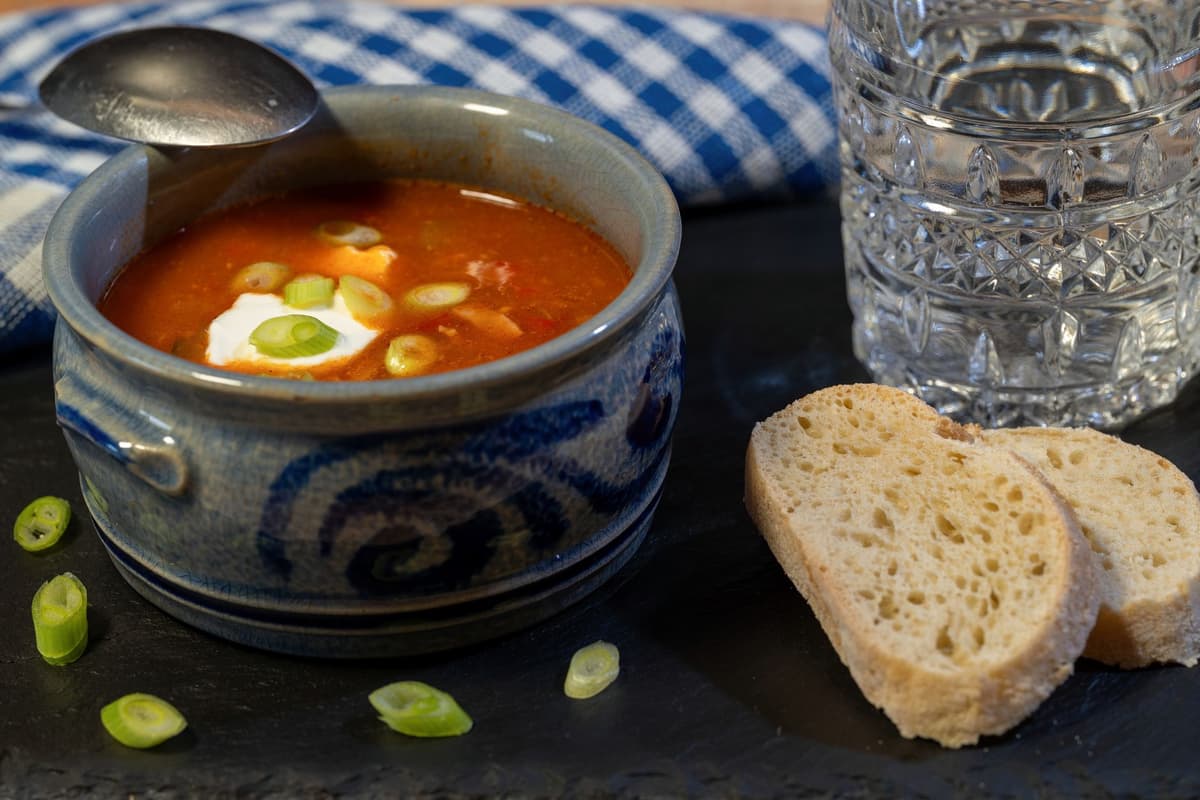
Photo by Gundula Vogel on Pexels
The process is intentionally grueling. You have to sear the meat, render the fat, and simmer the beets until the entire kitchen smells like a damp tomb. We tell ourselves we are experiencing the 'visceral reality' of the ancient world. In reality, we are experiencing the visceral reality of what happens when you follow a recipe that assumes you already know how to butcher a goat. The vagueness of the instructions—'cook until done'—is interpreted as ancient wisdom rather than what it actually was: a cook who didn't have a timer and was busy not dying of heatstroke.
Authenticity is a Marketing Term
We are obsessed with the 'precisely recreated' aspect of this, which is hilarious given that the original cooks were likely throwing in whatever hadn't rotted yet. Precision is a modern neurosis. The Babylonians weren't using digital scales to measure their coriander to the nearest gram; they were survivalists with a decent spice rack. By turning this into a high-brow academic exercise, we’ve stripped away the one thing that made it authentic: the sheer, unadulterated necessity of the meal.
- The original recipe calls for 'blood,' which most modern recreators replace with extra beets because 'sensory archaeology' has limits when it comes to the health department.
- We use stainless steel pots to simulate the heat distribution of a clay vessel over an open fire, which is like using a flight simulator to claim you’ve been to the moon.
- We post photos of the final product under ring lights, ensuring the 4,000-year-old aesthetic is properly optimized for an algorithm that didn't exist fifteen years ago.
This isn't a bridge to the past. It’s a mirror. We see a reflection of our own boredom and our desperate need to feel 'grounded' in something that isn't a glass screen. If we actually wanted the Babylonian experience, we’d eat the stew in the dark, while worrying about the salt content of our soil and whether the Hittites were about to burn down our village. Instead, we have a dinner party.
What This Actually Means
Our shift toward 'sensory archaeology' is a white flag. It’s an admission that the digital world has become so frictionless and hollow that we are willing to spend six hours making a soup that tastes primarily of dirt and iron just to feel a 'connection' to something real. We’ve automated every actual struggle out of our lives, so we have to invent new ones, like sourcing authentic Mesopotamian herbs in a suburban zip code.
It’s not that the stew is good—by most modern accounts, it’s fine, if you like boiled fat—it’s that the stew is heavy. It has weight. It has history. It occupies a physical space in a way that a TikTok trend or a crypto portfolio doesn't. We are so starved for a sense of permanence that we are literally eating the artifacts of a dead empire to see if we can digest their longevity.
Ultimately, the Babylonian Lamb Stew is the perfect metaphor for the 2020s. It’s an expensive, time-consuming way to arrive at a result that people 4,000 years ago would have traded for a single slice of mediocre pepperoni pizza in a heartbeat. We are looking backward because looking forward requires acknowledging that we’ve run out of ways to make the present interesting without raiding the pantry of the Bronze Age.
Quick Answers
Does the Babylonian stew actually taste good?
It tastes like someone tried to make borscht during a bronze-age supply chain crisis. It’s edible, but nobody is opening a franchise.
Why are people so obsessed with 'authentic' ingredients?
Because it’s a way to turn a hobby into a personality trait that requires more effort and money than just being a normal person.
Is this really 'time travel' through taste?
No, it's just dinner with a very long, very pretentious preamble that makes you feel smarter than people who order takeout.


