
Roughly 117 billion anatomically modern humans have walked the Earth since the emergence of our species, according to estimates by the Population Reference Bureau. You happen to exist among the eight billion alive right now, during an anomalous, fossil-fueled flash of industrial capacity. If humanity had an interstellar future spanning millions of years and trillions of lives, your presence at the microscopic dawn of that timeline would make you an extreme statistical anomaly.
You are almost certainly not an anomaly. You are an average observer drawn at random from a finite ledger.
This realization bridges two of the most unsettling thought experiments in modern science: the Carter-Leslie Doomsday Argument and the Fermi Paradox. For decades, astronomers scanning the skies with radio telescopes have asked why the Milky Way is silent when the basic building blocks for life are everywhere. The answer might not lie in the chemistry of abiogenesis or the mechanics of hyper-drives. It lies in the brutal math of population curves. We do not hear from extraterrestrial civilizations because typical observers belong to species that exhaust their demographic runway long before they cross interstellar space.
The Presumption of Mediocrity
Cosmology operates on the Copernican principle: Earth occupies no privileged place in the cosmos. We are orbiting an ordinary G-type star in an ordinary spiral galaxy among two trillion others. Yet when we ponder the future of our civilization, we abandon this modesty entirely. Futurists routinely sketch out Type II and Type III Kardashev civilizations that span Dyson spheres and colonize outer nebulae, generating quadrillions of conscious entities over cosmic epochs.
If those mega-civilizations exist, they break probability.
Imagine a lottery wheel containing every conscious observer belonging to a technological species that will ever exist. If civilizations routinely graduate to galaxy-spanning empires, 99.9999% of all observers reside in those sprawling post-planetary populations. The odds of a randomly selected observer finding themselves stuck on their species' birth planet, typing on a primitive keyboard before their civilization has even established a permanent base on a second planetary body, are vanishingly small.
Yet here we are. You are holding a ticket numbered roughly 110 billion out of a total sequence that probability suggests will not stretch very much farther. If we accept the premise that we are typical observers, the total count of humans who will ever exist is likely measured in the hundreds of billions, not trillions.
The Astro-Demographic Ceiling
The implications for astrobiology are chilling. The Fermi Paradox asks where all the alien civilizations are. The astro-demographic filter answers that they were precisely where we are now: pinned to their homeworlds, concentrated in a temporary demographic bulge, and running out of time.
Consider what it takes to sustain an observer-dense civilization:
- Exponentially increasing energy consumption per capita, which creates unavoidable thermodynamic byproducts.
- Biospheric stability, which is consistently disrupted by the extraction needed to support industrial scaling.
- Extreme technological centralization, where single failure points—microbial, computational, or nuclear—can zero out the census.
When we model alien species, we tend to extrapolate technological progress while ignoring demographic arithmetic. We assume that intelligence leads inexorably to expansion. But empirical reality shows that as societies become technologically complex and wealthy, their fertility rates crater, while their per-capita resource consumption peaks.
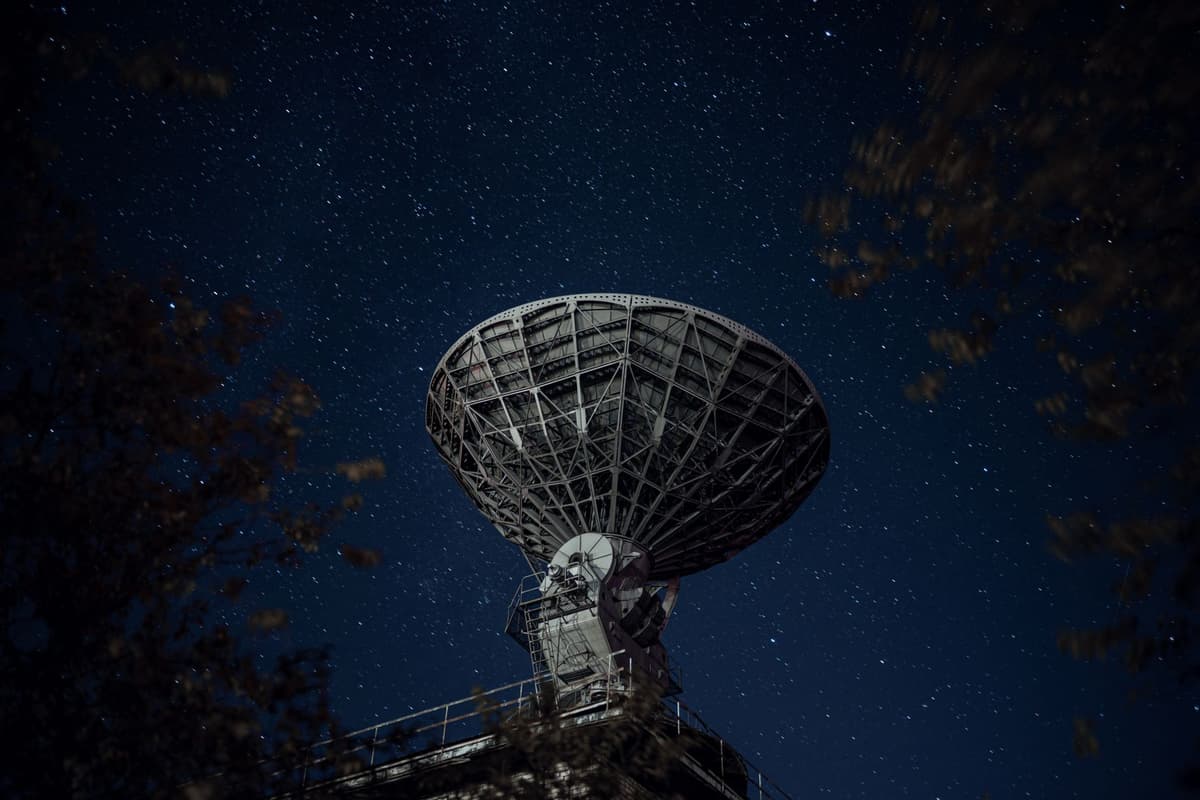
Photo by Igor Mashkov on Pexels
On Earth, total fertility rates have fallen by half across the globe over the last seventy years. We are already observing that technological maturation does not yield an infinite population of explorers. It yields a demographically brittle, aging society sitting atop an exhausted resource base. If this pattern is a universal socio-technological attractor, then civilizations do not explode into the galaxy. They plateau, age inward, and collapse under the weight of their own complexity.
The Geometry of Extinction
The classic formulations of the Great Filter assume a single catastrophic wall, like a thermonuclear exchange or an asteroid strike. The astro-demographic model suggests something far more structural: a statistical funnel that throttles every technological species at approximately the same demographic tier.
If the average technological civilization lasts for only a few thousand years and caps its cumulative population at a few hundred billion souls, the spatial density of active civilizations in our galaxy drops to near zero at any single point in time. The Milky Way is 100,000 light-years across. If a civilization flashes into existence, consumes its native fissile and fossil fuels, peaks at twenty billion simultaneous observers, and contracts, its entire life cycle is an imperceptible blink on the cosmological clock.
Two flashlights flicking on for a millisecond, an hour apart, on opposite ends of a continent, will never see each other. The silence of the universe is not evidence that life is rare. It is evidence that the duration of technological maturity is severely restricted by the math of finite populations.
What This Actually Means
We need to abandon the comforting myth of manifest destiny in space. The silence of the stars is not an open frontier waiting for our footprints. It is an echo chamber reflecting our own statistical limits.
If the astro-demographic filter holds true, humanity is currently passing through the thickest, most volatile band of its demographic existence. We are burning through non-renewable energy reserves and destabilizing our climate precisely at the moment our population sits at its absolute historic maximum. This is not an accident. It is the signature dynamic of an observer-average civilization running toward its limit.
The task ahead is not to invent warp drives or construct orbital colonies to rescue a fraction of the wealthy. The task is to defy our own probabilistic profile. Survival means learning how to decouple survival from perpetual growth, stabilizing our population and consumption before we reach the hard boundary that seems to have silenced every intelligence that preceded us.
We are looking into the cosmos through a telescope, but the glass is acting as a mirror.
Quick Answers
What is the Carter-Leslie Doomsday Argument?
It is a probabilistic argument stating that if all humans are born in a random order, any given human is likely to be born near the middle of human history rather than at the very beginning of an astronomical timeline.
Does this prove human extinction is imminent?
No, probability does not dictate absolute fate, but it establishes that an indefinite future containing quadrillions of humans is statistically improbable based on our current vantage point.
How does this solve the Fermi Paradox?
It suggests that technological civilizations peak quickly and remain confined to their home planets with relatively small cumulative populations, meaning they rarely exist long enough or spread far enough to be detected by contemporaries.


