The Great Rewiring of the Human Animal
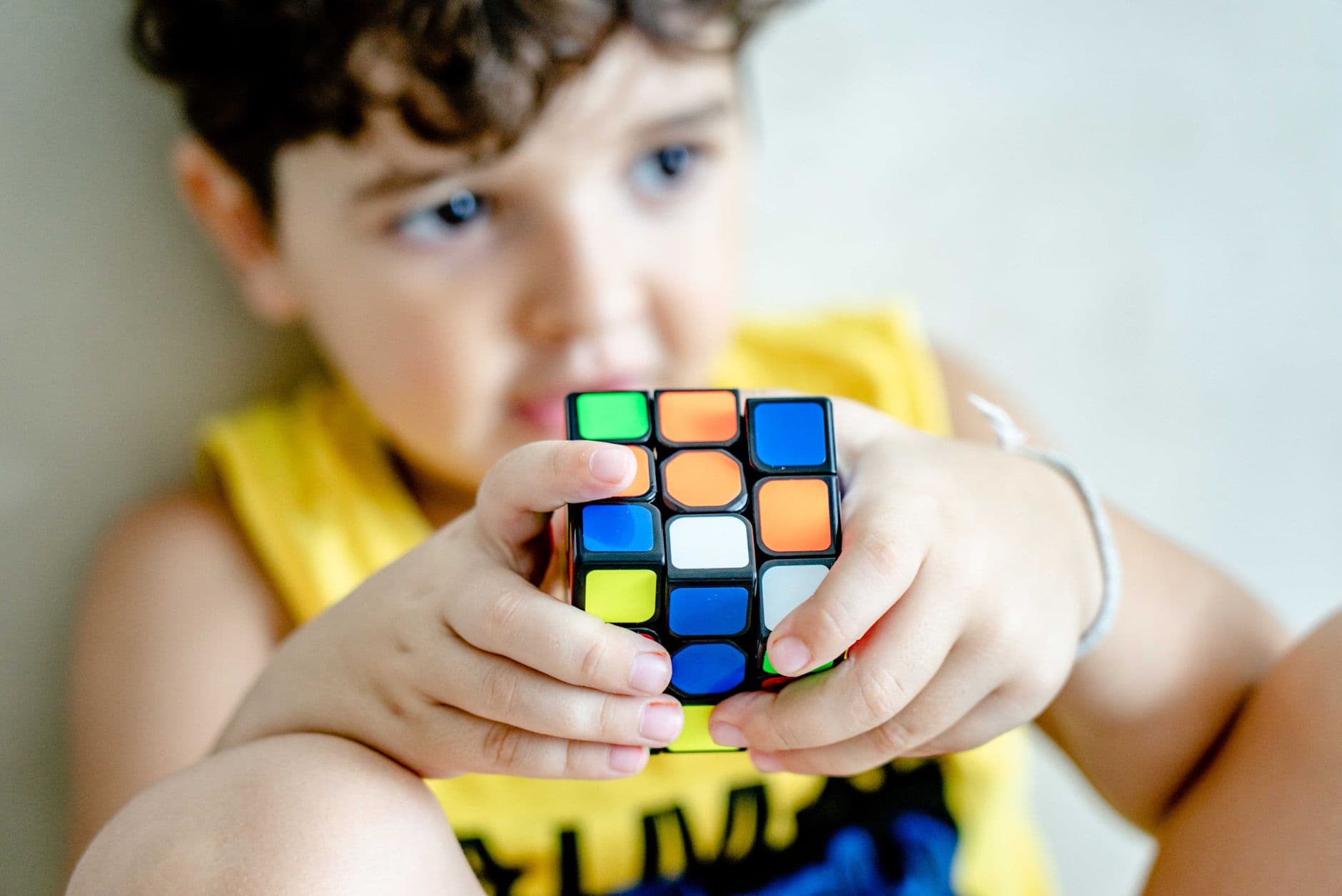
I spent three hours yesterday watching a toddler try to put a square peg into a round hole, and I realized I have no idea what was actually happening in his head. We like to think we remember being kids, but what we actually possess is a curated highlight reel of events, not the raw sensory data of what it felt like to exist in a world where everything was new. Neurobiologists call this the shift from high-plasticity exploration to high-efficiency exploitation, and it’s essentially a total system reboot that happens as we hit adulthood.
When we are young, our brains are in a state of constant 'synaptic pruning.' We have more connections than we need, and we are literally vibrating with the intake of new information. As we age, the brain decides it’s tired of being surprised. It builds thick, myelinated pathways—the neurological equivalent of paved highways—to make sure we can do things like drive a car or pay taxes without having a sensory meltdown. But in paving those highways, we seem to have built a firewall that keeps us from remembering the logic of the dirt paths we used to walk on.
The Efficiency Trap
Adults are obsessed with 'why.' We want to know the purpose, the outcome, and the ROI of every action. But a child’s brain operates on a 'what if' frequency that we physically cannot tune into anymore. If you look at the prefrontal cortex of a six-year-old, it’s a chaotic mess of possibilities. By age 25, that prefrontal cortex has locked down, prioritizing efficiency over discovery. We stop looking at the world as it is and start looking at it as a set of tools to be used.
This creates a massive disconnect in how we build things. We design playgrounds, schools, and even digital interfaces based on what we think children like, which is usually just a colorful, simplified version of adult reality. We treat children like 'small adults' who just haven't learned the rules yet, rather than acknowledging they are a different biological state of being entirely. We are trying to translate a poem from a language we no longer speak fluently.
Photo by SAULO LEITE on Pexels
The Architecture of Misunderstanding
Think about the typical classroom. It is designed for focus, sitting still, and linear progression—all things the adult brain values because they lead to productivity. However, a child's brain is biologically wired for high-entropy movement and non-linear associations. We are forcing high-plasticity hardware to run low-plasticity software, and then we wonder why kids are restless or anxious. We’ve forgotten that for a child, a hallway isn't just a transition space between Point A and Point B; it’s a terrain to be explored.
I wonder if this 'amnesia of maturity' is actually a survival mechanism. If we remembered the sheer, overwhelming intensity of childhood emotions—the way a dropped ice cream cone felt like a genuine cosmic tragedy—we probably wouldn't be able to function in a cubicle. We had to forget the depth of that feeling to make room for the shallow, consistent hum of adult responsibility. But in doing so, we’ve lost the ability to empathize with the very people we are supposed to be protecting and raising.
What This Actually Means
We need to stop assuming that our memories of being a child are accurate maps of childhood. They aren't. They are low-resolution postcards sent from a country we can never move back to. If we want to design better schools or more humane policies, we have to stop looking at our own pasts and start looking at the actual data of the developing brain. We need to respect the 'exploration' phase of life as its own valid state of being, rather than just a messy waiting room for adulthood.
Maybe the goal shouldn't be to 'understand' our kids by remembering ourselves. Maybe the goal should be to admit we are strangers to that way of thinking. Once we admit we are lost, we might actually start paying attention to the people who are still there. We might find that the 'inefficiency' of childhood is actually the most sophisticated learning process on the planet, and we are the ones who have become limited by our own 'maturity.'
Quick Answers
Is childhood amnesia just about forgetting events?
No, it's about the loss of the subjective experience—the way time, scale, and emotion felt before our brains prioritized efficiency over novelty.
Can we ever get that 'plasticity' back?
Not fully. While 'neuroplasticity' exists in adults, the sheer volume of synaptic connections in a child’s brain is a one-time biological event that ends after puberty.
How does this affect how we build cities?
We build cities for 'exploitation' (getting to work, shopping), which makes them hostile to 'exploration' (wandering, curiosity), the primary mode of the child's brain.


