
The Great Disappearance is Over
For decades, the sky was a black box. We knew birds went up, we knew some came down, and everything in between was a romantic mystery solved by grainy sketches and binoculars. That mystery just died a quiet, digital death. With the 'A Million Falcons' project, we aren't just tagging animals; we are effectively turning the avian population into a distributed sensor network that talks directly to the stars.
I keep thinking about the sheer scale of the handoff happening every second. A Peregrine falcon dives at 200 miles per hour, and a low-earth orbit satellite catches its heartbeat, its altitude, and its exact GPS coordinates with the same surgical precision used to track a stray bolt falling off the International Space Station. It makes you wonder if the birds feel the invisible tether of the silicon net we've cast over them. Are they still wild if every flap of their wings is a data point in a server farm in Virginia?
A Digital Twin of the Living World
What’s truly wild is the concept of the 'planetary-scale digital twin.' In engineering, you build a digital replica of a jet engine to predict when it might fail. Now, we are doing that with the planet’s lungs and veins. By tracking a million individual predators, we aren't just watching birds; we are watching the wind, the thermals, and the shifting availability of prey. If ten thousand falcons suddenly veer five degrees off their ancestral course, the model doesn't just record it—it asks why.
- The system handles over 1.4 billion data pings per month.
- Positional accuracy has shrunk from 'somewhere in this county' to 'this specific branch.'
- The lag time between a bird landing and a researcher seeing the data is now less than three seconds.
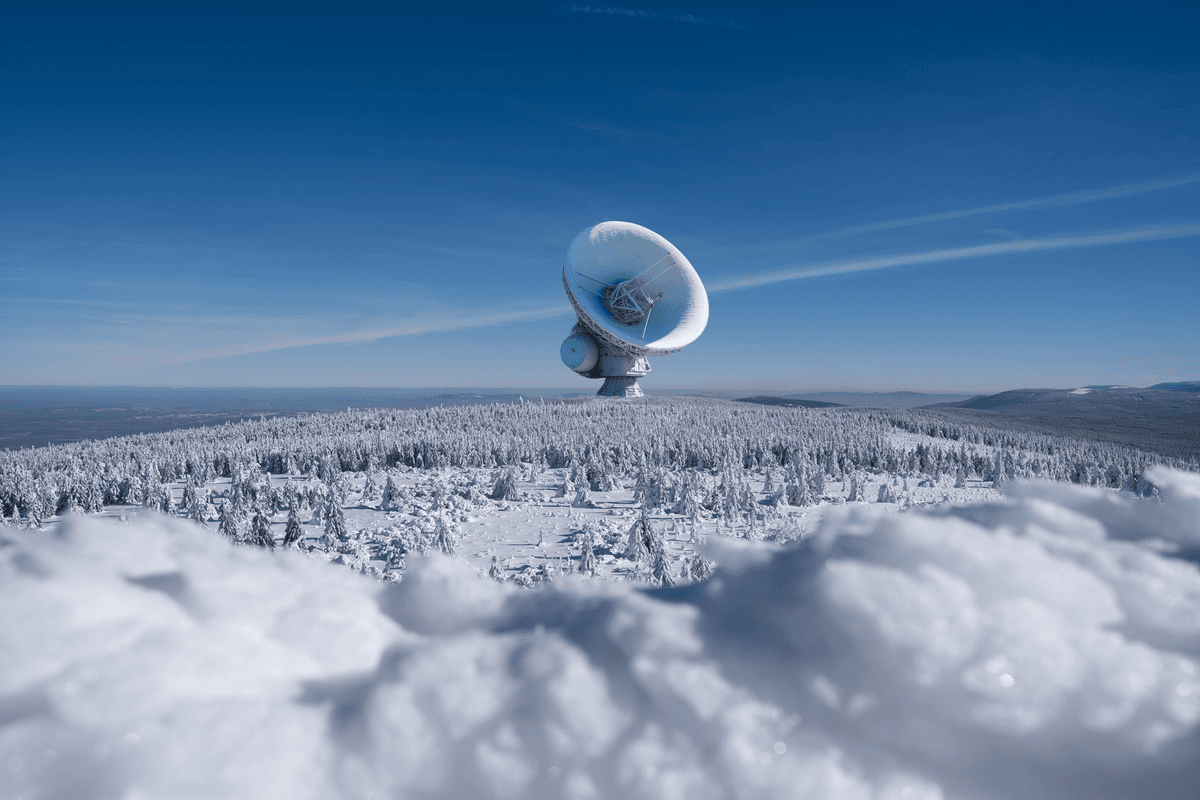
Photo by Radarsky 1984 on Pexels
This isn't just about saving a species from extinction anymore. It’s about using the birds as high-resolution probes for a world we are otherwise too blind to see. They find the micro-climates we miss. They detect the subtle shifts in barometric pressure that signal a storm three days before our ground stations do. We’ve turned the falcon into the ultimate atmospheric scout, a biological drone that never needs to be recharged by a human.
The Surveillance State of the Wild
There is a strange, itchy tension in knowing we’ve eliminated the 'missing' part of the wild. When we talk about surveillance, we usually mean cameras on street corners or tracking pixels in our emails. But applying that same level of scrutiny to the forest feels different. It’s a benevolent panopticon, sure, but it still feels like we’ve stripped away the last bit of privacy the earth had left. Can a creature truly be free if its entire life is a line on a dashboard?
I find myself staring at the maps produced by this project and seeing ghosts. You see these glowing neon threads stretching from the Arctic to the pampas of South America, thousands of them overlapping until the map looks like a nervous system. It’s beautiful, but it’s also a reminder of how much we have to manage now. We’ve moved from being observers of nature to being its frantic air traffic controllers.
What This Actually Means
We are approaching a moment where 'nature' is no longer something that happens to us, but something we monitor in real-time like a stock ticker. The integration of orbital telemetry and biology means the 'guessing game' of conservation is dead. We can see ecological collapse coming because the falcons will tell us. They are the early warning system for a planet that is running a fever, and for the first time, we have the hardware to actually listen to the scream.
This level of connectivity changes our fundamental relationship with the wild. We used to admire the falcon for its independence, its ability to vanish into the clouds and exist apart from our heavy-handed world. Now, the falcon is part of the grid. It’s a fascinating, necessary trade-off: we lose the mystery of the unknown, but we gain the data required to keep the world from falling apart. I just hope that in mapping every inch of their journey, we don't forget how to just look up and wonder where they're going.
Quick Answers
Is this actually spying on the birds?
Technically, yes, but for their own good; the GPS-to-satellite handoff allows researchers to intervene if a migratory path is blocked by new human infrastructure.
Does the gear hurt the falcons?
The latest transmitters weigh less than a nickel and are powered by solar film, meaning the birds don't even notice the 'backpack' they're wearing.
How does this predict ecological collapse?
Birds are 'sentinel species'; if their movement patterns break suddenly, it's a guaranteed indicator that the underlying food chain or climate has shifted violently.


