The Architecture of a Fidget
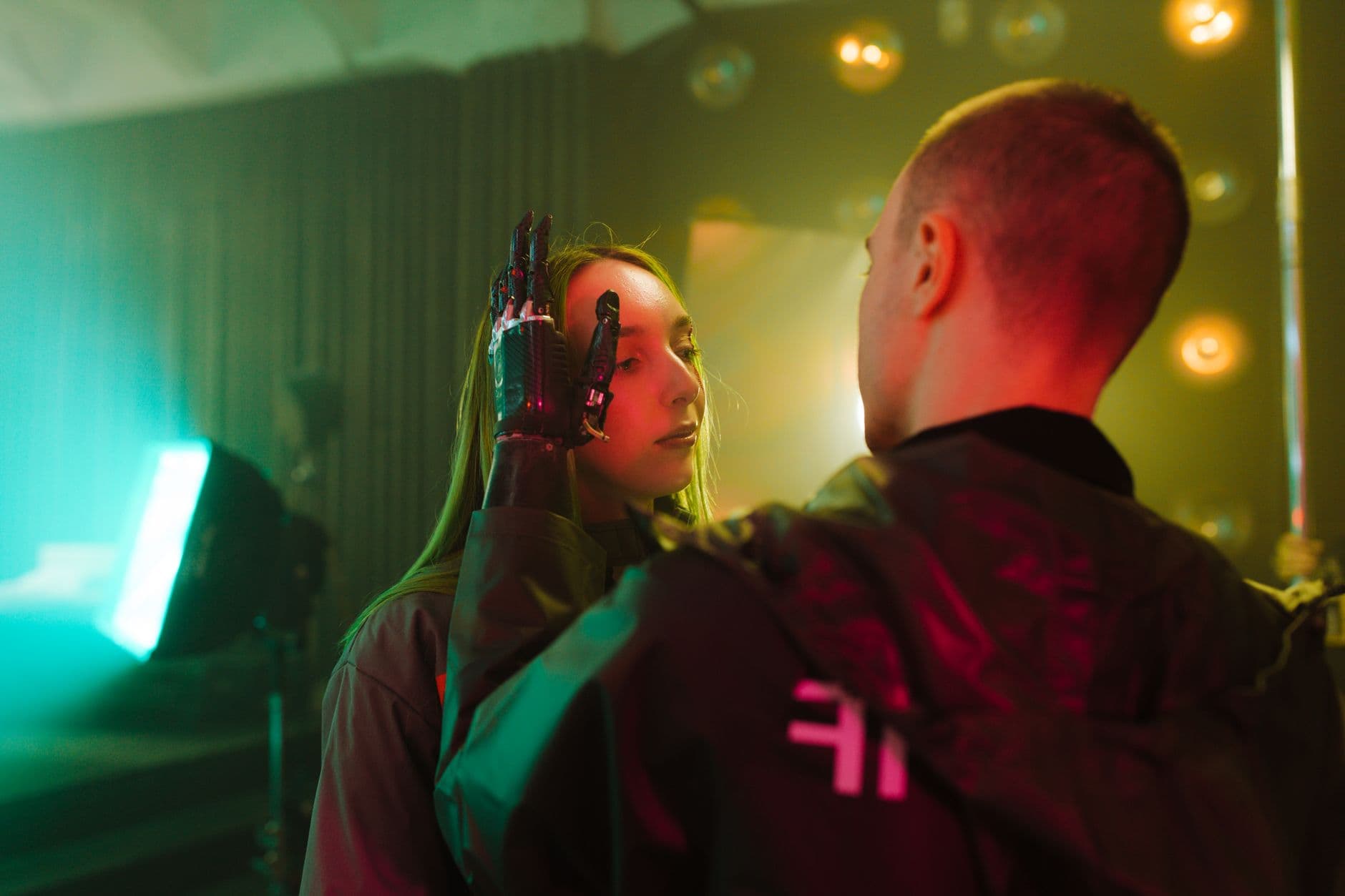
I keep thinking about the way my hands move when I’m trying to explain something complex. It’s a specific, stuttering rhythm that I’ve never consciously practiced. Now, multiply that by 4.5 billion. That is the scale of the recent data harvest from TikTok, where third-party entities are scraping the literal physical essence of a generation. We spent years worrying about facial recognition—the static map of our features—but we missed the bigger shift toward postural AI. This isn't about what you look like; it's about how you are.
Every time someone does a dance challenge or just rants into their front-facing camera, they are contributing to a massive library of human kinetic behavior. The scrapers aren't just looking for hashtags or sentiment anymore. They are extracting "behavioral fossils." They want to know the millisecond delay in your pupil dilation or the specific way your shoulder drops when you're lying. It feels like we're building a master key to human biology without ever asking who gets to hold it.
The Commodity of the Unconscious
There is something deeply strange about the idea that our micro-expressions are being liquidated into training sets for commercial prediction. If a model can analyze 500 million videos of people being "surprised," it eventually learns the biometric signature of genuine shock versus performed shock. I wonder if we’re reaching a point where an AI can detect a neurological condition or a mood shift before the person in the video even feels it. This isn't just data; it's a deep-tissue scan of the human experience.
Photo by Yassir Abbas on Pexels
Why is this happening now? Because the "data exhaust" we leave behind has become more valuable than the content we actually intended to share. The $12 billion industry surrounding biometric surveillance is hungry for raw material, and TikTok is the world’s most concentrated mine of human movement. We think we're participating in a social network, but we might actually be acting as unpaid motion-capture actors for a global simulation project.
Surveillance as a Mirror
I find myself wondering what a "postural profile" even looks like to a machine. Does it see me as a series of vectors? A heat map of anxiety? If a retail algorithm can predict a shoplifter based on a specific gait, or an employer can screen candidates based on "engagement posture" gleaned from social media archives, the world becomes a very narrow place. We’ve always had a public face and a private face, but this technology collapses the two. You can’t hide your nervous system.
- Postural AI tracks the skeletal geometry of your movement in 3D space.
- Micro-expression analysis measures muscle movements lasting less than 1/25th of a second.
- Spatial behavior modeling predicts where you will move next based on subtle weight shifts.
It’s a bizarre form of immortality. Long after these users delete the app, their kinetic signatures will live on in the weights and biases of a model used to sell insurance or optimize a checkout line. I’m curious if we will eventually develop "anti-scraping" movements—new ways of walking or blinking designed specifically to confuse the sensors. A digital camouflage for the physical body.
What This Actually Means
We are witnessing the birth of a world where our most involuntary actions are the most valuable. The 4.5 billion posts scraped aren't just a privacy breach; they are a fundamental redefinition of what constitutes "public" information. Your heartbeat, your limp, and your squint are now part of the global commons, harvested by companies that don't need your name to know exactly who you are.
I don't think this is a conspiracy as much as it is a natural progression of the "more is better" data philosophy. We’ve run out of words to scrape, so now we’re scraping the way we breathe. It makes me wonder if, in ten years, we’ll look back at the era of "private movement" with the same nostalgia we have for the era of private phone calls. The ghost is out of the machine, and it’s learning how to walk just like us.
Quick Answers
Is my specific TikTok account being used?
If your profile is public, it has almost certainly been scraped by multiple third-party research and commercial entities. Once the data is pulled, it exists in private datasets regardless of whether you delete your original post.
What is postural AI actually used for?
It ranges from benign uses like improving CGI in movies to more invasive applications like "intent prediction" in retail security and health diagnostics performed without patient consent.
Can I opt out of this biometric scraping?
Currently, there is no standardized way to opt out of third-party scraping once content is public. Setting your account to private is the only definitive way to stop future data harvesting of your movements.


