
The Death of the Asset-Light Illusion
For two decades, the venture capital playbook was defined by a single, seductive premise: scale without mass. Software-as-a-Service (SaaS) allowed companies to build billion-dollar empires with little more than a fleet of laptops and a credit card for AWS credits. That era ended the moment Large Language Models became the primary engine of value. We are witnessing a fundamental shift back to heavy industry, where the winners are defined by their ability to secure, deploy, and optimize physical compute at a scale that dwarfs the infrastructure projects of the mid-20th century.
Groq’s recent $640 million Series D—led by BlackRock and Neuberger Berman—is a signal that the market has realized software is no longer the bottleneck. The bottleneck is the physical throughput of tokens. By building a Language Processing Unit (LPU) that prioritizes inference speed over the general-purpose flexibility of a GPU, Groq is doing more than just selling chips. They are participating in a massive land grab to own the layer of the stack that everyone else must eventually rent. This is not a software race; it is a race to build the most efficient utility company in history.
The CapEx Moat and Vertical Dependency
Traditional SaaS companies are currently trapped in a dangerous cycle of dependency. While they focus on fine-tuning models and building slick user interfaces, they are doing so on rented ground. The "Hardware-as-a-Software" model, pioneered by companies like Groq and CoreWeave, creates a capital expenditure moat that is nearly impossible to cross. When a startup raises half a billion dollars specifically to deploy proprietary hardware, they aren't just seeking growth; they are making it mathematically impossible for their customers to ever achieve vertical independence.
Consider the economics of this transition. In the old model, your biggest expense was payroll. In the new model, your biggest expense is the "compute tax" paid to the providers of specialized silicon.
- The barrier to entry for a new infrastructure player is now measured in billions, not millions.
- Established software firms are finding that their margins are being eaten by the very infrastructure they rely on to function.
- Compute-as-a-Service providers are effectively becoming the new landlords of the internet, extracting rent from every interaction that passes through an AI model.
This creates a permanent class of "infrastructure-poor" companies. If you do not own the silicon, and you do not own the data center, you are merely a tenant. In a world where latency and cost-per-token determine market share, the tenant is always at the mercy of the landlord’s pricing power.
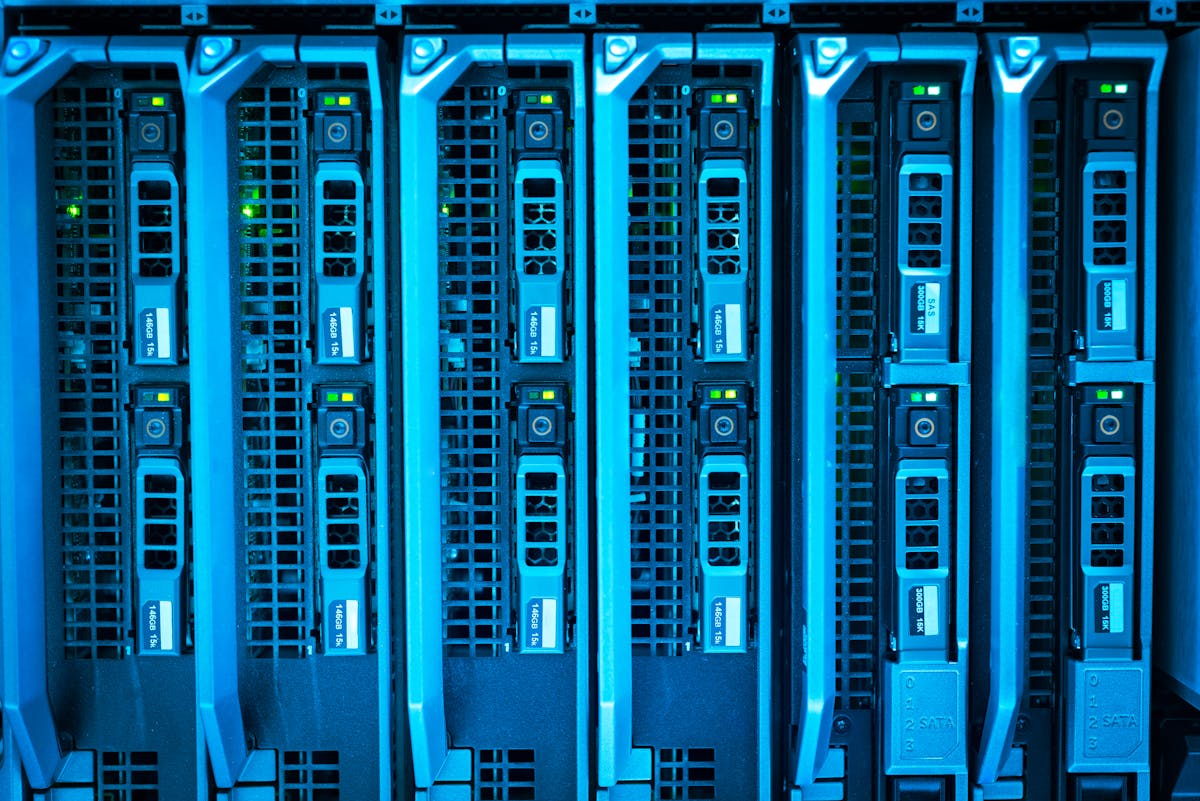
Photo by panumas nikhomkhai on Pexels
The Geopolitics of the Data Center
This shift toward deep-tech dominance has implications that reach far beyond Sand Hill Road. The concentration of compute power is becoming a matter of national economic security. When a single company can provide inference speeds that are an order of magnitude faster than the status quo, they become a systemic chokepoint. The $445 million and $640 million rounds we are seeing today are the opening salvos in a struggle to determine which entities will control the flow of machine intelligence.
We are seeing a return to the "Big Iron" philosophy of the 1960s, but with a crucial difference. Unlike the IBM mainframes of the past, today’s specialized hardware is designed to be accessed via API, masking the sheer physical complexity of the operation. This abstraction is a strategic choice. By making hardware feel like software, these companies are encouraging the entire tech ecosystem to build on top of them, deepening the dependency until it becomes irreversible.
What This Actually Means
The consolidation of power in the AI era will not happen at the application layer. It will happen at the physical layer. The massive capital rounds flowing into Groq and its peers represent a bet that the future belongs to those who own the hardware, while the software layer becomes a commoditized race to the bottom. If you are building a software company today, you are essentially a customer of a few massive, capital-heavy entities that control your COGS (Cost of Goods Sold) and your performance ceilings.
Ultimately, the "Hardware-as-a-Software" movement represents the end of the democratic era of tech startups. The next generation of giants will not be started in garages; they will be forged in fabrication plants and cooled by industrial-grade HVAC systems. The moat is no longer a clever algorithm or a network effect—it is a $500 million pile of specialized processors that nobody else can afford to buy or build.
Quick Answers
Is Groq just a chip company?
No, Groq is an infrastructure provider that uses its proprietary LPU architecture to offer high-speed inference as a service, bypassing the traditional bottlenecks of general-purpose GPUs.
Why are venture capitalists suddenly interested in heavy hardware?
Because they recognize that software margins are collapsing as compute costs rise, and the only way to capture long-term value is to own the physical infrastructure that powers AI.
Can traditional SaaS companies survive this shift?
Only if they can find a way to differentiate on something other than model performance, as the underlying compute will be a rented utility they cannot control.

