
The Athletic Proxy for Digital Sovereignty
Central Asia is currently executing one of the most calculated geopolitical shifts of the 21st century under the guise of sports diplomacy. When the 2026 Asian Games commence in Aichi-Nagoya, the focus for Astana and Tashkent will only partially be on the medal count. The real objective is the 'Digital Corridor,' a strategic initiative designed to transform these landlocked nations into the primary data-transit hub between the manufacturing powerhouses of East Asia and the consumer markets of Western Europe.
For decades, the flow of information across Eurasia followed the path of least resistance, which almost always meant crossing Russian soil. The war in Ukraine and the subsequent isolation of the Russian economy have turned that path into a liability. Kazakhstan and Uzbekistan are now positioning themselves as the 'Middle Corridor' for data, mirroring the physical trade routes that avoid Russian territory. The visibility of the Asian Games provides the perfect international stage to prove their operational maturity to Japanese, South Korean, and European investors.
Decoupling from the Northern Route
The technical reality of this shift is grounded in the Trans-Caspian Fiber Optic project. This involves laying 380 kilometers of cable across the seabed of the Caspian Sea to link Kazakhstan with Azerbaijan, eventually reaching Europe via Turkey. By the time the 2026 Games arrive, Kazakhstan aims to have significantly reduced its reliance on the Russian 'Transit Europe-Asia' (TEA) network. This isn't just about speed; it's about sovereignty and the elimination of a single point of failure that Moscow has controlled since the collapse of the Soviet Union.
Uzbekistan is following a similar trajectory, investing over $2.5 billion in its digital infrastructure to increase international internet bandwidth by a factor of ten. President Shavkat Mirziyoyev understands that to become a regional leader, Uzbekistan must move beyond exporting cotton and gas. It must export latency. By positioning their athletes on the podium in Japan, these nations are signaling to the world that they are stable, modern, and ready to handle the world's most sensitive data traffic.
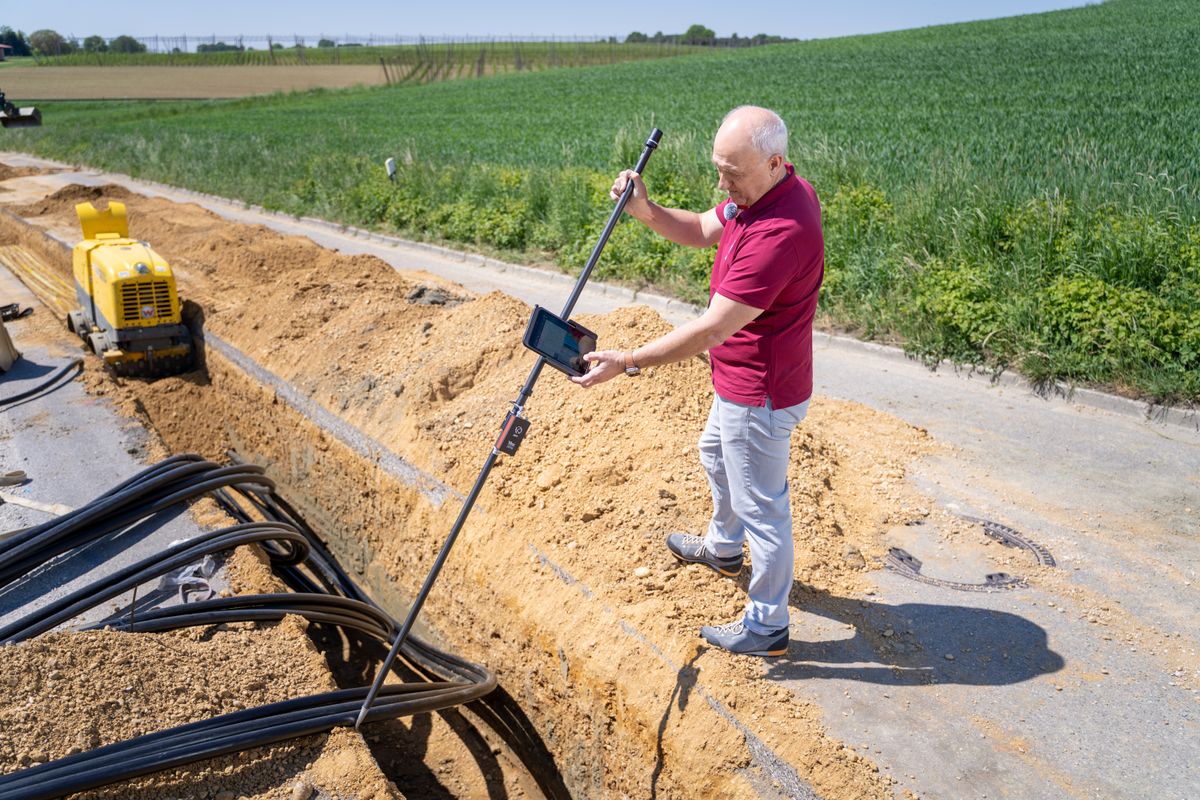
Photo by Michael Singer on Pexels
The Investment Pitch in Nagoya
The 2026 Games will serve as a massive trade show for Central Asian infrastructure. While the world watches the gymnastics and swimming events, the real work will happen in the hospitality suites where Kazakh and Uzbek officials meet with Japanese tech giants like SoftBank and NEC. These nations are pitching a future where 5G networks and massive data centers in the Eurasian steppe serve as the backbone of the global digital economy.
- Kazakhstan has already attracted $1 billion in investment for data center construction as of early 2024.
- Uzbekistan's 'Digital Uzbekistan 2030' strategy aims to increase the share of the digital economy in GDP by two times.
- The Middle Corridor project seeks to reduce data latency between Beijing and London to under 100 milliseconds without touching a single Russian server.
This is a long game. The Asian Games provide a concentrated window of global attention where these nations can shed their 'post-Soviet' labels. They are rebranding as the 'Digital Heartland,' a neutral, high-tech bridge that is essential to the resilience of the global internet. If they succeed, the 2026 Games will be remembered as the moment the iron curtain of data finally fell.
What This Actually Means
The shift toward a Digital Silk Road 2.0 represents the final stage of Central Asian independence. By decoupling their internet backbone from Russia, Kazakhstan and Uzbekistan are ensuring that their economic futures are no longer tied to the political whims of the Kremlin. They are choosing a multi-vector foreign policy that prioritizes integration with the global West and the technological East simultaneously.
We are witnessing the emergence of a new kind of geography where physical distance matters less than the path of a fiber-optic cable. The 2026 Asian Games are the catalyst for this transformation, providing the geopolitical cover and the high-visibility platform necessary to secure the multi-billion dollar deals that will define the next fifty years of Eurasian history. The competition in Japan isn't just for gold; it's for the right to control the flow of the world's information.
Quick Answers
Why use a sports event for digital infrastructure deals?
Major international sporting events provide high-level access to foreign investors and heads of state in an informal environment, making it the ideal venue for pitching large-scale, multi-national infrastructure projects like the Digital Corridor.
How does this bypass Russia?
Currently, most data between Europe and Asia travels via Russian terrestrial cables; the new 'Middle Corridor' uses fiber optics under the Caspian Sea and through the Caucasus to create a direct link that avoids Russian territory entirely.
Are these digital goals realistic by 2026?
Yes, because the physical laying of cables is already underway, and both Kazakhstan and Uzbekistan have passed significant legislative reforms to protect foreign data investment, aiming for full operational status to coincide with the Games' visibility.

