The Most Productive Afternoon of Your Life
For a few glorious, accidental hours, a segment of the Australian population was liberated from the crushing weight of 2024. Telstra’s network had a small stroke, and suddenly, timestamps were resetting to a year when the most stressful thing on the internet was deciding who made it into your MySpace Top 8. People weren't just seeing a wrong date; they were experiencing a digital phantom limb. It turns out that when your phone thinks it’s 2006, the modern internet—that shrieking, AI-generated, ad-choked dumpster fire—doesn't quite know how to talk to you.
Naturally, instead of being annoyed that their multi-thousand-dollar glass slabs were technically malfunctioning, people reacted like they’d just been handed a one-way ticket to a tropical island. There is something deeply pathetic about a society where a server error is treated like a religious experience. We are so desperate to escape the relentless 'For You' page that we’re willing to embrace a world where we had to pay 25 cents per SMS and the Razr was the height of industrial design.
The Low-Resolution Psychological Refuge
Why did this glitch trigger such a massive wave of 'digital displacement' content? Because the internet of 2006 was a quiet room compared to the 2024 sensory deprivation tank filled with strobe lights. Back then, you went to the internet; now, the internet follows you into the bathroom, the bedroom, and the grave. The 2006 timestamp represented a time before the Infinite Scroll was patented in 2006 (ironic, isn't it?) and before every single interaction was a data point being sold to a firm in Virginia.
We’ve reached a point where 'simplicity' is a luxury good. We see a grainy, low-res interface and we don't think 'obsolete technology,' we think 'mental peace.' It’s the digital equivalent of buying a $14 sourdough loaf because it reminds you of a peasant lifestyle you would actually hate if you had to live it. We crave the friction of the old web because friction meant we could eventually stop. You can't 'finish' the internet in 2024. In 2006, you eventually ran out of things to look at and went outside.
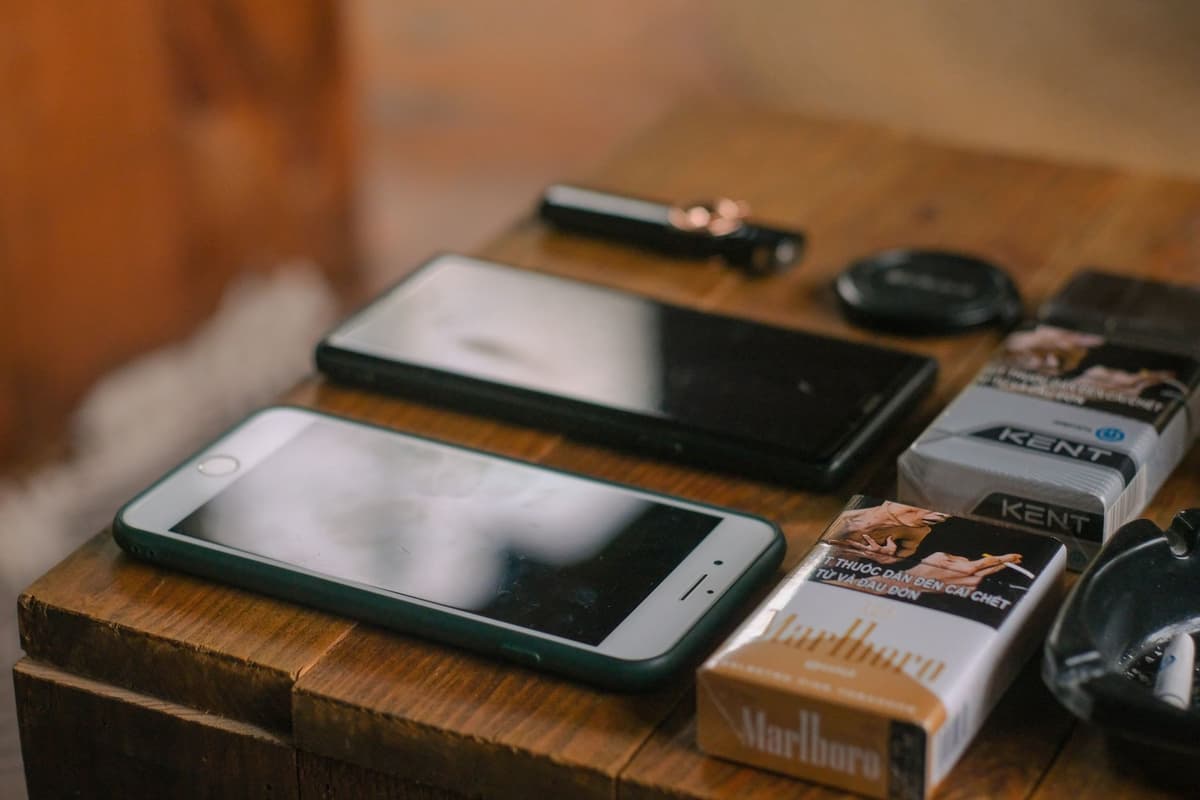
Photo by Dương Nhân on Pexels
Paying for the Privilege of Less
There is a hilarious irony in watching people post about this 'temporal glitch' on TikTok—an app that is the literal antithesis of everything 2006 stood for. You’re using a hyper-advanced algorithm to tell the world how much you miss when things were basic. It’s like using a private jet to fly to a protest about carbon emissions. The 'Y2K aesthetic' isn't about the fashion or the music; it's a desperate, clawing hope that we can somehow uninstall the last eighteen years of social engineering.
Market researchers are salivating over this. They see your 'digital displacement' and they don't see a cry for help; they see a niche for 'minimalist' phones that cost $700 and do absolutely nothing. We are now being sold the absence of features as a feature. The tech industry spent two decades making us addicted to notifications, and now they’re going to sell us the 'Focus Mode' to turn them off. It’s a brilliant business model: break a man’s legs, then charge him for the crutches.
What This Actually Means
This glitch wasn't a technical failure; it was a mirror. It showed us that we are all collectively exhausted by a digital landscape that demands 100% of our attention, 100% of the time. We don't actually want to go back to 2006—nobody wants to deal with 3G speeds or T9 predictive text again—but we do want to go back to a version of ourselves that wasn't constantly twitching for a notification. We want the world before it was optimized for engagement.
Unfortunately, the clock fixed itself. The timestamps returned to 2024, the ads resumed their positions, and the dopamine loops tightened back up. We’re back in the world of generative AI and short-form video brain rot. Telstra fixed the 'glitch,' but they couldn't fix the fact that we all secretly hoped it would stay broken just a little bit longer.
Quick Answers
Was my phone actually hacked during the glitch?
No, a server just had a momentary identity crisis and forgot what decade it was. Your data is fine, though it's already been sold to six different brokers anyway.
Why does everyone miss the early 2000s web so much?
Because back then, the internet was a tool you used, not a parasite that lived in your pocket and told you what to be angry about every morning.
Can I manually set my phone to 2006 to feel better?
Sure, but your banking apps will stop working and you’ll realize very quickly that nostalgia doesn't pay the bills or provide directions in real-time.