
The Ladle and the Crown
Hamburg’s Rathaus is a massive, neo-Renaissance beast of a building finished in 1897, and at first glance, it looks like every other European seat of power. It has the requisite green copper roof and a tower that reaches 112 meters into the sky, screaming for attention. But when you get close enough to actually look at the facade, the visual hierarchy starts to do something very strange and very deliberate.
Typically, these buildings are stone-carved resumes for the ruling class. You expect the emperors—and they are there, all twenty of them, from Charlemagne to Wilhelm I—but they aren't alone. Tucked into the ornamentation are the people who actually made the city run: the fishermen, the merchants, and famously, the kitchen boy. It’s a 19th-century version of 'civic legibility' that feels remarkably progressive, almost as if the architects were trying to bake the social contract into the masonry itself.
I find myself wondering why we stopped doing this. We moved away from literal statues because they felt too heavy or too tied to old-world ego, but in the process, did we lose the ability to see ourselves in our public buildings? There is a specific kind of magic in seeing a stone carver acknowledge a cook on the same wall as a king. It suggests that every person walking through that square has a permanent, physical stake in the gears of government.
The Paradox of Modern Transparency
Today, we’ve traded sandstone and statues for steel and floor-to-ceiling glass. The architectural logic is simple: glass equals transparency, and transparency equals democracy. If you can see the bureaucrats sitting at their desks from the street, the building is 'open.' But I’m starting to suspect that glass is actually the most opaque material we’ve ever used.
When you walk past a modern glass city hall, you don't see the 'kitchen boy' or the modern equivalent of the essential worker. You see your own reflection, or you see the glare of the sun, or you see a sterilized, climate-controlled interior that looks exactly like a corporate hedge fund office. It’s transparent in a literal sense, but it’s socially silent. It tells you nothing about who lives there, what the city values, or where you fit into the story.
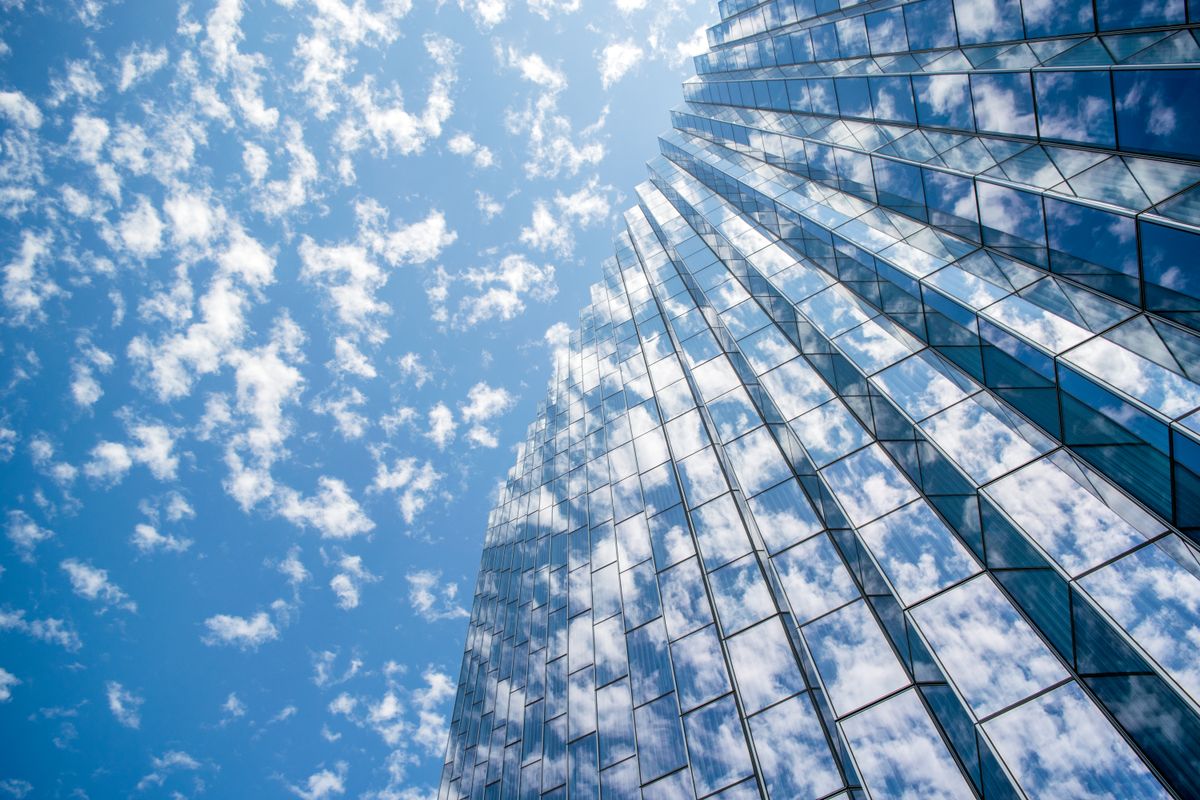
Photo by Thomas Parker on Pexels
Hamburg’s Rathaus cost about 11 million gold marks at the time—a staggering sum—but it bought a visual language that people could actually read. You didn't need a degree in architectural theory to understand that the building was claiming to represent the whole of society. Modern civic architecture, by contrast, often feels like it's trying to disappear. It’s so afraid of making a definitive statement about power or identity that it ends up saying nothing at all, leaving us with 'non-places' that feel like they could be in Singapore, London, or Des Moines.
Reading the Walls
There is a concept in urban planning called 'civic legibility'—the idea that a city should be easy to navigate and understand. I think we need to apply that to the soul of a building, not just its floor plan. The Hamburg Rathaus uses its facade as a textbook. It tells the story of the Great Fire of 1842 and the subsequent rebirth of the city. It uses 647 rooms to house a complex bureaucracy, but it uses its skin to talk to the person standing in the Rathausmarkt.
I’m curious if we can ever get back to that level of detail without it feeling like a theme park. Every time a modern building tries to add 'character' through ornamentation, it often feels like a cheap imitation or a 'tribute' that lacks the conviction of the original. We’ve become very good at building things that are efficient and 'light,' but we’ve forgotten how to build things that are heavy with meaning.
- The Rathaus was built on 4,000 oak piles because the ground was too soft.
- It survived the firestorms of WWII while much of the surrounding city was leveled.
- The central courtyard features a fountain of Hygieia, built to commemorate the 1892 cholera epidemic.
These details aren't just flourishes; they are scars and memories. When a building is made of glass, it doesn't scar. It just breaks or gets replaced. There’s no room for the kitchen boy in a curtain wall system. There’s only room for the grid.
What This Actually Means
We are currently living through a crisis of civic identity, and I don't think it’s a coincidence that our public buildings look more like private tech campuses every year. If we want people to believe in public institutions, those institutions need to look like they belong to the public. That doesn't mean we need to start carving marble statues of delivery drivers—though, honestly, why not?—but it does mean we need to move past the 'glass box' as the default setting for democracy.
The Hamburg Rathaus succeeded because it was brave enough to be specific. It wasn't trying to be a universal space; it was trying to be Hamburg’s space. It recognized that a city is a messy, hierarchical, beautiful collection of people, from the guy at the top to the kid in the kitchen.
Maybe the next great era of architecture won't be defined by how much light we can let in, but by how much of ourselves we can see in the walls. We need buildings that act as mirrors of our collective life, not just literal mirrors reflecting the street back at us. We need to find our version of the kitchen boy again.
Quick Answers
Why put a kitchen boy on a government building?
It was a deliberate move to represent the 'Stände' or the various classes and guilds of the city, signaling that the wealth of Hamburg was built by everyone, not just the elite. It turned the building into a visual contract between the governors and the governed.
Is glass architecture actually bad for democracy?
Not inherently, but it often prioritizes literal sightlines over symbolic inclusion. While you can see inside, the lack of human-scale detail or local storytelling can make the building feel cold and indifferent to the specific culture of the city.
Can modern buildings have 'civic legibility' without being old-fashioned?
Yes, but it requires moving away from minimalism. Architects are experimenting with textured facades, local materials, and integrated public art that tells a story, though it rarely reaches the comprehensive narrative scale of 19th-century stonework.


