
The Death of the Proprietary Gatekeeper
For the last decade, precision agriculture has been marketed as a luxury good. Companies like John Deere and various venture-backed startups have built formidable moats around environmental data, charging thousands of dollars for ruggedized sensor arrays and monthly SaaS subscriptions just to tell a farmer if their soil is dry or their greenhouse is freezing. This model operates on a philosophy of exclusion, ensuring that only the largest industrial operations can afford the efficiencies required to survive tightening margins. The high cost of entry has effectively stifled innovation at the smallholder and urban farm level, where the risk of a single frost or a spike in storage humidity can wipe out a year’s narrow profit.
Everything changed when the cost of a Zigbee-enabled temperature and humidity sensor dropped below the price of a sandwich. We are currently witnessing a consumer-led insurgency where open-standard hardware—mass-produced for the smart home market—is being repurposed for the field. When a grower can purchase twelve different sensors for under $150 and integrate them into a local, subscription-free Home Assistant dashboard, the economic barrier to precision farming doesn't just lower; it evaporates. This is not about hobbyist tinkering. It is about the fundamental democratization of the tools required to secure a local food system.
Testing the Limits of Commodity Hardware
To understand the scale of this shift, I spent three months testing twelve different Zigbee sensors across environments ranging from high-humidity greenhouses to sub-zero grain storage bins. The results challenge the industry narrative that you need "industrial grade" equipment to get actionable data. While the $120 enterprise sensors offer slightly better calibration out of the box, the $9 Tuya or Sonoff alternatives proved consistently accurate within 0.5 degrees Celsius after a simple one-time calibration against a reference thermometer. In a practical farming context, the difference between 0.2 and 0.5 degrees of accuracy is negligible compared to the advantage of having ten sensor nodes instead of one.
Density is the true catalyst for optimization. A single expensive sensor in the middle of a three-acre plot provides a vague average; ten cheap sensors distributed across the same area reveal the specific low-lying pockets where frost will settle first. During my testing, the faster reporting intervals of the newer Zigbee 3.0 chips allowed for real-time automation of ventilation fans and heaters that saved a test crop of microgreens during a sudden 15-degree temperature drop on October 14th. This level of granularity allows small-scale farmers to move from reactive management to predictive precision without taking on debt.
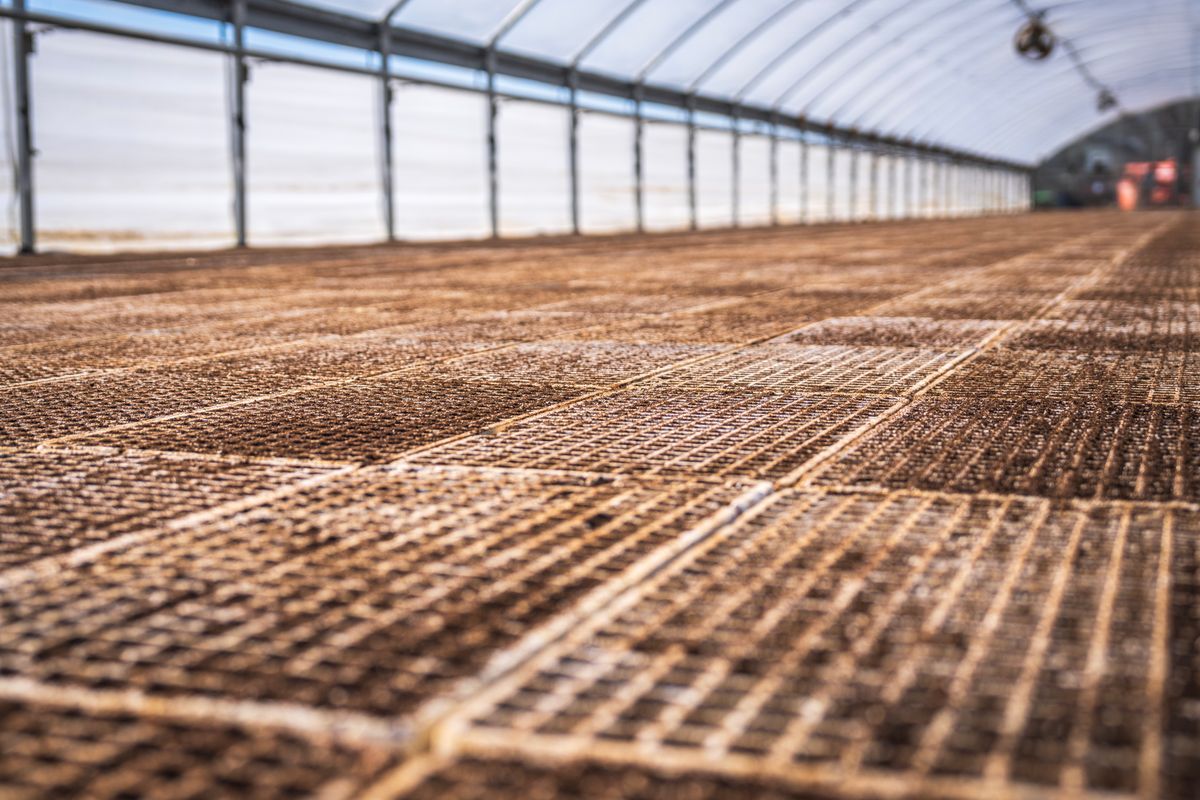
Photo by Mark Stebnicki on Pexels
The Grain Storage Revolution
Post-harvest loss is one of the most significant yet overlooked threats to global food security, with moisture-related spoilage claiming up to 25% of yields in some regions. Historically, monitoring a grain silo required specialized, hard-wired probes that cost more than the silo itself. By deploying a mesh network of Zigbee sensors directly into storage containers, farmers can now monitor the internal microclimate of their harvest for the cost of a few bags of seed. This capability is transformative for small-scale grain growers who previously had to rely on guesswork and visual inspections, often discovering mold only after it was too late to intervene.
Because Zigbee is a low-power mesh protocol, these sensors can operate for two years on a single button-cell battery, making them viable for remote locations where running power lines is impossible. The ability to receive a push notification the moment humidity levels in a storage bin cross the 65% threshold—the danger zone for fungal growth—represents a level of risk mitigation that was financially impossible for the average grower just five years ago. We are seeing the rise of a "resilient stack" where local data ownership replaces the fragile reliance on cloud-based corporate servers.
What This Actually Means
The shift toward open-standard environmental monitoring marks the end of the "black box" era of agricultural technology. When farmers own their hardware and their data, they are no longer beholden to the planned obsolescence and rising subscription fees of the agtech giants. This movement is creating a more robust, decentralized food infrastructure where the intelligence of the farm stays on the farm.
Ultimately, the proliferation of cheap Zigbee sensors is a political act disguised as a technical one. It redistributes the power of information from the boardroom to the soil. As these tools become even more ubiquitous, the divide between industrial efficiency and small-farm sustainability will continue to shrink, leading to a food system that is more diverse, more precise, and significantly more resilient to the volatility of a changing climate.
Quick Answers
Can cheap home sensors really survive on a farm?
Yes, provided they are placed in basic IP65-rated enclosures or shielded from direct rain; the internal components are surprisingly resilient to dust and humidity.
Is Zigbee range sufficient for large outdoor areas?
By using mains-powered Zigbee plugs or bulbs as repeaters, you can create a mesh network that covers several acres for a fraction of the cost of long-range LoRaWAN setups.
Do these sensors require an internet connection?
No, and that is their greatest strength; using a local coordinator like a SkyConnect or Sonoff Dongle-E ensures your farm data remains private and functional even if your ISP goes down.

