Your House Is About to Become a Giant Pinecone
For centuries, we’ve looked at trees and thought, "Wow, look at that sturdy, immobile object that occasionally drops a heavy branch on my Corolla." We were wrong. Trees are actually slow-motion gymnasts. They possess something called 'tension wood,' a specialized tissue that acts as a biological muscle, allowing them to pull themselves upright after a storm or lean toward the sun like a teenager trying to catch a faint Wi-Fi signal. It’s not just growth; it’s a mechanical flex.
Now, architects and engineers are looking at this cellulose-based 'muscle' and thinking: "What if we built a skyscraper that sweats?" They want to use the same mechanical mechanism to create building envelopes that open and close based on humidity. Imagine a window shutter that doesn't need a motor, a battery, or a confusing remote control from 2004. It just senses moisture and curls up like a dead spider, but in a way that’s somehow sustainable and chic.
The Cellulose Gym Rat
The secret sauce here is a G-layer (gelatinous layer) in the wood fibers that shrinks or expands. When the tree gets thirsty or the humidity drops, these fibers contract, pulling the trunk into a better position. It’s essentially a hydraulic system made of salad. If you’ve ever seen a wooden door swell shut in the summer, you haven’t witnessed a structural failure; you’ve witnessed a door trying to return to its natural state of being a very confused, flat tree.

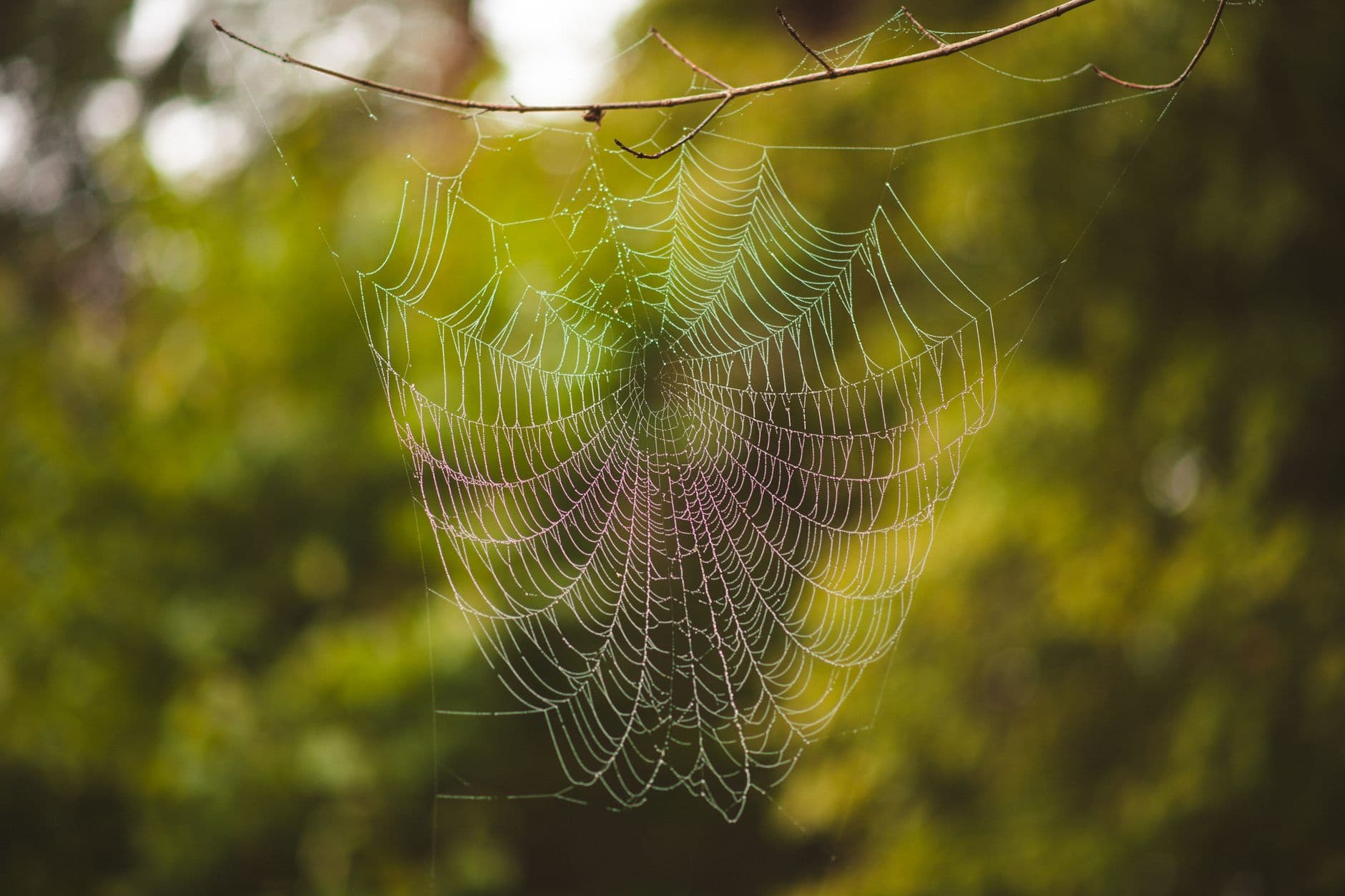
Photo by Mark Stebnicki on Pexels
Researchers are now isolating these cellulose nanocrystals to build materials that react to the environment without a single microchip. We are talking about solar trackers that follow the sun because the material on one side is literally 'wilting' faster than the other, tilting the panel toward the light. It’s the ultimate lazy-man’s engineering. Why build a complex robotic arm when you can just use a piece of high-tech plywood that’s programmed by the weather? It’s the first time in history that 'being as stiff as a board' is actually a compliment to your kinetic range.
Living in a Mood Ring
If this tech takes off, your future home is going to have more 'feelings' than a middle school poetry club. On a humid Tuesday, your balcony might decide to curl upward to catch the breeze. On a dry winter morning, the exterior slats of your apartment might huddle together for warmth. We are moving toward an era of 'Passive Robotics,' which is a fancy way of saying we’re making objects that do stuff because they’re physically incapable of doing nothing.
There is a certain comedic irony in the fact that we spent sixty years trying to make everything digital, plastic, and 'smart,' only to realize that a Douglas Fir has had better structural engineering since the Jurassic period. We’re basically trying to reverse-engineer the 'technology' of a pinecone. A pinecone doesn't need an OS update. A pinecone doesn't lose its charger. It just opens when it's dry and closes when it's wet because physics says it has to.
What This Actually Means
This is a massive win for sustainability, mostly because it removes the 'oops, the motor broke' factor from green architecture. By using tension wood principles, we can create buildings that regulate their own temperature and light using zero electricity. It’s the ultimate irony of the tech age: the most advanced 'robotics' might actually be a very sophisticated pile of sticks.
We are looking at a future where the line between a 'building' and an 'organism' gets real blurry, real fast. If your house can move, breathe, and react to the sun, are you a homeowner or a parasite living inside a very large, very still pet? Either way, as long as the 'muscle wood' doesn't decide to start walking toward the nearest lake, I’m on board. It’s time to let the plants do the heavy lifting.
Quick Answers
Is my wooden coffee table going to crawl away?
No. The wood in your furniture is kiln-dried and 'dead,' meaning its muscle days are over, though it might still groan if you put a heavy pizza on it.
Do these 'botanical robots' need to be watered?
Not exactly. They react to ambient humidity in the air, though if your house starts looking thirsty, a giant spray bottle wouldn't hurt the aesthetic.
Is this cheaper than regular smart tech?
In the long run, yes, because a piece of wood that bends itself doesn't require a $200-an-hour technician named Kyle to come fix the wiring every time it rains.


