The Tragic Convenience of Knowing Where You Are
Congratulations to everyone involved in the invention of the Global Positioning System and the grid-based city. You’ve successfully optimized the human experience to the point where the most complex navigational decision the average person makes is whether to ignore the blue line on their phone because of a puddle. We have achieved the pinnacle of efficiency: a world where you can traverse an entire continent without ever engaging a single neuron in your hippocampus. It turns out that by removing the risk of being late to a dinner party, we’ve also removed the only thing keeping our brains from shrinking into raisins.
Now, the same people who brought you the soul-crushing efficiency of the suburban cul-de-sac are having a mid-life crisis. They’ve looked at the brains of London cabbies—men who spent years memorizing 25,000 streets and 20,000 landmarks just to earn a badge—and noticed something annoying. These drivers have physically larger hippocampi than the rest of us. While you were following a voice named Siri into a literal lake, these guys were building a structural defense against Alzheimer’s through the sheer, unadulterated stress of navigating Piccadilly Circus at rush hour. Naturally, the solution isn't to work harder; it's to make the world intentionally more annoying.
Navigational Urbanism Is Just Gaslighting With Architecture
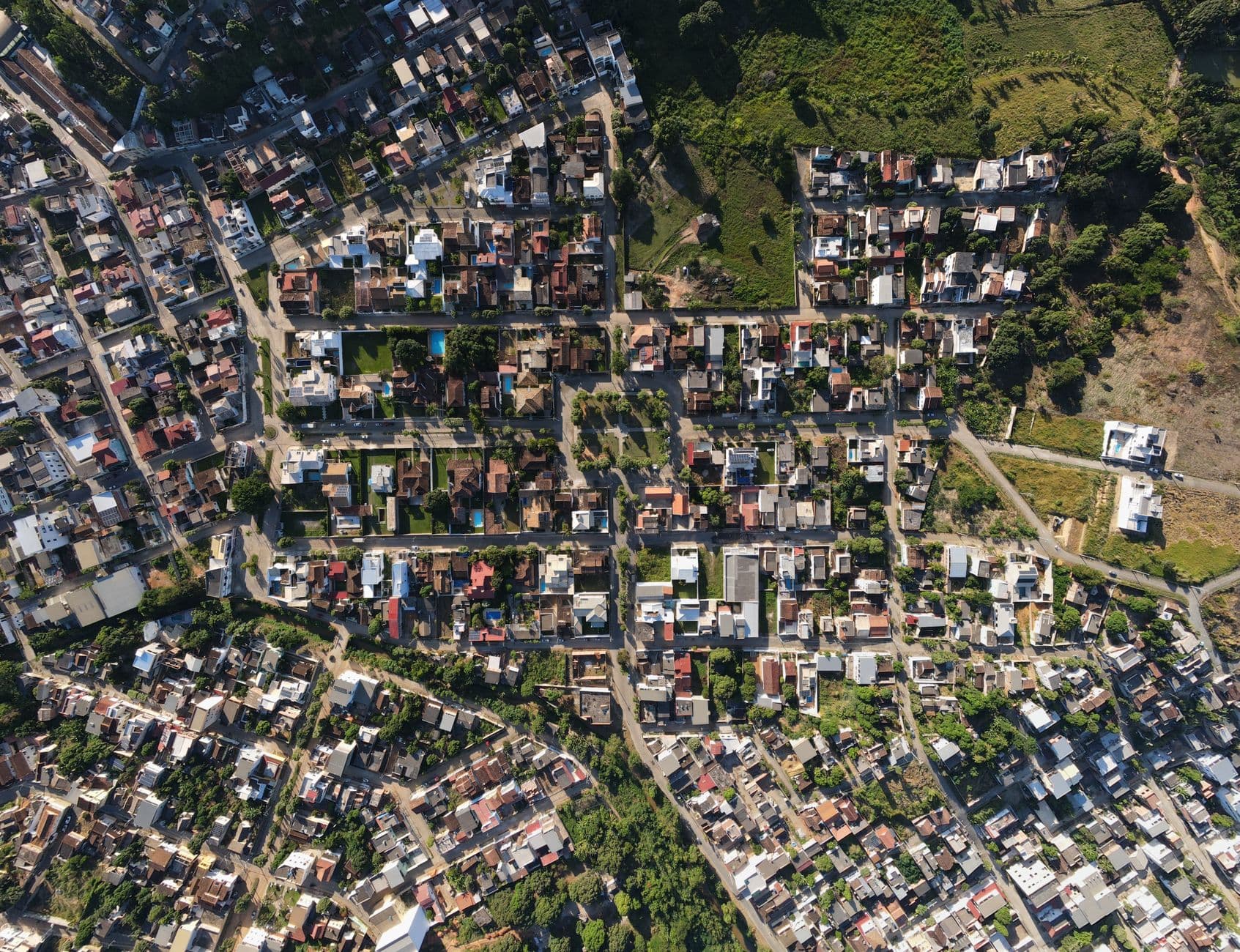
Enter the era of "Navigational Urbanism." This is the high-brow architectural movement that suggests if we just make cities more difficult to understand, we’ll all live forever. It’s a bold strategy. Instead of clear signage and logical street layouts, the new mandate is to create "cognitively legible" environments that "challenge" the brain. In layman’s terms, this means making the path to the grocery store feel like an escape room designed by a sadist. If you don't have to solve a spatial riddle to find the local post office, are you even really living?
- The "Simplified Grid" is now the enemy of the state.
- Visual landmarks must be subtle enough to require a PhD to decode.
- Dead ends are no longer mistakes; they are "neuroprotective pause points."
- If you aren't mildly sweating while looking for the exit, the architect hasn't done their job.
We are moving away from the "Wayfinding" era and into the "Way-failing" era. The theory is that by forcing your brain to create a mental map of a non-linear environment, you are essentially doing bicep curls with your grey matter. It’s a wonderful irony. We spent five thousand years of civilization trying to stop people from getting lost and dying of exposure, only to realize that getting lost was actually the only thing keeping us sharp. Now, we want to pay millions in tax dollars to recreate the confusion of a 14th-century Italian village in the middle of a Kansas shopping mall.

Photo by Sergej ***** on Pexels
The Luxury of Total Disorientation
There is something deeply elitist about the idea that we should design cities to be harder to navigate. It assumes that everyone has the luxury of time to spend forty-five minutes wandering around a "visually stimulating" plaza because the architect decided that a straight line was too intellectually lazy. It’s the urban planning equivalent of a $12 green juice that tastes like lawn clippings—it’s unpleasant, it’s expensive, but you’re told it’s the only way to stay healthy in a world that wants you dead by sixty.
This movement ignores the fact that London taxi drivers didn't get big brains because they liked pretty buildings. They got them because their livelihoods depended on not ending up in the Thames. Creating a "challenging" urban environment for a software engineer who is looking at their phone anyway isn't neuroprotective; it’s just a way to ensure they trip over more curbs. You can’t simulate the cognitive load of "The Knowledge" by just removing the street signs. That’s not science; that’s just a prank on the elderly.
What This Actually Means
What this actually means is that we have reached a point where our technology is so good at solving basic human problems that we have to re-introduce those problems as luxury features. We automated the walking, so we invented the treadmill. We automated the hunting, so we invented CrossFit. Now, we’ve automated the navigating, so we’re going to build cities that look like M.C. Escher drawings to save us from our own convenience. It’s a recursive loop of fixing the fixes until the original problem looks like a vacation.
The "Navigational Urbanism" mandate is a confession that we’ve built a world too boring for the human brain to inhabit. If we need to intentionally design "legible challenges" into our streets, maybe the issue isn't the grid—it's the fact that we’ve outsourced our curiosity to a piece of glass in our pockets. We don't need more complex architecture; we need to put the phone down and accept that sometimes, being lost is the only time we’re actually paying attention.
Ultimately, the quest for a neuroprotective city will likely end the way all urban trends do: with a lot of expensive concrete, three new buzzwords, and a population that still uses Google Maps to find their own bathroom. If you want to avoid Alzheimer’s, maybe just try driving to a new neighborhood without a digital leash. Or don't. At least if you lose your mind, the grid system will make it very easy for the authorities to find you and bring you home.
Quick Answers
Does this mean I should stop using GPS?
Only if you value your hippocampus more than your punctuality and your general sanity.
Will living in a confusing city actually make me smarter?
No, but it will make you much better at swearing in traffic and finding creative ways to justify being late for work.
Are architects really doing this on purpose?
Yes, they have run out of ways to make glass boxes look interesting, so they've pivoted to "neurological health" as a justification for weird shapes.
What happened to the London taxi drivers?
They’re still there, they’re still smarter than you, and they’re currently laughing at your inability to find a Starbucks without an orbital satellite's help.


