
For two years, the consumer tech industry sold a deliberate lie: that meaningful personal autonomy required either a $2,000 graphics card humming in your closet or a permanent $20 monthly corporate subscription. Projects like Talorys, which orchestrate persistent, autonomous personal agents entirely within Cloudflare’s free serverless tier, prove that the gatekeepers were charging for architecture, not necessity. We are witnessing the quiet death of the hardware tax.
To understand why this matters, look at what Silicon Valley spent 2023 and 2024 attempting to sell us. First came the dedicated AI hardware plays—the Humane Ai Pin at $699 with a mandatory $24 monthly carrier fee, followed by the Rabbit r1 at $199. Both were fundamentally hollow shells whose internal logic lived entirely on proprietary, latency-heavy cloud servers. When consumers realized these devices were little more than plastic wrappers around an API call, the enthusiast market swung to the opposite extreme: self-hosting local models using massive desktop rigs running dual RTX 3090s. That alternative demanded technical masochism, hundreds of watts of continuous wall power, and an upfront investment north of $3,500.
Talorys bypasses both traps by exploiting an obvious economic reality that incumbent software vendors hoped users would ignore: edge workers, key-value stores, and vector databases at scale are essentially free for an individual's personal operational load.
The Subsidized Architecture of Autonomy
A personal agent does not spend 24 hours a day rendering tokens. Human lives do not operate at enterprise data throughput. Most of an agent’s lifecycle involves waiting: monitoring an inbox, tracking an RSS feed, checking calendar conflicts, or executing an event-driven webhook every twenty minutes.
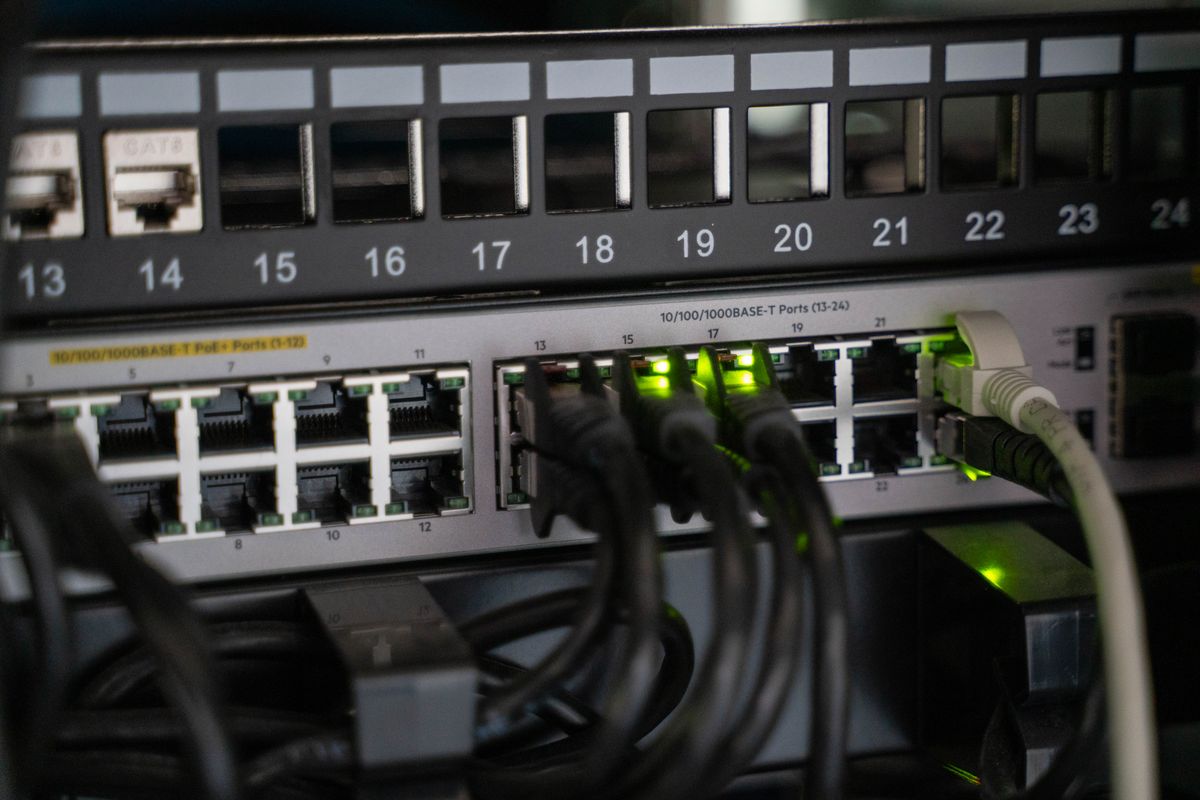
Photo by Vladimir Srajber on Pexels
Traditional local hosting forces your machine to stay awake, burning power and consuming memory, merely to maintain readiness. Corporate agent platforms like OpenAI's custom GPTs or Microsoft Copilot charge users premium monthly rents precisely to maintain that illusion of constant presence. Yet Cloudflare's serverless tier offers 100,000 requests per day for zero dollars. For an enterprise, that limit disappears in four seconds. For an individual human coordinating personal logistics, research dossiers, and smart-home routines, 100,000 executions per day is practically infinite capacity.
By decoupling the agent’s memory and orchestration logic from local compute and placing it on edge infrastructure, several structural shifts happen at once:
- The runtime cost drops from the price of a dedicated machine to literally zero dollars per month.
- The operational latency matches native web infrastructure because edge nodes execute within tens of milliseconds of any consumer device.
- The agent persists across laptop sleeps, power outages, and device swaps without complex container management.
- The user retains ownership of the codebase and storage keys rather than renting an interface behind a platform's terms of service.
Breaking the Rentier Economy of AI
Software companies thrive on recurring revenue models that obscure actual marginal costs. When a vendor charges $20 per seat per month for an AI workspace assistant, you are not paying for the raw inference compute. A typical user's actual token usage across an entire month of typical personal tasks frequently costs less than $1.15 in direct API calls to modern foundational models like Claude 3.5 Sonnet or GPT-4o mini.
The remaining $18.85 is pure margin, collected simply because the platform maintains the state, the database, and the execution cron job. They charge you a subscription not because intelligence is expensive, but because persistence used to be technically difficult for non-engineers to construct.
When open architectures like Talorys automate the deployment of persistent state machines directly onto commodity edge networks, that margin evaporates. The consumer buys raw intelligence at wholesale prices straight from model providers via API keys, or routes tasks to open-weight models hosted on decentralized inference endpoints. The orchestration layer, which used to be the SaaS product itself, becomes free personal plumbing.
The Disappearance of the Dedicated AI Gadget
This shift destroys the rationale for standalone AI consumer gadgets. The premise behind bespoke AI pins, pendants, and dedicated companion boxes was always fragile: they claimed that ambient intelligence required ambient silicon. It does not. It requires ambient access to a coordinated personal state.
Once your digital twin lives in an always-on, zero-cost edge layer, every screen or microphone you already own becomes a terminal for that agent. Your seven-year-old iPhone, an abandoned Android tablet mounted on a kitchen wall, or an open terminal window on a cheap Chromebook all tap into the exact same persistent brain. You do not need a novel form factor when your actual assistant is decoupled from the physical device entirely.
We spent decades assuming that personal computing meant personal hardware ownership: the personal computer, the personal workstation, the smartphone. The serverless personal agent turns that logic inside out. Computing power can remain remote, centralized, and shared, while control, state, and identity remain strictly personal and decentralized.
What This Actually Means
The real battle for personal computing over the next five years is not about model sizes, parameter counts, or who builds the flashiest pocket device. It is a battle over sovereignty and tenancy. If your personal agent exists only within a closed corporate ecosystem, your digital twin is a tenant subject to sudden price hikes, feature deprecations, and privacy policy revisions.
Open-source, serverless deployments demonstrate that consumer autonomy does not require wealth. You do not need to be an engineer with a home server rack to avoid being farmed for recurring platform revenue. The infrastructure to run a private, perpetual digital assistant already exists, paid for by the massive scale of enterprise cloud providers who treat individual traffic as rounding errors.
The tools are sitting in the open. The only remaining hurdle is the collective willingness to stop renting convenience from corporations that charge enterprise rates for pocket change.
Quick Answers
Does this mean inference costs zero dollars too?
No. While edge hosting, memory storage, and routing logic cost nothing on free serverless tiers, calling advanced proprietary foundation models still incurs microscopic per-token API charges, typically totaling pennies per week for personal usage.
Do I need deep software engineering skills to deploy this?
While early open-source repositories require basic familiarity with command-line tools and API management, one-click template deployments are making edge agent setup accessible to non-technical users.
What happens if Cloudflare limits or removes its free tier?
Because the underlying architecture uses standard serverless and key-value primitives, these agents can be migrated to competing edge runtimes like Deno Deploy, Vercel, or AWS Lambda with minimal configuration changes.

