
The Digital Ghost in the Freezer Aisle
I’ve spent the morning wondering why we ever thought connecting a freezer to the open internet was a fundamental necessity for human survival. It happened again this week—supermarket chains across Europe watching their digital thermometers climb steadily into the red while IT teams scrambled to regain control of a cooling system that had been effectively kidnapped. We aren't talking about a simple power outage where you throw a blanket over the frozen peas; we are talking about a targeted, 'Thermodynamic Ransom' where hackers hold the structural integrity of our dinner hostage.
It makes me wonder about the specific moment a piece of frozen Atlantic salmon crosses the line from 'product' to 'biohazard' because a server in a different time zone stopped talking to a compressor. We live in a world where food safety is measured in seconds and single digits. If a freezer bank hits 5 degrees Celsius for more than a few hours, the protocol isn't to 'wait and see'—it is to dump every single item into a landfill. It is a massive, centralized, and instantaneous creation of waste that feels almost supernatural in its efficiency.
Why Does a Fridge Need an IP Address?
There is a genuine mystery in how we reached this level of hyper-connectivity. On the surface, the logic is sound: if a corporate headquarters can monitor the temperature of 5,000 freezers simultaneously, they can optimize energy use and predict when a motor is about to fail. It’s an efficiency play. But by chasing that last 2% of operational savings, we’ve inadvertently created a central nervous system for our food that can be paralyzed with a single stroke. I’m curious if the engineers who designed these 'smart' refrigeration grids ever sat down and asked what happens when the smarts are used against the grid.
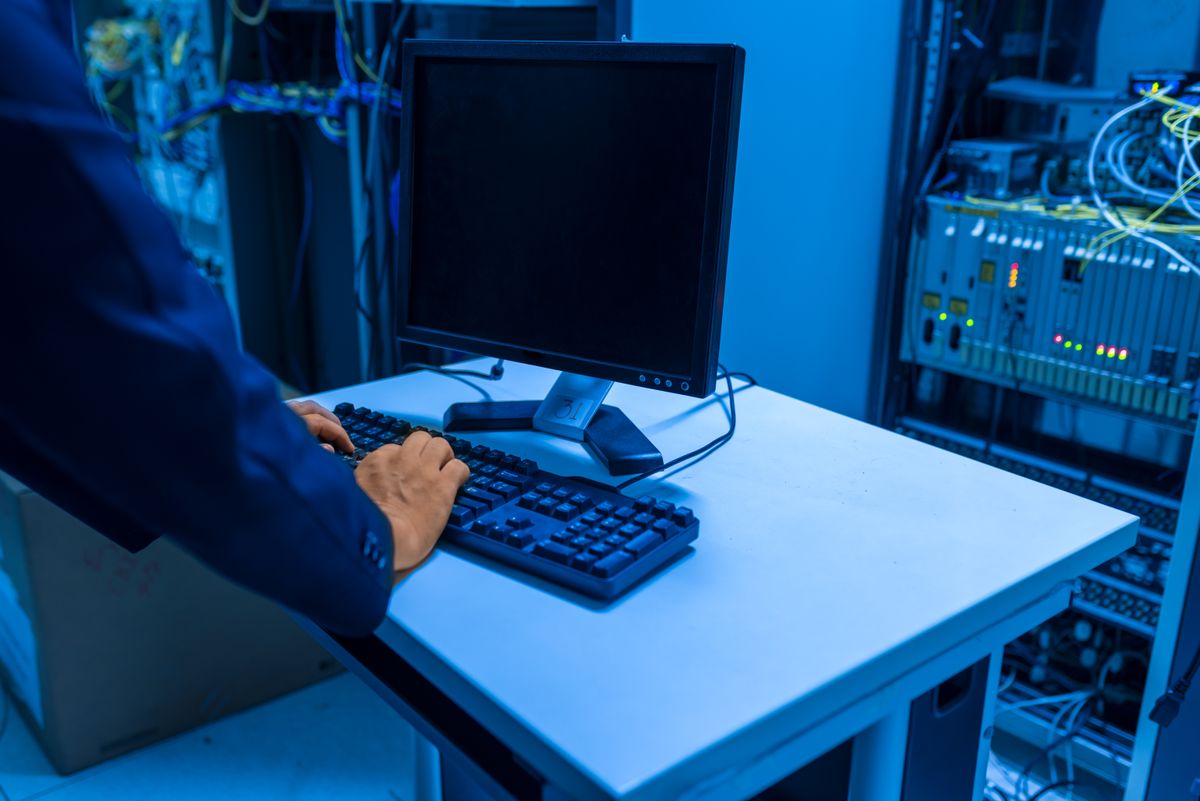
Photo by panumas nikhomkhai on Pexels
The scale of the vulnerability is staggering. In this latest attack, an estimated 400 tons of perishable goods were lost in a forty-eight hour window. That isn't just a financial hit for a corporation; it’s a terrifying look at the physical consequences of digital failure. We’ve moved our vulnerabilities from the physical world—where you’d need a literal army to destroy that much food—to the digital world, where a script kiddie or a state actor can do it while drinking a latte. I find myself asking: at what point does the cost of this 'efficiency' outweigh the risk of total systemic collapse?
The Just-in-Time Trap
We’ve spent decades perfecting 'Just-in-Time' logistics. It’s a beautiful, fragile dance where nothing sits in a warehouse for longer than necessary because storage is a cost, and cost is the enemy. But this dance requires a level of environmental stability that we can no longer guarantee. When a cyber-attack hits the cooling chain, there is no buffer. There are no backup warehouses full of ice blocks. The food moves from the truck to the shelf to the bin because the system has no 'pause' button.
I’m trying to wrap my head around the irony of our sustainability goals. We use these smart systems to reduce our carbon footprint by managing energy more tightly, yet a single breach results in more carbon waste—via rotted food and methane—than the system could save in a decade of perfect operation. It’s like we’ve built a high-speed train with no brakes because we wanted to save weight on the wheels. It’s faster, sure, until there’s a pebble on the track.
What This Actually Means
This isn't just about a few spoiled pizzas or a bad week for a grocery conglomerate. It’s a signal that our definition of 'infrastructure' needs a massive update. We usually think of infrastructure as bridges, roads, and power lines. We need to start thinking of 'cold' as infrastructure. If we can’t guarantee the temperature of our food supply, we don't have a food supply; we just have a very expensive, very temporary collection of organic matter.
I wonder if the solution is actually a step backward. Perhaps the most 'advanced' version of a supermarket is one that can function entirely offline, using local sensors and manual overrides that don't report back to a central mothership. We are so obsessed with the 'Big Data' of things that we’ve forgotten that, at the end of the day, a freezer is just a box that needs to stay cold. If the price of knowing exactly how cold it is involves the risk of it being turned off by a stranger, I think I’d rather stay in the dark.
We are entering an era where 'resilience' might mean being a little less 'smart.' I’m genuinely curious to see which retailers will be the first to realize that a manual thermometer and a physical lock are the ultimate cybersecurity patches. Until then, we’re all just one firmware update away from a very empty plate.
Quick Answers
What is a thermodynamic ransom?
It’s a cyber-attack where hackers take control of industrial cooling systems and demand payment to restore the temperature, essentially threatening to rot the entire inventory.
Why can't they just move the food?
Logistically, moving hundreds of tons of food during a systemic outage is impossible because every other local storage facility is usually part of the same compromised network or already full.
Is this a new type of threat?
While cyber-attacks are old, targeting the physical 'cold chain' is a growing trend because it causes immediate, irreversible physical damage that forces companies to pay quickly.


