
The Heroic Struggle to Save Every Mistake
It is truly heartening to see the brightest minds in San Francisco tackling the most pressing crisis of our time: the fact that Git was never designed to store fifty thousand versions of a five-terabyte file. While the rest of us are busy feeling guilty about using a plastic straw once every six months, the visionaries at OpenAI are doing the real work of ensuring that every single mathematical hiccup and training failure is preserved for eternity. It’s not just data; it’s a digital monument to the trial-and-error process that will eventually lead to a bot that can write a mediocre LinkedIn post.
Scaling Git to handle model weights isn't just a technical challenge; it's a commitment to the idea that nothing should ever be deleted. We’ve moved past the era of 'move fast and break things' into the era of 'move fast and store every single broken shard in a high-availability, liquid-cooled vault.' It is a masterclass in redundancy. Why have one version of a model that hallucinates when you can have 1,400 slightly different versions, each pulling enough wattage to power a small suburb in Ohio?
This is the new 'dark data'—the digital equivalent of that box of tangled cables in your garage, except this box costs millions of dollars a month to keep plugged in. We are essentially building a museum of failure where the lights never go out and the air conditioning is always set to sixty degrees. It’s a bold strategy for a species currently concerned about rising sea levels, but perhaps the plan is to use the heat from the server farms to evaporate the excess ocean water.
Carbon Offsets for Your Commit History
The sheer logistics of managing these multi-terabyte model weights are staggering. We aren't just talking about a few hard drives; we are talking about massive, energy-sucking infrastructure designed specifically to make sure we don't lose a single byte of a model that we already know doesn't work. It’s like keeping every lottery ticket you’ve ever bought that didn't win, just in case the ink contains the secret to the universe.
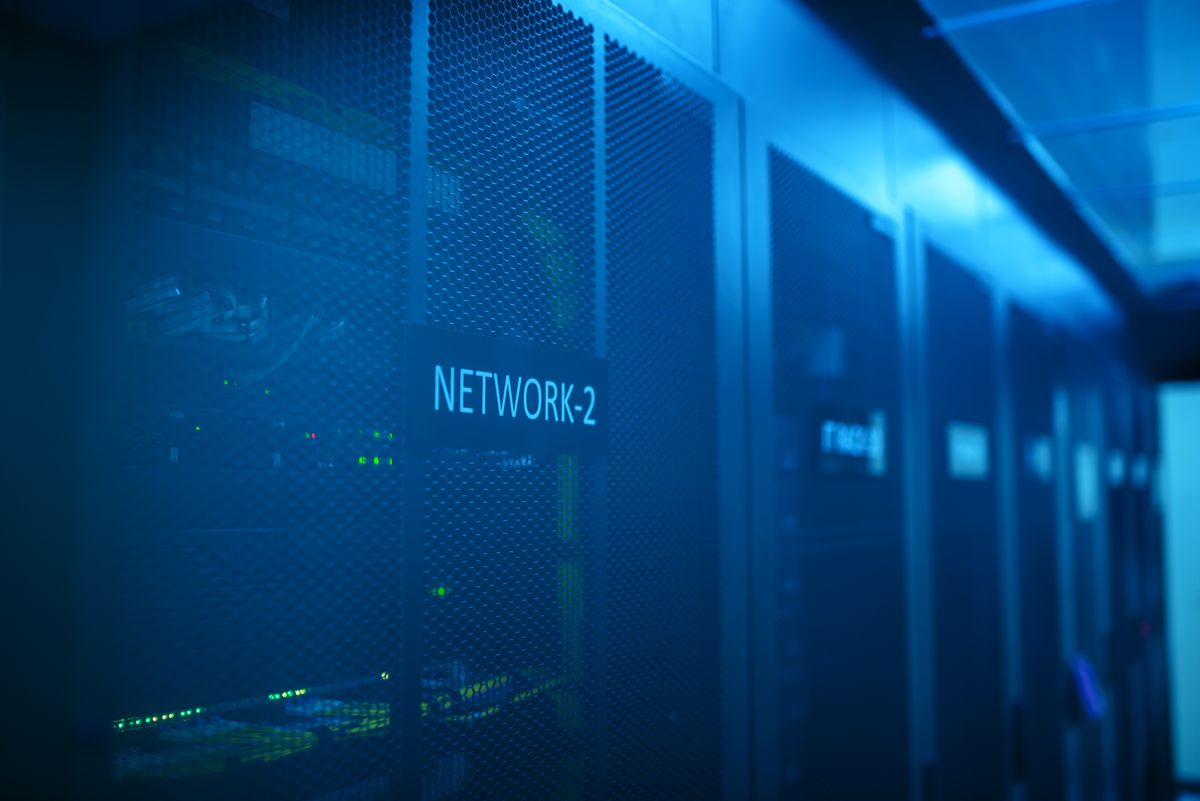
Photo by panumas nikhomkhai on Pexels
Every time a developer runs a command to sync these massive checkpoints, a coal plant somewhere gets its wings. We’ve reached a point where the 'version control' for AI is basically a high-speed pipeline of carbon emissions. But don't worry, the industry is very serious about sustainability. I'm sure there’s a slide deck somewhere with a very green leaf on it that explains how storing 400 petabytes of 'mostly noise' is actually a win for the environment because it might one day help an AI optimize a delivery truck route by three percent.
There is a certain poetic irony in using the world's most advanced technology to recreate the behavior of a hoarder who can't throw away a stack of newspapers from 1994. We are building the most sophisticated garbage disposal in history, and instead of turning it on, we’ve decided to build a bigger kitchen to house the trash. It’s a growth industry, clearly. The more we fail, the more data we create, and the more servers we need to keep that failure refrigerated.
The Brave New World of Lossy Memories
Now, some 'radicals' are suggesting that maybe we don't need to keep every single weight of every single epoch. They’re talking about 'lossy' or 'ephemeral' versioning, which is a fancy way of saying 'deleting things.' It’s a terrifying concept. If we start deleting the data that doesn't work, we might accidentally have a smaller carbon footprint, and then what would we talk about at the next ESG conference?
Imagine the bravery it takes to suggest that a model checkpoint from three weeks ago, which has already been surpassed by ten newer versions, might not be worth its weight in carbon. It’s almost as if the industry is realizing that an infinite growth model based on storing infinite amounts of redundant math might have a literal breaking point. But why innovate on efficiency when you can just build another data center next to a hydroelectric dam and claim you're '100% renewable' while consuming the entire output of the river?

Photo by Nikola Čedíková on Pexels
Developing these ephemeral systems is the tech equivalent of learning how to use a trash can. It’s groundbreaking. It’s disruptive. It’s what happens when you realize that your digital landfill is starting to smell like burning coal. If we actually move toward systems that only keep what matters, we might lose the ability to boast about the sheer scale of our infrastructure. And in Silicon Valley, if you aren't talking about how many exabytes you're mismanaging, are you even really trying?
What This Actually Means
The AI industry has a 'hoarding' problem that is currently being subsidized by the hope that the 'Alpha' version of everything is sacred. We are treating model weights like they are the Dead Sea Scrolls, when in reality, most of them are the digital equivalent of a toddler’s finger painting—interesting to the parents, but ultimately destined for the bin. The energy-intensive maintenance of this dark data isn't a side effect; it's a fundamental design flaw in how we value progress.
If we don't move toward 'lossy' versioning, the AI revolution will be remembered primarily for its ability to turn electricity into heat without the middleman of actually being useful. We are currently prioritizing the preservation of the process over the health of the planet. It turns out that 'Scaling Git' is just a polite way of saying 'we've run out of places to put our stuff.'
Ultimately, the sustainability of AI won't be found in better algorithms, but in the revolutionary act of hitting the 'delete' key. Until then, we can all rest easy knowing that while the permafrost melts, at least OpenAI has a perfect, high-fidelity record of exactly which version of their model thought a strawberry had three 'r's in it. Priorities are important.
Quick Answers
Is dark data really that bad for the environment?
Yes, because 'storing' data isn't passive; it requires constant power for cooling and hardware maintenance, meaning your digital trash is actively warming the planet.
Why can't they just use regular Git?
Because Git was built for tiny text files, and trying to shove a 5TB model into it is like trying to fit a blue whale into a standard-issue office filing cabinet.
What is ephemeral versioning?
It’s a technical term for 'not being a packrat,' where the system automatically deletes intermediate steps that don't contribute to the final result, saving both space and sanity.


