
I keep thinking about the sheer audacity of a seed. We spend decades engineering corn to be a high-performance athlete, optimized for the perfect amount of nitrogen and a predictable rainfall schedule, only for the Pacific Ocean to decide it’s going to tilt the entire global thermostat three degrees to the right. This Super El Niño isn't just a seasonal glitch; it’s a systemic shock that is forcing a fascinating, somewhat desperate pivot in the Global South. Farmers are walking away from the 'get rich' crops—the avocados, the high-yield soy, the delicate coffee beans—and returning to the heavy, stubborn grains that their ancestors used to survive centuries of chaos.
It feels like we are watching a massive, uncoordinated hedge against catastrophe. For years, the mantra was 'yield optimization.' Every square inch of soil had to produce the maximum dollar value. But as we head into a winter that forecasters say could break every heat record on the books, that strategy looks incredibly fragile. I find myself wondering if the global food system is finally admitting that efficiency is a luxury we can no longer afford when the sky stops cooperating.
The Shift From Dollars to Calories
There is a specific kind of math happening in fields across Ethiopia, India, and Peru right now. It’s a shift from 'How much can I sell this for on the Chicago Mercantile Exchange?' to 'Will my family actually have something to chew on in July?' This is what experts call metabolic resilience, but I think of it as a return to the fundamentals. We’ve spent the last 50 years building a fragile web of international trade where a drought in one hemisphere is supposed to be offset by a surplus in another. This year, the Super El Niño is so vast that the surplus might not exist.
Farmers are opting for ancient grains like millet, sorghum, and teff. These aren't high-margin products. They don't make for trendy lattes or expensive skincare oils. They are, however, essentially indestructible compared to modern monocultures. Millet can grow in soil that looks like a brick and with water levels that would kill a standard corn stalk in forty-eight hours. It’s a fascinating trade-off: farmers are voluntarily choosing to be 'poorer' in the short term to ensure they aren't starving in the long term.
I wonder what this does to the global economy. If the Global South stops being the world's garden for luxury produce because they need to prioritize their own caloric floor, the grocery aisles in the North are going to look very different. We’ve grown accustomed to a world where seasonality is a myth maintained by cheap shipping and predictable weather. That myth is currently evaporating.
The Architecture of a Hardy Seed
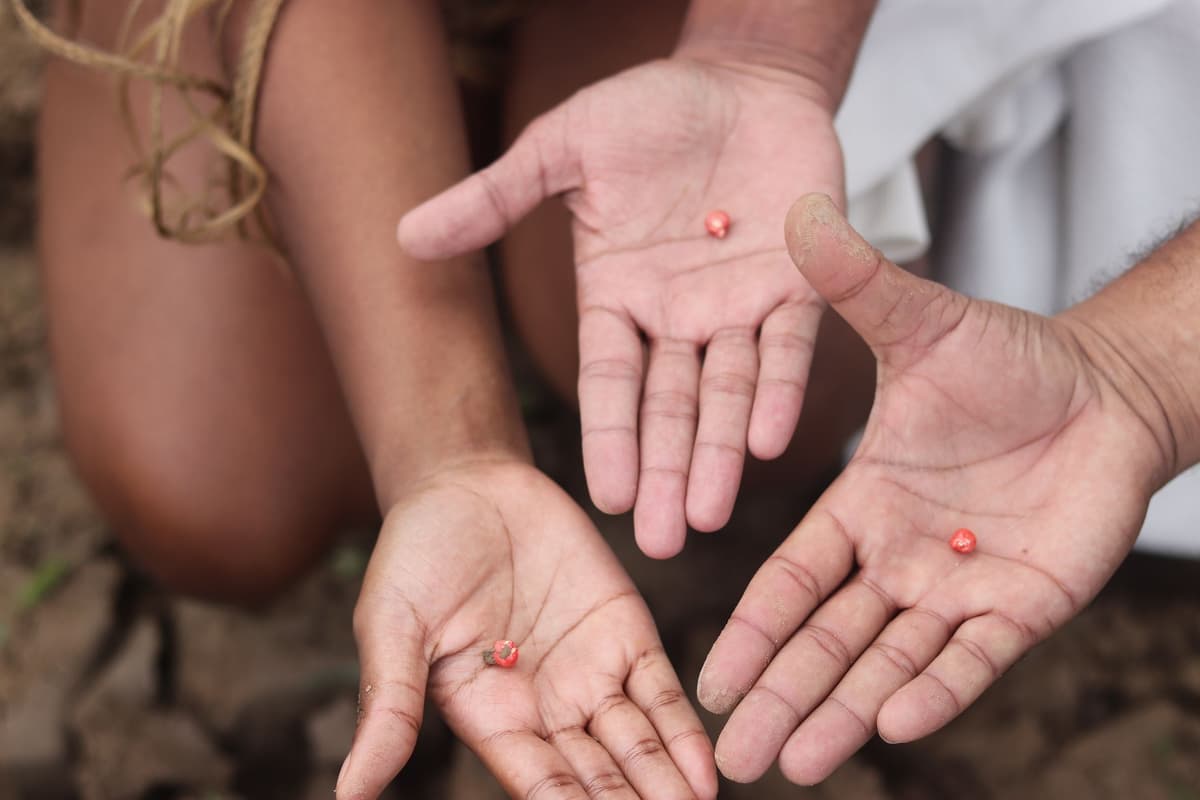
Why did we ever leave these grains behind? I've been digging into the biology of sorghum, and it’s basically a biological tank. It has this incredible ability to go dormant during a heatwave, literally pausing its growth until the next drop of rain arrives, whereas modern wheat just gives up and dies. We traded that resilience for speed and volume. It was a great deal while the weather was stable. Now that the 2023-2024 El Niño is pushing sea surface temperatures 2.0°C above average, the 'fast and fragile' model is looking like a bad bet.
- Ancient grains often have deeper root systems that tap into moisture caches modern hybrids can't reach.
- Many of these crops require 30% to 50% less synthetic fertilizer, making them cheaper to grow when supply chains break.
- They have a higher nutritional density per gram, which is the ultimate insurance policy against a failed harvest.
It’s not just about the plants, though. It’s about the knowledge. To grow these crops, you have to remember how to farm without a massive chemical safety net. I'm curious if this knowledge, once reclaimed, will ever be surrendered again. Once a farmer realizes they can survive a Super El Niño by trusting a thousand-year-old seed over a laboratory-designed one, does the marketing for the lab-designed one ever work again?
The Great Uncoupling of Trade
What happens when 'market forces' lose their power over the soil? Usually, if the price of a crop goes up, people grow more of it. But if the climate risk is high enough, price doesn't matter. You can't eat dollar bills. We are seeing a quiet decoupling where local food security is being prioritized over global market participation. This 'climate-caloric' hedge is effectively a localized insurance policy.
In some regions, governments are actually subsidizing this retreat from the global market. They’ve realized that it’s cheaper to help a farmer grow millet than it is to deal with the social unrest and humanitarian crisis of a total crop failure. It makes me think about the definition of progress. We usually define it as moving toward more complexity and higher output. But right now, progress looks like simplifying. It looks like moving backward to move forward.
I find myself captivated by the irony. Our most advanced climate models, running on supercomputers, are essentially telling us that the best way to survive the future is to act like it’s 2,000 years ago. There’s a humility in that which I think we’ve been missing.
What This Actually Means
This isn't just a story about weather; it's a story about the end of the 'infinite growth' mindset in agriculture. We are reaching a point where the physical limits of the planet are overriding the digital logic of our markets. The Super El Niño is the catalyst, but the underlying issue is our obsession with optimization over endurance. We built a food system that was a Ferrari—fast and beautiful on a smooth track, but completely useless the moment you hit a dirt road.
For the rest of us, this means the price of 'predictable' food is going to skyrocket. Anything that requires a stable climate—your morning coffee, your chocolate, your out-of-season berries—is becoming a high-risk gamble. We might have to learn to love the grains that we spent the last century ignoring. It’s a shift from eating for pleasure and profit to eating for persistence.
Ultimately, the move toward ancient grains is a vote of no confidence in our ability to fix the climate in the short term. It’s a pragmatic, gritty realization that the storm is already here, and the best thing you can do is plant something that won't break when the wind starts to howl. I'm curious to see if this is a temporary pivot or the first step in a permanent dismantling of the global food monoculture. I suspect it's the latter.
Quick Answers
Is a Super El Niño different from a regular one?
Yes, it’s defined by sea surface temperatures in the central Pacific rising at least 2.0°C above average, leading to much more extreme and unpredictable global weather patterns.
Will this make my groceries more expensive?
Almost certainly, especially for products sourced from the Global South like coffee, sugar, and cocoa, as farmers prioritize local staples over export crops.
Are ancient grains actually better for the environment?
Generally, yes; they typically require significantly less water and chemical intervention than the high-yield corn and wheat varieties used in industrial farming.


