
The Luxury of Being Watched by a Silicon Chip
I’m so glad we finally reached the point where my computer spends 40% of its battery life cataloging the exact moment I looked most depressed while eating a microwave burrito. For decades, we struggled with the crushing burden of forgetting things. If you didn't tag a photo of your grand-aunt in 2014, that memory was effectively lost to the void, floating in a digital soup of unorganized JPEGs. Now, thanks to the miracle of on-device multi-modal search, my MacBook Pro can tell me exactly which frame of a three-hour screen recording contains a specific line of CSS I copied from Stack Overflow and then immediately regretted.
This isn't just a feature; it’s a lifestyle choice for people who find the concept of 'fleeting moments' to be a personal affront. We’ve moved past the era of passive storage. Your laptop is now an ambient historian, which is a polite way of saying it’s a stalker that lives in your backpack. It doesn't just store your files; it indexes your failures in 4K at 60 frames per second. It’s comforting to know that while I’m procrastinating, my neural engine is working overtime to make sure my entire life is searchable by keyword.
The Brave New World of Neural Silicon
The marketing for these features is always a masterclass in gaslighting. We’re told this is the 'privacy-first' approach because the processing happens locally. It’s a wonderful logic: it’s not surveillance if the spy lives in your house and doesn't tell his boss what he saw. We’re building a world where the consumer privacy divide is defined by who owns the hardware that watches them. If you’re poor, Google watches you in the cloud. If you’re rich, you pay $2,499 for the privilege of Apple watching you on an M3 Max chip.
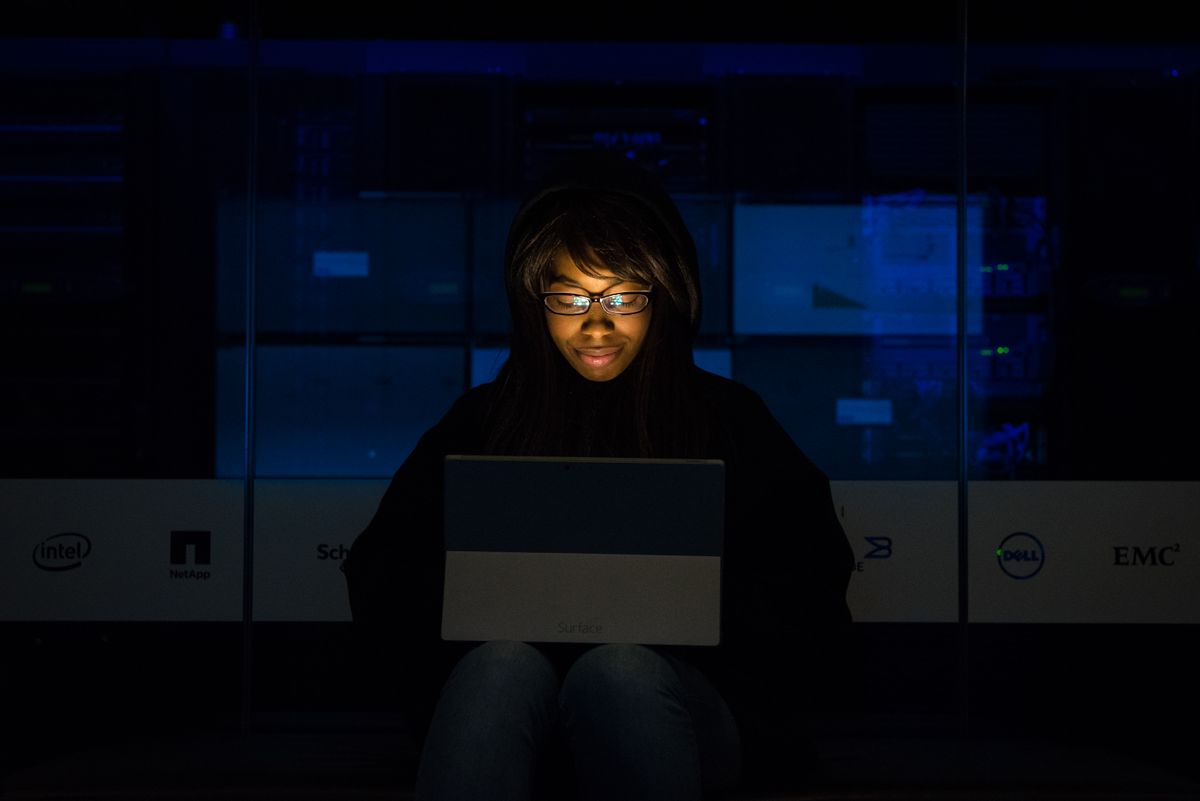
Photo by Christina Morillo on Pexels
There is something deeply poetic about using $4,000 worth of hardware to solve the problem of 'where did I see that meme?' We have redirected the greatest engineering minds of a generation toward the goal of ensuring no frame of video goes un-indexed. It’s the ultimate solution for a society that produces so much garbage content that we need a dedicated AI sub-processor just to find the specific piece of garbage we’re looking for. I can’t wait for the day my laptop suggests a therapist based on the aggregate mood of my screenshots.
Total Recall is Definitely Not an Ominous Name
Naming a technology after a dystopian sci-fi movie where memories are implanted and people’s identities are erased is a bold move. It shows a certain level of confidence, or perhaps just a complete lack of self-awareness. The 'Total Recall' shift implies that our brains are simply too inefficient to handle the rigors of 2024. Why bother remembering anything when you can just type 'red shirt' into a search bar and see every time you wore that shirt over the last five years? It’s a massive win for people who want to audit their own lives like a forensic accountant.
- It indexes your screen every few seconds.
- It uses CLIP or similar models to turn your visual life into a series of vectors.
- It ensures that even if you delete a file, the 'memory' of it lingers in a local database.
- It turns your hard drive into a searchable transcript of your entire digital existence.
This is the 'ambient' future we were promised. It’s a world where the distinction between 'using a computer' and 'being recorded by a computer' has finally, mercifully, vanished. I used to worry about the government tracking my movements; now I just worry that my laptop knows exactly how many times I’ve re-watched the same three-minute clip of a guy explaining how to fix a leaky faucet.
What This Actually Means
In reality, we are watching the final death of the 'dumb' device. Your laptop is no longer a tool that waits for your input; it is a proactive observer that interprets your life through the lens of a vector database. The 'privacy divide' isn't about whether you’re being tracked—everyone is being tracked—it’s about the latency of the tracking. On-device AI just means the metadata is generated closer to your eyeballs. It’s a localized panopticon where you are the warden, the prisoner, and the guy who paid for the bricks.
As these tools become standard, the idea of a 'private' moment on a digital device becomes a quaint relic of the early 2000s. We are voluntarily installing black boxes in our lives because we’re too lazy to remember where we saved a PDF. It’s a fair trade, honestly. I’ll give up the structural integrity of my personal privacy if it means I can find that one picture of a sandwich I ate in 2019 three seconds faster.
Quick Answers
Is my data actually safe if it stays on the device?
Sure, as long as you never lose your laptop, never get compromised by malware, and trust that the 'local' database stays local forever. It's essentially a high-security vault with a glass door.
Does this make me more productive?
Only if your job involves searching for obscure frames of video across hundreds of hours of footage. For everyone else, it’s just a very expensive way to organize your clutter.
Can I turn it off?
Technically yes, but the OS will probably act like you’re asking it to lobotomize itself. You’ll be the only person in 2026 who actually has to remember things, like some kind of medieval peasant.

