
The Ultimate One-Trick Pony
During the Cold War, IBM decided that general-purpose computing was for losers who had too much free time and not enough plutonium. They built a secret, disposable supercomputer designed to do exactly one thing: crack a specific cryptographic code. It didn’t have a calculator app. It didn’t have a calendar. It certainly didn’t have a little tactile vibration that alerted you when a stranger liked a photo of your sourdough bread. It was a massive, humming wall of silicon that lived for a single mathematical grudge match, and once that job was done, it was essentially a very expensive space heater.
We’ve lost this level of commitment. Today, my phone tries to be a camera, a map, a bank, and a flashlight, which is why it usually ends up being a $1,200 brick that dies at 4:00 PM because the 'Find My' app got into a fight with a Bluetooth speaker. There is something deeply respectable about a machine that knows its place. IBM’s cryptographic beast didn't suffer from choice paralysis. It woke up, chose violence against a specific set of Soviet algorithms, and went back to sleep.
Your Phone is a Distracted Toddler
Modern hardware architecture is basically a toddler in a candy store who has also been told they need to file their taxes. Because our chips are designed to be 'general purpose,' they have to keep a billion different gates open just in case you suddenly decide to stop checking emails and start rendering a 3D model of a cat in a tuxedo. This 'just in case' logic is an energy parasite. It’s like keeping your car engine idling in the driveway for three weeks because you might need to drive to the hospital, or a Taco Bell, at any given second.
If we went back to the IBM method, you’d have a pocket-sized device that only plays Spotify. That’s it. It would have a battery life of roughly six years because it wouldn't be wasting cycles wondering if it needs to update the weather in Des Moines. Instead, we have 'versatility,' which is just a fancy marketing term for 'this device is moderately okay at twenty things and spectacular at none of them.' I don't need my fridge to tweet; I need it to keep the milk from turning into a science project.
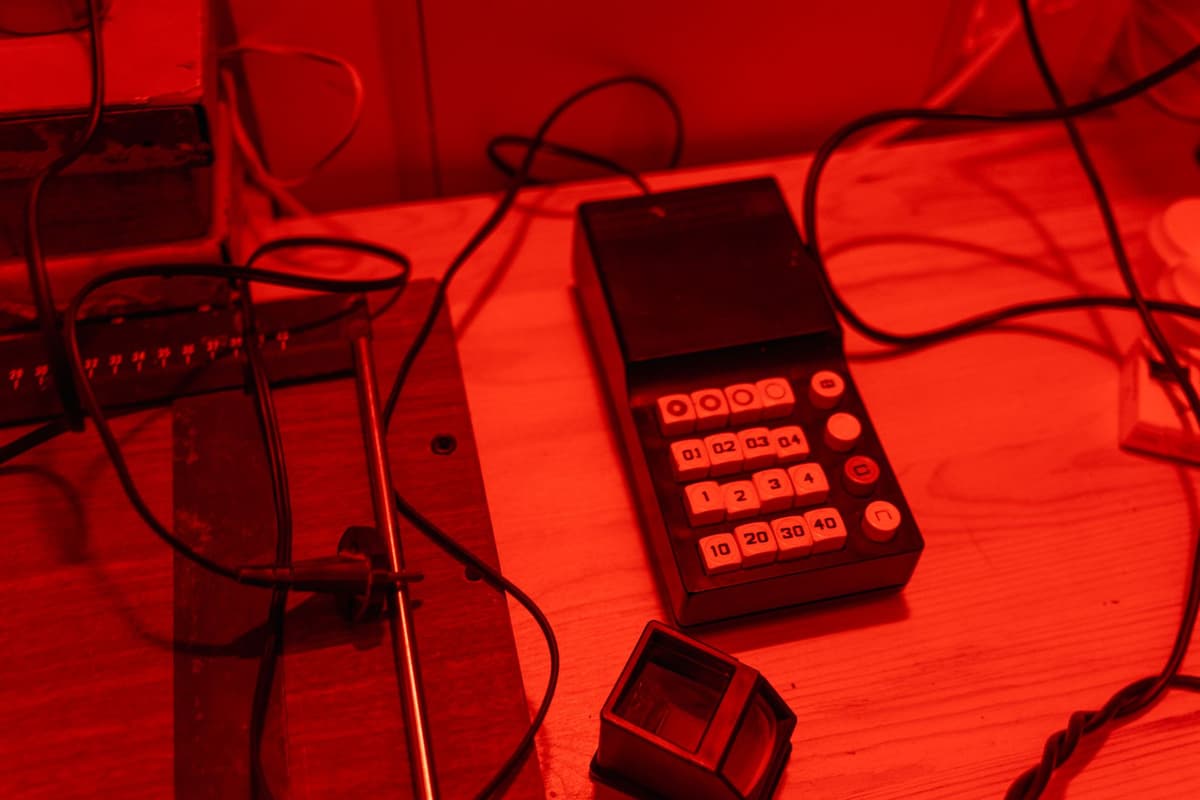
Photo by Tima Miroshnichenko on Pexels
The Glory of Hard-Wired Efficiency
When you hard-wire a task into silicon, you aren't asking the CPU to 'think.' You’re forcing it to 'be.' The Cold War-era disposable supercomputer didn't have an operating system bloat problem. It didn't have to load a kernel or check for driver updates. The math was the machine. If we applied this to modern life, your 'TikTok Phone' would be a slab of glass that does nothing but serve up brain-rot at 120 frames per second with the efficiency of a nuclear submarine.
We are currently facing a mobile energy crisis where we keep throwing bigger batteries at the problem like we’re trying to put out a forest fire with a Super Soaker. The real solution isn't a better lithium-ion sandwich; it's admitting that maybe we don't need our watches to be able to dictate text messages while also monitoring our heart rate and telling us the phase of the moon. I would trade my watch’s ability to track my sleep for a watch that actually stays alive long enough to wake me up in the morning.
Bring Back the Disposable Genius
There is a certain Zen-like peace in the 'disposable' nature of these old IBM units. They were built for a mission. Once the mission was over, they were decommissioned. Compare that to the drawer in your kitchen filled with five generations of iPhones that all still 'work' but are too slow to open a PDF without screaming in digital agony. We’ve traded specialized excellence for a landfill full of mediocre multi-tool gadgets that all require a proprietary charging cable.
Imagine a world of 'Single-Taskers.' You’d have a device for navigation that never loses signal because it doesn't care about your Instagram notifications. You’d have a dedicated gaming handheld that doesn't try to sync your work Outlook mid-boss-fight. It sounds like more stuff to carry, sure, but at least your pockets wouldn't feel like they're holding a thermal detonator every time you try to use Google Maps in the summer.
What This Actually Means
We are reaching the logical limit of the 'everything device.' As AI integration starts eating more clock cycles and sucking more juice, the general-purpose chip is going to start feeling like a marathon runner trying to carry a refrigerator. The IBM cryptographic monster was a glimpse into a parallel reality where we valued the 'job to be done' over the 'feature list to be marketed.'
Returning to specialized silicon isn't a step backward; it's a realization that our tech has become too loud and too busy. We need hardware that does less, but does it with such terrifying efficiency that we forget what a charging cable even looks like. Give me a device that does one thing perfectly, and I’ll give you a person who isn't constantly looking for a wall outlet in a crowded airport.
Efficiency isn't about doing more with less; it's about doing one thing so well that 'more' becomes irrelevant. It's time to stop making gadgets that are jacks-of-all-trades and starts making some that are masters of literally anything.
Quick Answers
Was the IBM computer actually disposable?
In the sense that it was built for a specific window of time and a specific task, yes—it wasn't meant to be upgraded or repurposed for playing Minesweeper later.
Should I really carry five different devices?
If it means your phone doesn't die because you checked the weather twice, your lower back pain from the extra weight is a small price to pay for digital reliability.
Is the energy crisis in computing that bad?
Yes, we are basically one 'Siri update' away from needing a personal diesel generator just to check our email in the park.
Does this mean I have to give up my smartphone?
No, it just means you should feel slightly embarrassed that a 1960s room-sized box had more career focus than your entire digital life.


