For years, the promise of AI in medicine felt distant, locked behind massive data centers and requiring insurmountable computational power. The breakthroughs were undeniable, but the practical, personal application remained elusive, often bogged down by concerns over data privacy, infrastructure costs, and connectivity. Now, that landscape is fundamentally shifting.
We are on the cusp of a revolution where medical-grade LLMs, like those optimized for diagnostic interpretation or genomic analysis, are being engineered to run efficiently on the very devices we carry in our pockets. This isn't about running a generic chatbot on your phone; it's about deploying sophisticated algorithms like Kimi and GLM, previously confined to high-performance computing environments, directly onto consumer-grade hardware. The implications for accessibility, cost, and most critically, patient confidentiality, are immense.
The Unseen Power of Edge AI
The core of this transformation lies in "edge computing" – bringing the processing power and intelligence closer to the data source, rather than sending the data to a centralized cloud. In the context of medical AI, this means your smartphone, tablet, or even a specialized wearable can become the processing unit for highly sensitive information.
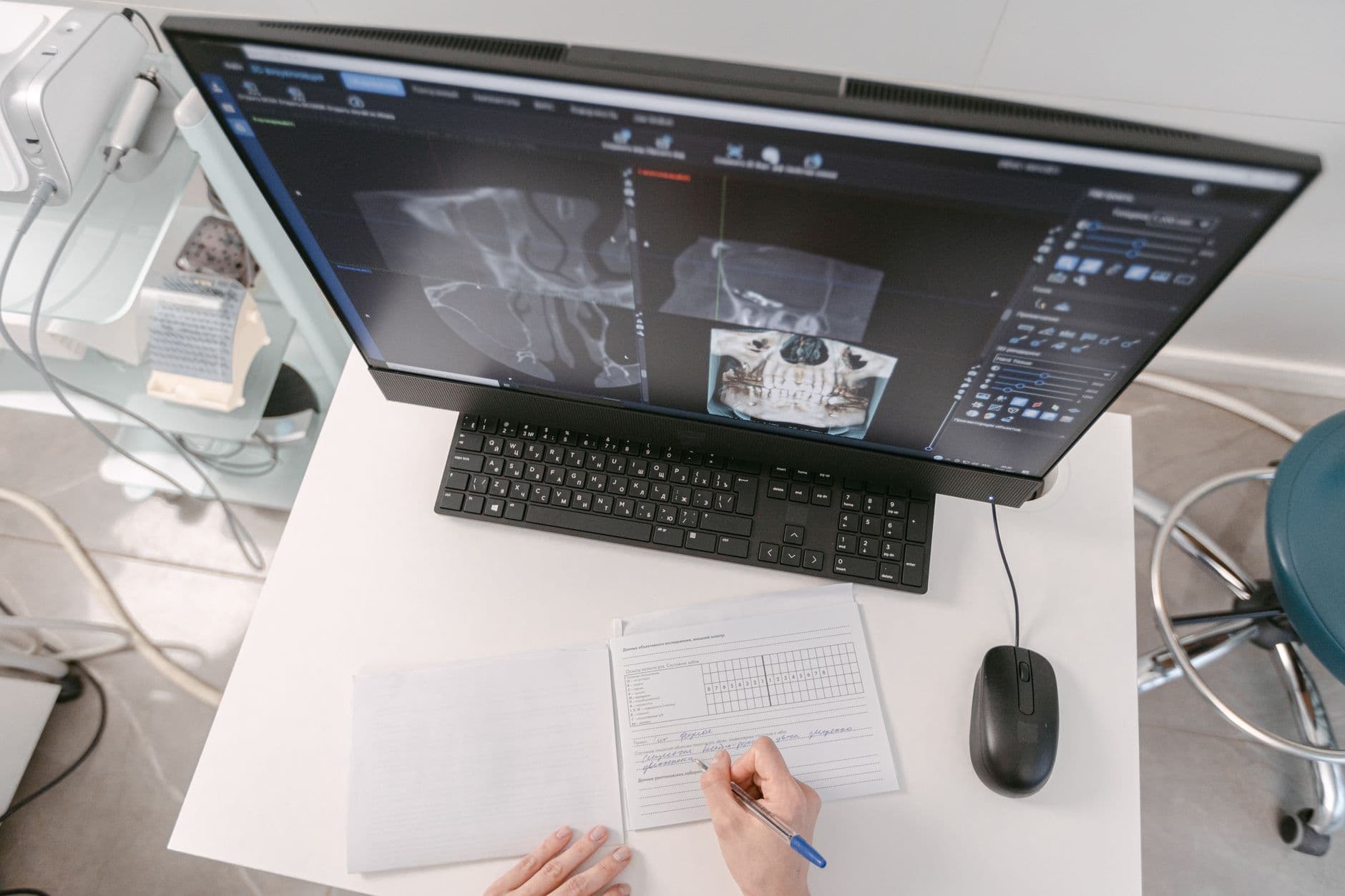
Consider the workflow: a patient uploads a medical image, perhaps an MRI scan or a dermatological photo, directly to an application on their device. Instead of that image being sent across the internet to a remote server for AI analysis, the AI model itself resides on the device. It processes the data locally, identifies potential anomalies, and provides preliminary insights or flags areas for a human doctor to review. This entire process occurs offline, within the secure confines of the user's personal device, eliminating the most significant privacy vulnerabilities associated with cloud-based medical data processing. The patient's data never leaves their control.
Privacy by Design, Not by Policy
The current regulatory landscape for medical data – HIPAA in the U.S., GDPR in Europe – is robust but constantly challenged by the inherent risks of data centralization. Every server, every cloud instance, every third-party vendor represents a potential vector for a data breach. The recent breach at Change Healthcare, impacting potentially millions of Americans, underscores the fragility of centralized systems, costing UnitedHealth Group alone over $1.6 billion in the first quarter of 2024.
Edge AI fundamentally alters this risk profile. By design, it embeds privacy directly into the architecture. The patient's genomic sequence, their detailed medical history, the nuances of a complex diagnostic image – all of this remains on their device. The AI model, having been pre-trained on vast, anonymized datasets, can perform its analytical tasks without ever needing to see or transmit the individual's raw, identifiable information. This isn't just a stronger privacy policy; it's a technical impossibility for the data to be broadly compromised in the same way centralized systems are vulnerable.

Photo by Matheus Bertelli on Pexels
Democratizing Advanced Diagnostics
Beyond privacy, the move to edge AI has profound implications for global health equity. Access to advanced diagnostic tools often depends on high-bandwidth internet, reliable power grids, and expensive hospital infrastructure – resources that are scarce in many parts of the world. A smartphone, however, is increasingly ubiquitous, even in remote regions.
Imagine a remote clinic where a doctor can use a standard smartphone, equipped with a specialized app, to analyze a patient's ultrasound images for early signs of disease, or to quickly screen for genetic predispositions. The need for sending large files over unstable networks, or waiting for lab results from distant facilities, is significantly reduced. This is not about replacing human doctors, but about empowering frontline healthcare workers with sophisticated tools that were previously out of reach, making advanced diagnostics accessible to populations that have historically been underserved.
Overcoming the Technical Hurdles
Optimizing medical-grade LLMs for consumer hardware is no trivial feat. These models are inherently complex, requiring significant computational resources. The challenge involves aggressive model compression, quantization, and specialized hardware acceleration (like neural processing units, or NPUs, now common in high-end smartphones) to perform inference efficiently with minimal power consumption.
Researchers are employing techniques like pruning irrelevant connections in neural networks, converting high-precision floating-point numbers to lower-precision integers without losing accuracy, and designing custom chip architectures that are purpose-built for AI workloads. The steady march of semiconductor innovation, coupled with relentless algorithmic optimization, is what makes this vision tangible. We're seeing models that once required racks of GPUs now run effectively on a chip the size of a thumbnail.
What This Actually Means
This isn't just another incremental improvement in health tech; it's a foundational shift in how we conceive of personal healthcare. Your phone is transforming from a data consumer to a data processor, a secure bastion for your most sensitive health information. This decentralization of diagnostic power will not only fortify patient privacy but will also dramatically expand access to cutting-edge medical analysis.
We are moving towards a future where proactive health management is driven by intelligent, private tools in our pockets. It means fewer trips to specialized clinics for initial screenings, faster preliminary insights, and a significantly reduced burden on centralized medical infrastructure. The human element – the doctor's nuanced judgment and empathetic care – remains irreplaceable, but the tools they wield, and the way patients engage with their own health data, are poised for a quiet, yet profound, revolution.
Quick Answers
Q: What is a "medical-grade LLM"?
A: A medical-grade Large Language Model is an AI model specifically trained and optimized on vast, anonymized medical datasets to perform tasks like diagnostic interpretation, genomic analysis, or treatment recommendation with high accuracy and reliability, meeting clinical standards.
Q: How does this improve patient privacy?
A: By running the AI model directly on your personal device (edge computing), your sensitive medical data never has to leave your device and travel to a remote cloud server, drastically reducing the risk of data breaches or unauthorized access.
Q: Can my current smartphone do this?
A: While current high-end smartphones with dedicated neural processing units (NPUs) are beginning to support such models, widespread adoption will depend on further model optimization and hardware advancements, making it more efficient on a broader range of consumer devices.
Q: Does this replace my doctor?
A: Absolutely not. These AI tools are designed to provide preliminary analysis, flag potential issues, and empower patients and frontline healthcare workers with more information, but human medical professionals remain essential for diagnosis, treatment planning, and personalized care.


