
The Death of the Centralized Diagnosis
For decades, the promise of digital medicine has been held hostage by a fundamental trade-off: to receive high-level analysis, a patient had to surrender their most intimate data to a cloud-based server. This architecture created a permanent bottleneck and a massive security liability. By optimizing medical-grade Large Language Models (LLMs) like GLM to run on edge devices, we are witnessing the collapse of that trade-off. We are moving from a world where you 'send your data to the doctor' to a world where the intelligence of the doctor resides locally on your hardware.
This isn't about basic chatbots or symptom checkers that search a database. We are talking about 4-bit and 8-bit quantization techniques that allow a $1,200 smartphone to execute billions of parameters of medical logic. When a device can analyze complex medical imaging or parse genomic sequences without an internet connection, the hospital infrastructure becomes a partner in treatment rather than a gatekeeper of information. This shift is practical, inevitable, and deeply disruptive to the current healthcare hierarchy.
Local Power Over Cloud Convenience
The technical barrier to this was always memory and compute, but the optimization of models like Kimi has proven that we can compress medical expertise without sacrificing clinical accuracy. Running these models locally on NPU-integrated chips means a rural clinic in a low-bandwidth environment now has access to the same diagnostic caliber as a Tier-1 research hospital in Zurich. In 2023, the idea of processing a full-body MRI scan on a handheld device felt like science fiction; today, it is a matter of software optimization and local VRAM allocation.
Privacy is the most significant beneficiary of this transition. When the diagnostic process happens entirely in the RAM of a local device, the risk of a third-party data breach is effectively zero. There is no server to hack, no transit layer to intercept, and no corporate entity to 'de-identify' and sell your genetic markers. This is the only way to build a medical AI system that people can actually trust with their lives. If the data never leaves the palm of your hand, the patient retains total sovereignty over their biological narrative.
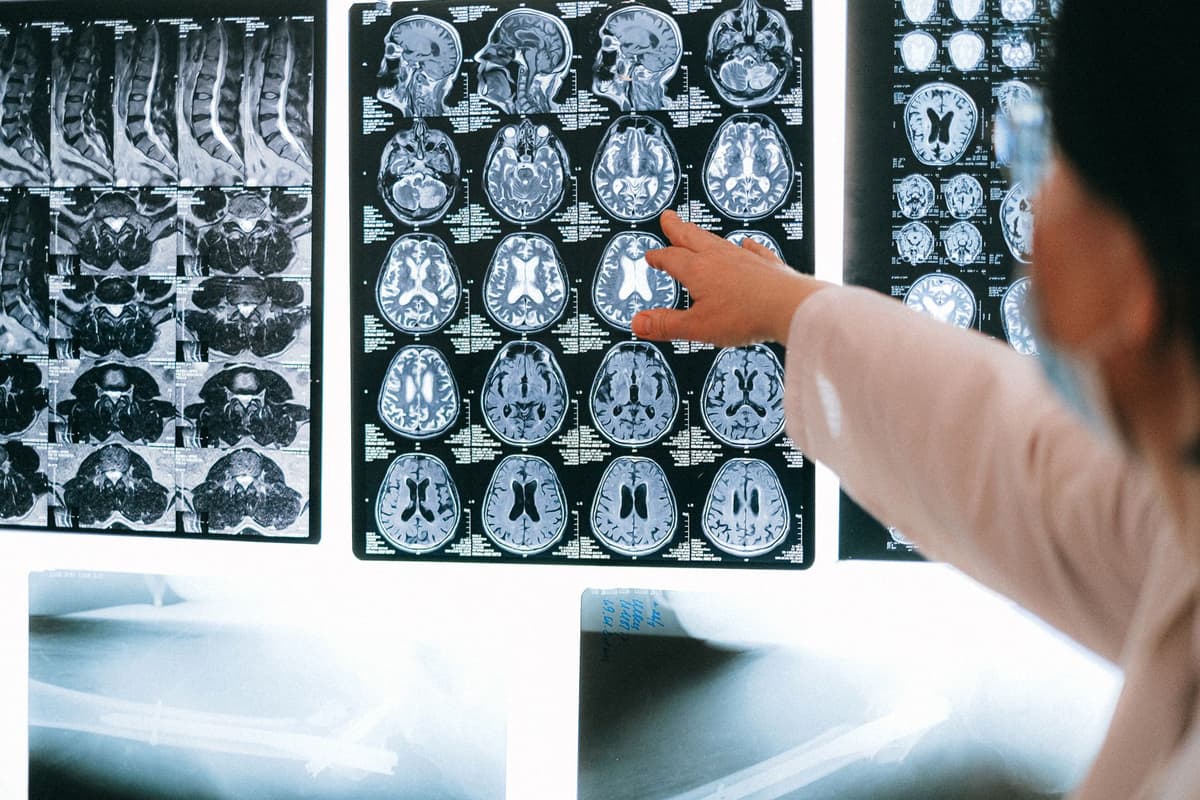
Photo by Anna Shvets on Pexels
The Infrastructure of Autonomy
We must consider the implications for global health equity. Current medical AI models often require a fiber-optic connection and a subscription to a massive tech conglomerate. By moving the 'diagnostic lab' into the device, we eliminate the recurring cost of data transmission and the dependency on stable power grids for cloud access. A smartphone becomes a sterile, private, and portable laboratory. This isn't just a convenience for the wealthy; it is a lifeline for the four billion people currently living in areas with limited medical infrastructure.
The deployment of GLM and Kimi at scale on consumer hardware also forces a regulatory reckoning. Traditional medical device laws are built on the assumption of a physical tool or a centralized software service. They are not prepared for a reality where a patient downloads a weights-and-biases file and becomes their own primary diagnostician. The oversight must shift from controlling the access to the intelligence to ensuring the integrity of the local models themselves.
What This Actually Means
The transition to edge-based medical AI is the final step in the democratization of expertise. When the ability to interpret a rare genetic mutation or identify a malignant tumor moves from the ivory tower to the pocket, the power dynamic of healthcare shifts permanently toward the patient. We are no longer waiting for the future of medicine to be delivered to us via a monthly subscription; we are carrying it with us.
This technology demands a higher level of individual responsibility. As the 'Personal Diagnostic Lab' becomes a standard feature of our hardware, the distinction between 'consumer' and 'clinician' will blur. We must ensure that the speed of this technological adoption does not outpace our ability to interpret the results. The goal is not to replace the human doctor, but to ensure that no patient is ever left waiting for a diagnosis because of a lack of infrastructure or a fear of data theft.
Ultimately, the optimization of these models is an act of liberation. It decouples medical intelligence from the traditional constraints of geography, wealth, and institutional gatekeeping. The smartphone is no longer just a communication device; it is a sovereign medical instrument.
Quick Answers
Is a smartphone really powerful enough for medical imaging?
Yes, through quantization and hardware-specific optimization, modern NPUs can process high-resolution scans locally with high precision.
How does this protect my privacy better than a hospital?
Hospital data is stored on servers that are targets for ransomware; edge-AI keeps your data on your physical device, never hitting the cloud.
Does this replace my primary care physician?
No, it provides a high-fidelity diagnostic starting point and a way to monitor health privately, but physical treatment still requires human intervention.


