
The Vanishing Line Between Pro and Consumer
I spent the morning looking at the latest optimizations for Qwen 3.8 Flash Next, and I can’t shake the feeling that we are witnessing a genuine glitch in the matrix of capitalism. For the last two years, the narrative has been simple: if you don't have $100 million for an H100 cluster, you aren't playing the game. We were told that frontier-class intelligence required industrial-scale cooling and a direct line to the power grid. Then, suddenly, someone figured out how to squeeze a 125B parameter beast into the VRAM of a standard RTX 4090 and make it scream at 100 tokens per second.
It makes me wonder if we’ve been overestimating the 'moat' of big compute this whole time. If a mid-sized law firm or a boutique research shop can run a model that rivals GPT-4 on a machine that sits under a desk, what exactly is the multi-billion dollar advantage of the hyperscalers? We are moving from an era of 'who has the most bricks' to 'who has the best architect.' The raw power is becoming a commodity faster than anyone predicted, and that shifts the entire burden of proof onto the software and the data.
I’m curious about the psychological shift this creates for a CTO. Last year, you were begging for a CAPEX budget to rent cloud GPUs. Today, you might just need a few gaming rigs and a very talented optimization engineer. When the barrier to entry drops from 'impossible' to 'the price of a used Honda Civic,' the competitive landscape doesn't just change—it liquefies.
The Efficiency Paradox of 125 Billion Parameters
There is something almost poetic about the math of 4-bit quantization and flash attention. We used to think that 'bigger is better' meant 'more expensive to run,' but the optimization community is proving that intelligence is remarkably compressible. Seeing 100T/s on a 125B model isn't just a technical achievement; it’s a signal that the 'efficient frontier' of AI is much closer to our living rooms than we thought.
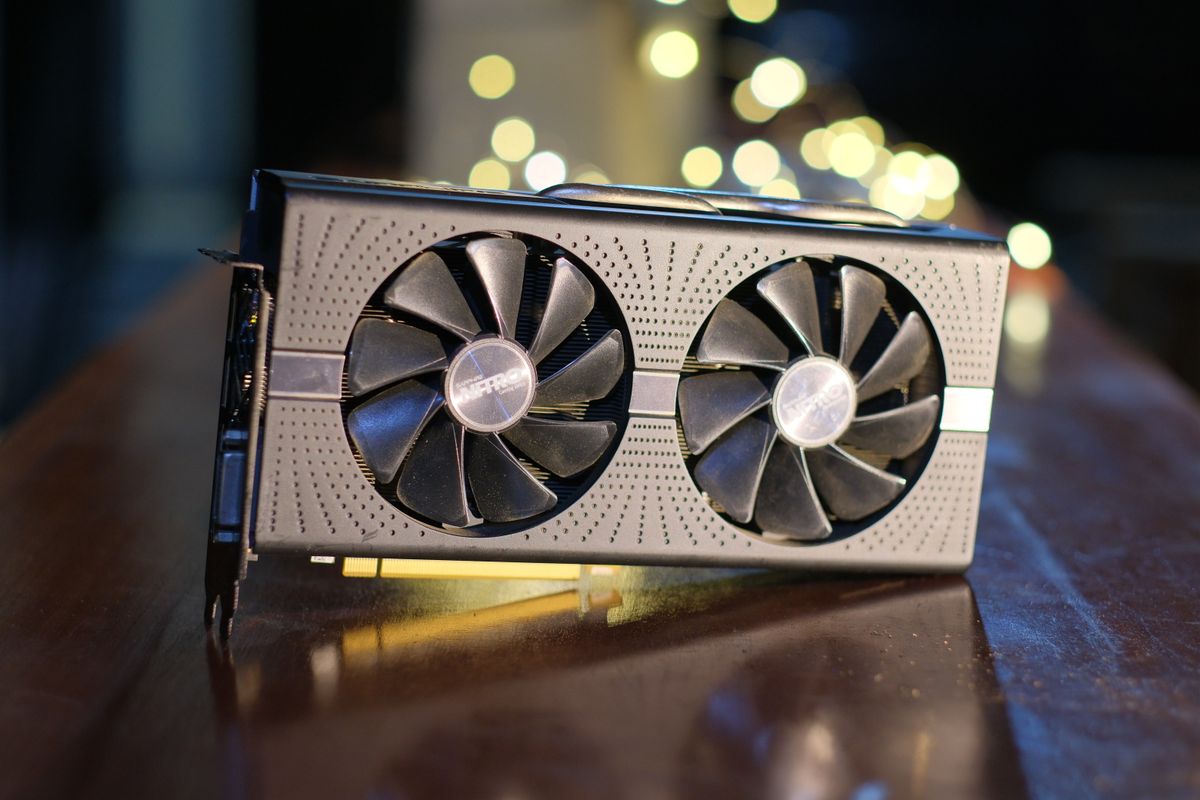
Think about the implications for proprietary data. If I’m a company with sensitive medical records or trade secrets, my biggest hurdle wasn't the cost of the AI—it was the fear of sending that data to a third-party cloud. The moment I can run a frontier-level model locally, that fear evaporates. The moat doesn't belong to the guy with the 10,000 GPUs anymore; it belongs to the person who actually owns the unique data that the model is processing. The hardware is just the pipe, and the pipe is getting cheaper by the hour.
I wonder if the 'compute shortage' was actually just an 'optimization lag.' We were throwing more silicon at the problem because we hadn't yet figured out how to be elegant with the math. Now that the elegance is arriving—driven by open-source contributors who don't have unlimited budgets—the scarcity model is falling apart. It reminds me of the early days of the internet when people realized you didn't need a mainframe to host a website; you just needed a PC and a phone line.
The New Competitive Geometry
If hardware is no longer the differentiator, what is? I suspect we are entering the era of 'Hyper-Local Mastery.' In this world, the winner isn't the company that uses the 'best' model, because everyone has access to the same 125B parameter powerhouses. Instead, the winner is the company that can fine-tune that model to their specific, weird, niche workflow with surgical precision.
- The advantage moves from the CFO (who signs the checks for cloud credits) to the Lead Engineer (who knows how to implement speculative decoding).
- Data privacy becomes a default state rather than a luxury feature.
- The 'latency gap' between local and cloud AI disappears, enabling real-time applications that were previously too slow or too expensive.
I’m trying to imagine a world where a 50-person startup has the same cognitive throughput as a Fortune 500 company. In that world, the only thing that matters is the quality of your ideas and the cleanliness of your data. It’s a terrifyingly level playing field. Large enterprises have relied on their size as a shield for decades, but when intelligence becomes a cheap commodity, size often just becomes overhead.
What This Actually Means
The commoditization of compute means we are about to see a massive decentralization of 'intelligence.' We’ve spent the last decade centralizing everything into a few giant data centers in Virginia and Oregon, but the pendulum is swinging back. If you can get 100T/s on a consumer card, the economic incentive to use the cloud starts to crumble for anything other than massive training runs.
For mid-sized enterprises, this is a 'get out of jail free' card. They no longer have to pay the 'tax' to the big tech giants just to participate in the AI revolution. They can build their own 'intelligence stacks' on-premise, keep their data behind their own firewalls, and operate at speeds that cloud APIs can't touch due to network latency. The 'Compute Moat' was a temporary wall built on a misunderstanding of how fast software would catch up to hardware.
Ultimately, I suspect we’ll look back at the 2023-2024 'GPU wars' as a brief, frantic moment before we realized that intelligence is just another utility. Like electricity or water, it’s not about who owns the power plant; it’s about what you build with the power once it’s flowing into your house. The barrier isn't the cost of the GPU—it's the limits of our own imagination on what to do with 100 tokens per second of pure, local thought.
Quick Answers
Does this mean NVIDIA is in trouble?
Not necessarily, but their customer base might shift from a few giants to millions of smaller entities buying consumer-grade or mid-tier cards. They lose the 'scarcity premium' but gain a massive, decentralized market.
Can a 4090 really handle a 125B model?
Yes, through extreme quantization (like 4-bit or even 2-bit) and clever memory management, though you might need a multi-GPU setup for the highest precision. The 'Flash' optimizations specifically target making these large models usable on limited VRAM.
Is the cloud dead for AI?
No, the cloud will still be the king of training the next generation of models. However, for 'inference'—the actual act of using the AI—the move toward local hardware is becoming an economic no-brainer for anyone with data privacy concerns or high-volume needs.

