
The Defiance of Classical Thermodynamics
For over a century, the physics of energy storage has been a game of patience and thermal management. If you want to charge a bigger battery, you need more time or a more dangerous amount of current. This is the classical bottleneck: as the number of cells increases, the complexity of distributing energy across them scales linearly at best, and inefficiently at worst. We have spent decades refining lithium-ion chemistry to shave minutes off charging cycles, but we are fundamentally fighting the resistance of matter.
Quantum batteries change the math by utilizing super-absorption. In a classical system, cells charge independently; in a quantum system, entanglement allows the cells to act as a single, collective unit. This creates a phenomenon where the charging rate is proportional to the square of the number of cells. In plain terms, if you double the size of a quantum battery, it doesn't just hold more power—it charges twice as fast as the smaller version. This inverted logic upends everything we thought we knew about infrastructure scaling.
Solving the Renewable Intermittency Trap
The primary crisis facing the transition to green energy isn't generation; it is the 'idling' problem. Solar and wind produce massive surges of power that our current grid cannot ingest quickly enough. We lose gigawatts of potential energy every year because chemical batteries have a physical 'speed limit' on how fast they can absorb electrons. If we force it, the heat buildup destroys the hardware.
Research published in Physical Review Letters has demonstrated that quantum entanglement can bypass this thermal throttle. By allowing a massive array of storage units to synchronize instantaneously, we could theoretically capture a lightning-strike level of energy from a wind surge and store it in seconds. This isn't just an incremental improvement. It is the difference between a grid that sips power through a straw and one that opens a floodgate.
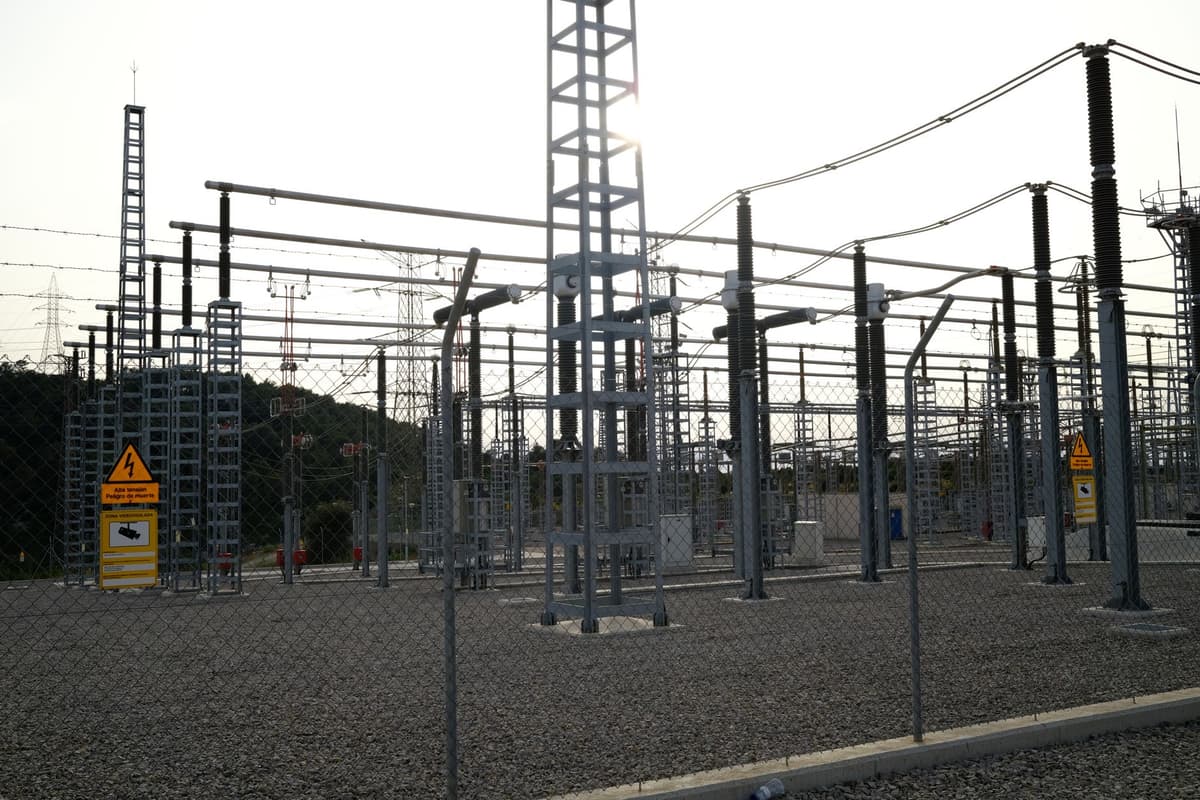
Photo by Enric Cruz López on Pexels
The Engineering Gap Between Theory and Reality
Despite the mathematical certainty of super-absorption, the transition from laboratory decoherence to industrial-scale storage remains a formidable hurdle. Currently, these systems require extreme environments—often near absolute zero—to maintain the delicate quantum states necessary for entanglement. A battery that requires a liquid-helium cooling system to function is not a viable replacement for the pack in a consumer electric vehicle or a neighborhood transformer.
However, the trajectory of quantum materials science suggests these barriers are temporary. We are seeing the emergence of room-temperature superconductors and topological insulators that could house these quantum states. The focus of global investment is shifting from the chemistry of the cell to the physics of the state. We are moving away from 'burning' or 'moving' ions and toward the manipulation of information-energy interfaces. The first company to stabilize a quantum battery at 20 degrees Celsius will effectively own the 22nd century.
What This Actually Means
The arrival of quantum batteries marks the transition from the era of resource extraction to the era of fundamental property manipulation. We have spent the industrial age digging up increasingly rare minerals to act as sponges for electricity. If we can master entanglement-based storage, the physical material matters less than the quantum architecture we impose upon it.
This technology will fundamentally decouple the size of a machine from its downtime. A cargo ship with a quantum core could fully recharge during the time it takes to dock. A national power grid could stabilize itself against fluctuations in milliseconds rather than hours. We are looking at the death of the 'charging' wait time as a concept of modern life.
Ultimately, this is about the survival of high-energy civilization. We cannot run a global, carbon-neutral economy on the slow, heat-restricted chemistry of the 20th century. We need a storage medium that moves at the speed of the electrons it holds. Quantum batteries are not just a luxury for the tech-obsessed; they are the necessary infrastructure for a world that can no longer afford to wait for its power to catch up.
Quick Answers
Will this make my phone charge in one second?
Technically yes, but the infrastructure to deliver that much power to a handheld device safely doesn't exist yet. The first applications will be in massive grid storage, not consumer electronics.
Is this technology safe compared to Lithium-ion?
Quantum batteries don't rely on the same volatile chemical reactions, meaning they lack the 'thermal runaway' risk that causes current batteries to catch fire when damaged.
When will this be commercially available?
Small-scale laboratory prototypes exist now, but commercial grid-scale deployment is likely 15 to 20 years away due to cooling and stability requirements.


