
Somewhere in a wooden cabinet in London or Paris, there is a flattened, brittle leaf collected in 1884 that can kill drug-resistant bacteria. We have had the cure sitting on a shelf for a hundred and forty years, but nobody knew how to ask the dead plant what it was holding. Now someone pointed a computer vision model at the margins of handwritten naturalist notes, and the drawers are starting to talk.
The Ghost Fleet of Modern Chemistry
Walk into the back rooms of any major natural history museum and you will smell naphthalene, old parchment, and cedar. You are looking at an archive of extinctions, migrations, and colonial expeditions. The world's herbaria hold roughly 400 million preserved plant specimens, some dating back past the 1700s. For centuries, these pressed weeds were treated mostly as morphological receipts: proof that a particular fern grew along a specific bend of the Mekong River in 1892.
Botanists knew these plants contained complex secondary metabolites. Plants are, after all, stationary chemical warfare factories. Because they cannot run away from caterpillars, fungi, or competing weeds, they invent terrifyingly intricate molecules to poison their enemies or heal their own tissues. But extracting those molecules meant destroying the specimen, boiling down irreplaceable dried fragments in solvent, and hoping for a signal through the noise.
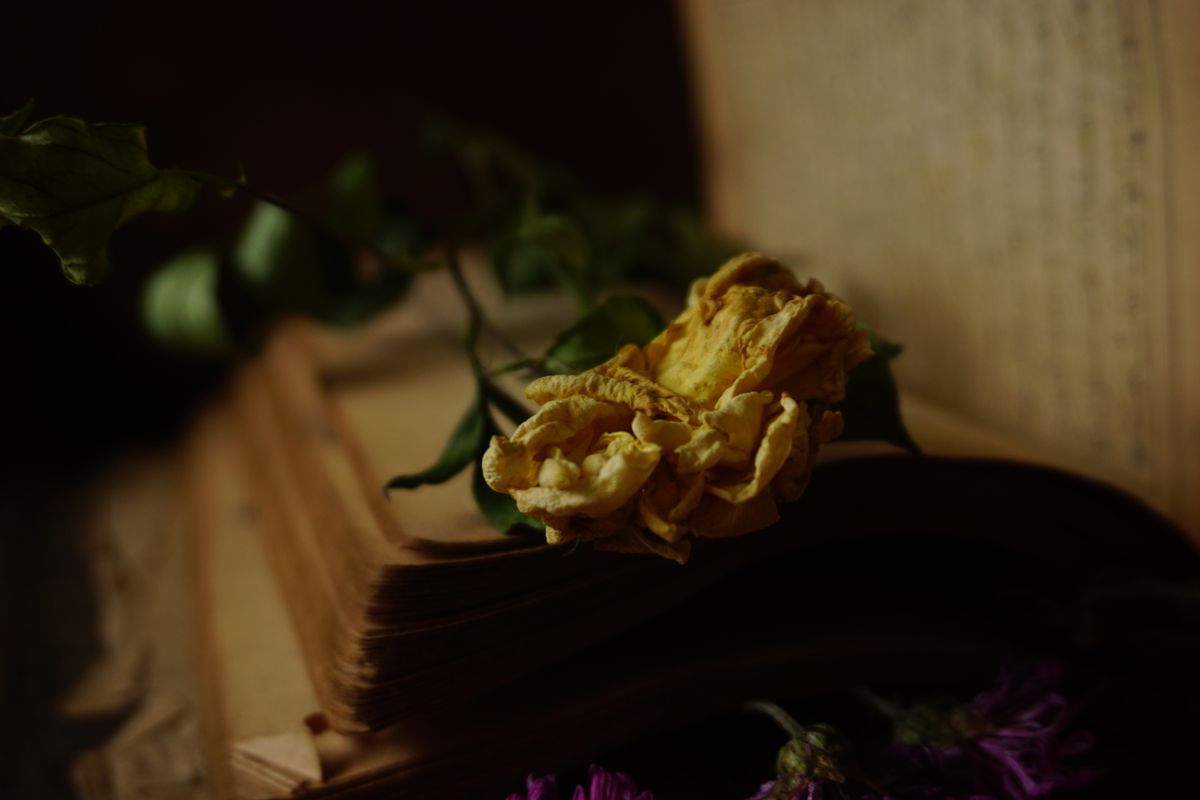
So the sheets just sat there. Thousands of linear feet of biological code, physically preserved behind brass latches, completely unindexed by the pharmaceutical industry. We spent billions of dollars on synthetic chemical libraries, systematically testing millions of randomly assembled molecules in robotic well plates, while an armada of field-tested biological solutions slowly turned to dust in basement storage.
Reading the Margins with Synthetic Eyes
What changed recently is not just high-resolution scanning, but the collision of multimodal AI with messy, non-standard historical handwriting. The breakthrough sits in an emerging discipline called paleopharmacology. It turns out that 19th-century botanists were obsessive note-takers, but their handwriting was atrocious, their dialects were archaic, and their cross-referencing system was nonexistent.
When researchers train vision-language models on digitized herbarium sheets, the models do not just classify the leaf shape. They read the frayed field notes pasted in the lower-right corner. They parse marginalia written in fading iron-gall ink. They cross-reference an offhand note by an amateur Scottish botanist in Madras—noting that local villagers boiled a specific tuber to treat festering spear wounds—with modern genomic databases and protein-folding predictions.
- Vision models detect faint chemical weathering patterns and resin deposits on 150-year-old leaves without destroying the tissue.
- Multimodal OCR transcribes archaic vernacular names, matching historical folk uses to modern pathogen assays.
- Predictive molecular algorithms infer the probable biosynthetic pathways of specimens that have been extinct in the wild for eighty years.
Consider the sheer volume. In late 2023, automated archival mining projects began surfacing lost taxa, misplaced meteorite fragments, and neglected subspecies across European collections simply by connecting dots humans forgot existed. It makes you wonder: what happens when that same archival pattern-matching is aimed purely at antimicrobial resistance?
Bioprospecting Without a Machete
Traditional bioprospecting is brutal work. You fly a team of biochemists into a cloud forest, hire local guides, harvest kilograms of fresh biomass under strict regulatory treaties, freeze it in liquid nitrogen, and fly it home. It takes years and millions of dollars, and frequently runs into legitimate ethical walls regarding indigenous intellectual property.
Archive mining turns the entire pipeline inward. You don't need a machete; you need a high-resolution flatbed scanner and a high-bandwidth neural network. You are prospecting in the collective memory of thousands of long-dead field scientists.
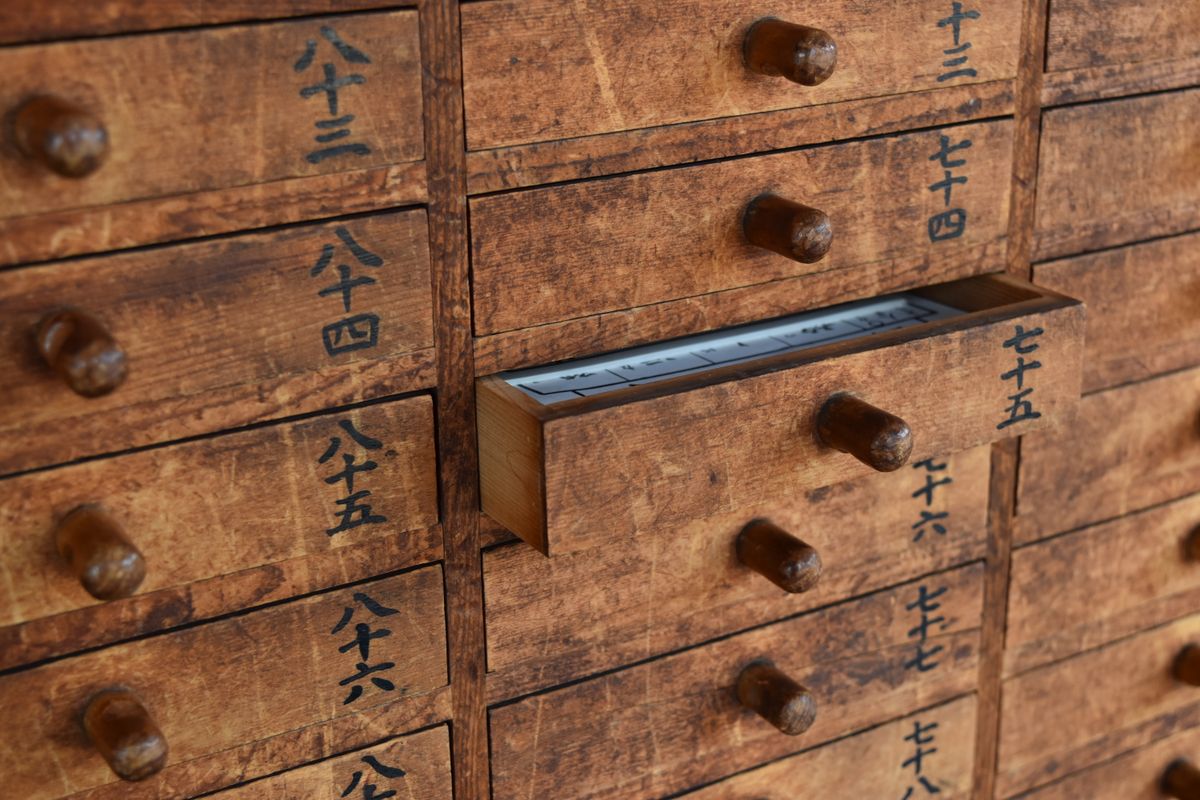
Photo by Stephan Streuders on Pexels
There is an eerie, poetic symmetry here. We are facing a crisis where modern synthetic chemistry is running out of new antibiotic scaffolds. The World Health Organization estimates that bacterial antimicrobial resistance was directly responsible for 1.27 million global deaths in 2019. We are running out of weapons against common infections because our synthetic discovery engines keep cycling through variations of the same four or five basic molecular shapes.
Yet here, preserved between sheets of acid-free rag paper, are plants collected before the advent of industrial monoculture, before heavy chemical pesticides altered soil microbiomes, and before global habitat loss erased countless chemotypes forever. In a very literal sense, the 19th century bottled up chemical defenses against pathogens we have never genetically screened.
What This Actually Means
We usually talk about artificial intelligence as a forward-facing predictive engine, something built to forecast protein shapes from scratch or simulate clinical trials in silico. But maybe its most profound immediate trick is retrospective. It behaves like an artificial collective memory, knitting together fragments of human observation that were separated by centuries, oceans, and bad handwriting.
I find myself wondering how much other fundamental knowledge is already sitting in plain sight, fully documented, merely waiting for an intelligence patient enough to read the filing cabinets. We assume that scientific progress is a clean, cumulative ladder where each generation builds on the proven insights of the last. It isn't. Science is a leaky bucket. We forget things constantly. We misfile remedies, we abandon entire taxonomic families because a grant ran out in 1912, and we let brilliant observations rot in university sub-basements.
The real breakthrough in archival AI is not that it creates new medicine out of pure math. It is that it finally lets us listen to what we already found.
Quick Answers
Does scanning an old plant actually tell you its chemical structure?
Not directly, but multimodal systems correlate historical field notes, leaf morphology, and taxonomic lineages with modern chemical databases to predict which dried samples likely produce rare bioactive compounds before any lab cuts into the specimen.
Can dried plants over a century old still yield useful medicine?
Yes, because complex secondary metabolites like alkaloids, tannins, and terpenoids can remain chemically stable within dry herbarium sheets for centuries, waiting to be identified and synthesized artificially in modern labs.
Why not just collect fresh plants from nature?
Many of the specific habitats documented in historical collections no longer exist, and dozens of the sampled plants are critically endangered or totally extinct in the wild.

