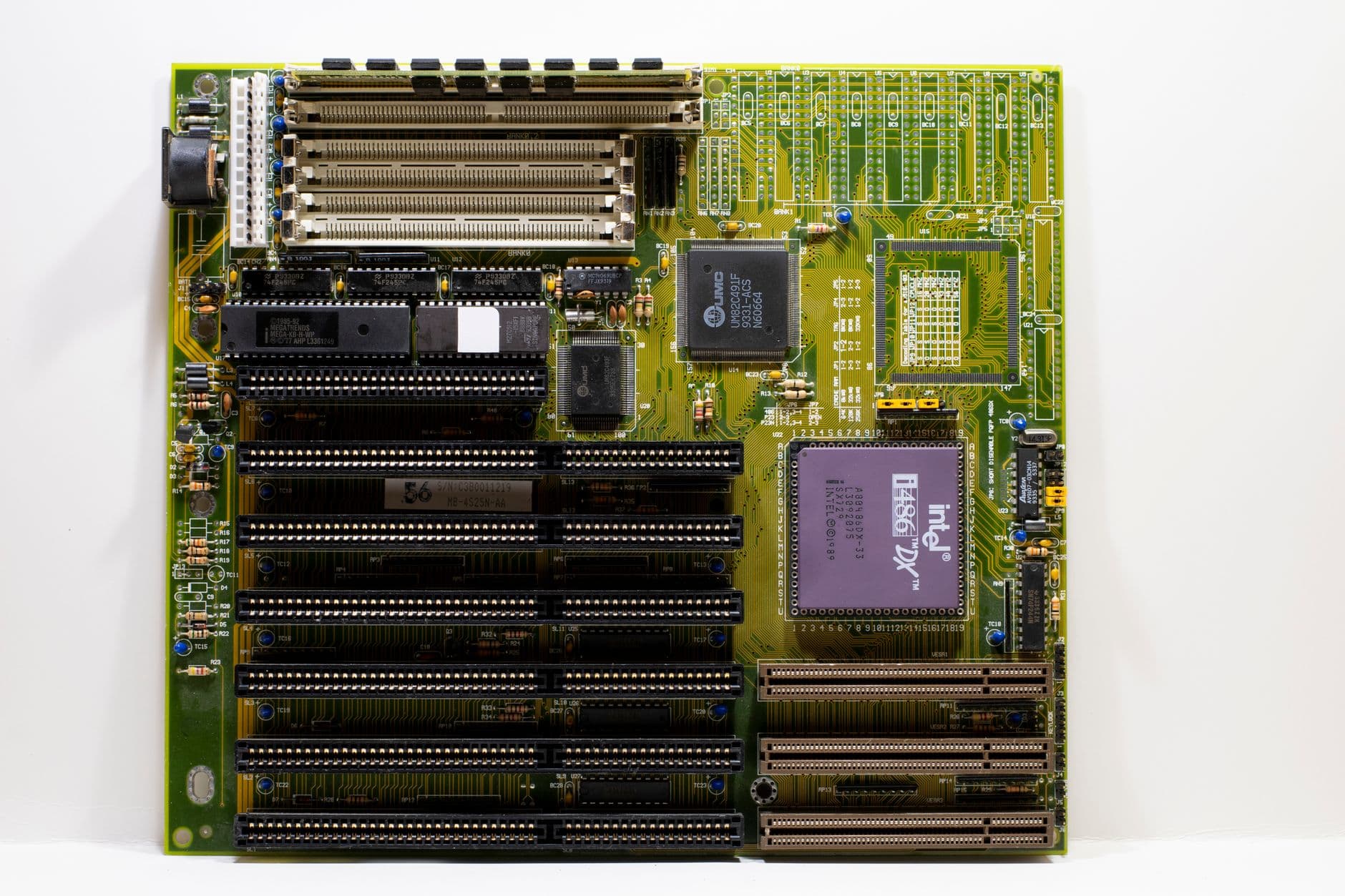
It took sixty years of relentless microchip scaling, billions of dollars in R&D, and trillions of invisible transistors for modern engineers to realize they miss tiny pieces of red plastic. We engineered computing power so microscopic that nobody can see it, surrounded it with layers of proprietary abstraction so thick that nobody can inspect it, and now we are celebrating the bold, disruptive frontier of moving plastic pegs by hand. Congratulations to us all.
Behold the Digi-Comp 1, a mechanical binary computer sold by E.S.R., Inc. in 1963 for a whopping $4.99. It came with three plastic flip-flops, some cylindrical pegs, and a handful of thin rubber bands that degraded into sticky yellow slime if you looked at them wrong. It held exactly three bits of data. It added numbers up to seven, provided you did not yank the manual clock lever with enough force to snap the polystyrene frame. It was a toy for children who thought Erector Sets were too chaotic and wanted to experience the joy of Boolean logic in their living room.
Now, six decades later, our best and brightest are dusting off this exact design to rescue the industry from its own brilliance.
The Grand Renaissance of Things You Can Drop on Your Foot
There is a deeply earnest subculture emerging in consumer electronics called 'tactile logic' or 'explainable computing.' The premise is as touching as it is embarrassing: modern software is so impossibly opaque that the only way to teach someone how a logic gate operates is to build a gigantic, clunky machine that clicks.
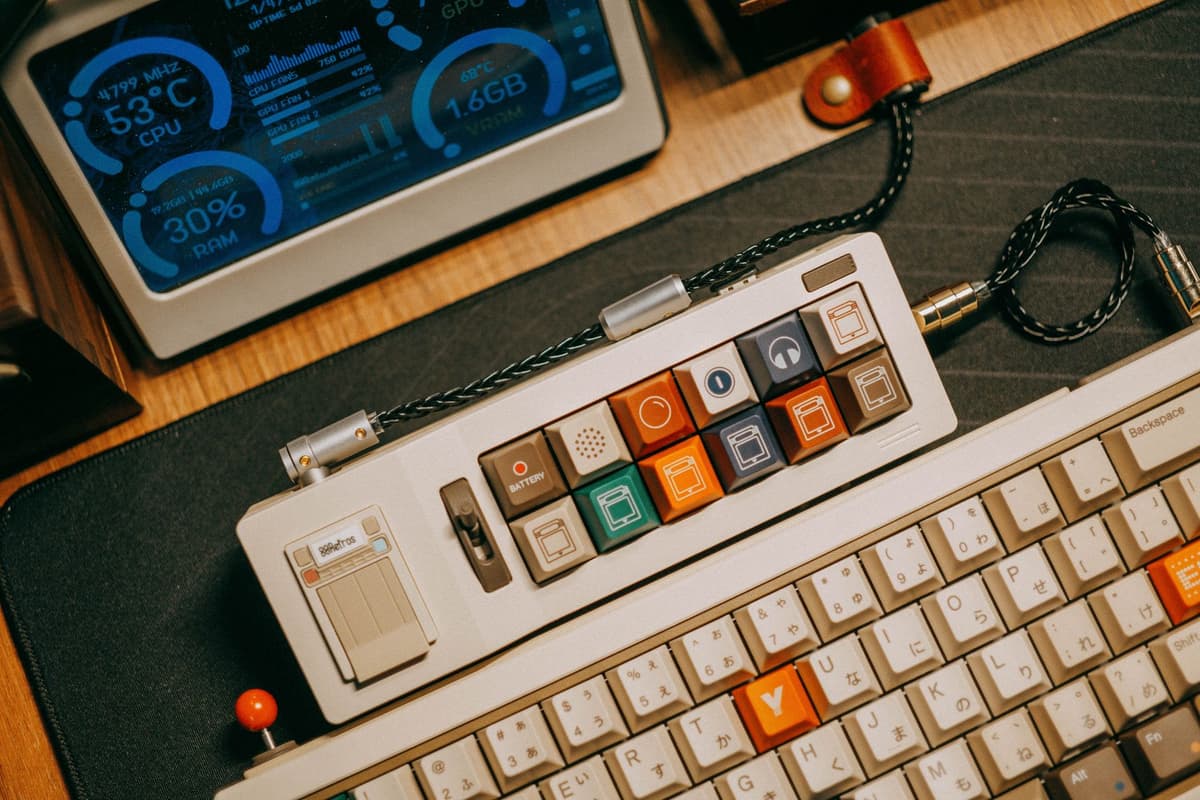
Photo by FOX ^.ᆽ.^= ∫ on Pexels
We spent the last half-century relentlessly shrinking transistors down to a staggering 3 nanometers, effectively building silicon cathedrals on the head of a pin. The reward for this triumph of human intellect is that nobody buying a consumer gadget has the faintest idea how any of it works. Your phone is a polished black rectangle filled with billions of invisible switches, running closed-source operating systems, interpreting neural nets that even their creators describe as incomprehensible statistical soup.
Naturally, the enlightened response from the engineering vanguard is to pivot backward toward literal clockwork. The argument goes that because consumers feel alienated by the black box of modern tech, they need to physically see a plastic tab block another plastic tab. This is not a nostalgic retreat, we are assured with very straight faces. It is a revolutionary pedagogical leap forward.
A List of Things We Conquered Just to Re-invent the Abacus
To appreciate the sheer majesty of this intellectual circle, consider the trajectory of consumer technology over the past sixty years:
- In 1963, a kid used a Digi-Comp 1 to physically observe how binary addition carried the one via a physical plastic rod.
- By 1981, home computers hid the logic gates inside epoxy resin, but you could still poke around in BASIC.
- By 2005, the hardware was completely untouchable, but you could at least open a terminal window.
- By 2024, our tools write our code for us, our neural networks hallucinate answers, and top-tier engineers are 3D-printing giant mechanical NAND gates on Kickstarter to remember what a bit feels like.
We conquered nature, bent light to etch microscopic silicon, and engineered systems so sophisticated that our only recourse for understanding them is treating a 1960s plastic toy like a sacred artifact found in an ancient tomb.
When 'Explainable' Just Means 'Slow Enough for Humans'
The driving thesis of explainable computing is that demystifying the machine will make people more rational digital citizens. If a teenager pushes a mechanical slider and sees how an AND gate decides whether a lever drops, they will suddenly grasp the ethical implications of algorithmic surveillance. It is a lovely theory. It assumes the problem with modern technology is that people simply lack an intuitive grasp of discrete mathematics, rather than the fact that modern tech companies deliberately lock everything behind encrypted bootloaders and glue their hardware shut.

Silicon was never meant to be empathetic. It was meant to be fast and cheap. The Digi-Comp 1 calculated at roughly one cycle every two seconds, depending on how vigorously a twelve-year-old pumped the plastic handle on the side. The modern smartphone executes billions of instructions per second. If you want computing to be physical, visible, and completely transparent, you have to accept computing that takes three minutes to determine if four is greater than two.
Modern hardware manufacturers love this tactile movement because it reframes their deliberate opacity as a charming quirk of physics. They did not lock you out of your devices with proprietary screws and encrypted firmware—no, computing is just inherently mysterious, and you should probably buy a wooden gear kit if you want to feel involved.
What This Actually Means
The tactile logic revival is not the vanguard of a new computing era. It is an autopsy of comprehension. We have officially built tools that exceed our collective ability to visualize them, so we are creating mechanical dioramas of the past to comfort ourselves.
There is nothing wrong with a plastic slider or a wooden cam. They are neat. They are satisfying. They click in a way that provides a fleeting hit of dopamine to engineers exhausted by abstract debugging sessions. But let us stop pretending that playing with a sixty-year-old plastic toy is fixing the opacity of modern technology.
You cannot demystify a global data empire with three bits and a rubber band. The plastic slider moves back and forth, the lever drops, and the machine sits there on the table, completely understood, entirely harmless, and completely irrelevant to the black boxes running the world.
Quick Answers
What was the original Digi-Comp 1?
It was a plastic mechanical computer introduced in 1963 by E.S.R., Inc. for $4.99 that used sliding plates, pegs, and rubber bands to perform basic binary logic operations manually.
Why are engineers suddenly interested in 1960s mechanical toys?
Modern computing is so abstract and microscopic that educators and developers use physical, moving mechanisms to visually demonstrate basic logic gates that are normally invisible inside silicon chips.
Can a mechanical computer actually do anything useful today?
No. Unless your definition of useful is calculating simple binary addition at a rate of one operation every three seconds while sounding like a broken typewriter.


