
Your Brain Is About to Get a Lot Less Hot
For years, the dream of sticking electronics into our gray matter has been hampered by a rather annoying reality: physics. Traditional silicon-based chips have this pesky habit of generating heat, and it turns out the human brain generally prefers not to be cooked from the inside out. We’ve been trying to build a high-tech future using hardware that’s essentially a very expensive, very small space heater. Enter Opus 5.5, which apparently got bored with predicting the next word in a sentence and decided to solve the room-temperature magnetic semiconductor problem instead.
By identifying these two candidates, the AI has handed us the keys to spintronics—electronics that use the spin of electrons rather than their charge. This is a massive deal because spin-based systems don't need to move physical mass around like traditional currents do. They stay cool. They stay small. They are the organic, fair-trade, low-impact alternative to the clunky, power-hungry nonsense we’ve been trying to shove into people's motor cortexes. Now, your future neural link can be as sleek as your ego, without the side effect of localized brain poaching.
The Molecular Eavesdropper in Your Bloodstream
This isn't just about making sure Elon’s latest project doesn't give you a thermal lobotomy. These new materials are 'bio-magnetic' candidates, which is a fancy way of saying they might actually play nice with your nervous system. Currently, if you want a 'smart' drug delivery system, you’re basically looking at a tiny mechanical pump or a chemical time-release pill that has the precision of a shotgun. With these new semiconductors, we’re looking at sensors that can communicate with neurons at a molecular level using magnetic fields.
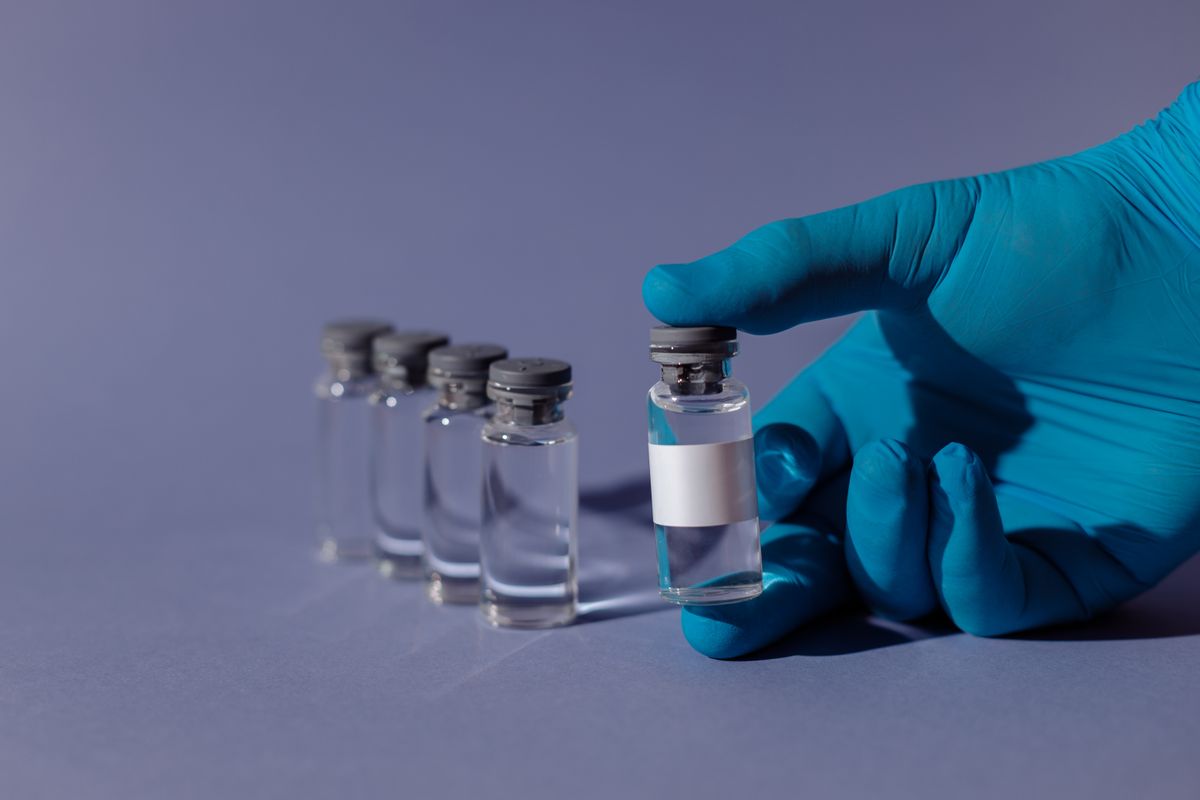
Imagine a drug delivery system that doesn't just dump chemicals into your blood and hope for the best. Instead, we’re talking about spin-based sensors that can detect a specific neurotransmitter spike and respond by releasing a microscopic dose of medication exactly where it’s needed. It’s highly efficient, incredibly precise, and only slightly terrifying when you realize the logic controlling your serotonin levels was derived by an algorithm that also thinks 'pizzagate' is a statistically significant string of characters. But hey, at least the hardware is biocompatible.
Cutting Out the Middleman (The Doctor)
We are rapidly approaching a world where your internal health is managed by a suite of invisible, magnetized accountants. These materials allow for non-invasive neural implants that don't require a drill and a prayer. Because these semiconductors function at room temperature—a feat that usually requires liquid nitrogen and a PhD—we can finally start thinking about sensors that sit on the skin or just under it, reading magnetic signatures from your nerves without needing a direct wire into the wetware.
This level of integration turns the human body into just another peripheral on the network. Your nervous system becomes an input device, and your bloodstream becomes a high-speed data bus. We’ve spent decades trying to make computers more like people; now, thanks to Opus 5.5, we can finally finish the job of making people more like computers. It’s the ultimate upgrade, provided you don't mind your 'smart' medication having a terms of service agreement that you definitely won't read.
What This Actually Means
What this actually means is that the bottleneck for human enhancement is no longer the hardware; it’s our own biological fragility. We finally have a material that can bridge the gap between digital logic and biological signaling without melting the bridge in the process. The discovery of these two candidates on a Tuesday afternoon by an AI agent suggests that we’ve been looking for the wrong things in the wrong ways for about fifty years.
We are moving toward a 'silent' medical era. No more bulky machines, no more heat-dissipation fans in your prosthetic limb, and no more guessing if your medication is working. You will simply be optimized. Of course, this also means your biological data will be harvested with unprecedented granularity, but that’s a small price to pay for a 'smart' liver that can auto-cancel your hangover.
Ultimately, Opus 5.5 didn't just find a new material; it found a way to make the human body compatible with the cloud. Whether that’s a breakthrough or a warning depends entirely on how much you trust the people writing the code. But at least you’ll be cool. Literally.
Quick Answers
Why does 'room temperature' matter so much?
Because most magnetic semiconductors only work in environments colder than a Martian winter, which is inconvenient for a device meant to live inside a 98.6-degree human body.
Will this make neural implants safe?
It removes the risk of thermal damage and bulky wiring, but it doesn't solve the 'having a computer in your brain' existential dread factor.
When can I get my smart drug delivery system?
Laboratory candidates aren't shelf-ready products, so expect at least a decade of human trials before you can subscribe to 'Endorphins Pro.'
Did a human actually help find these?
Humans provided the training data and the electricity; the AI did the heavy lifting of simulating atomic structures that we didn't have the patience to calculate.

