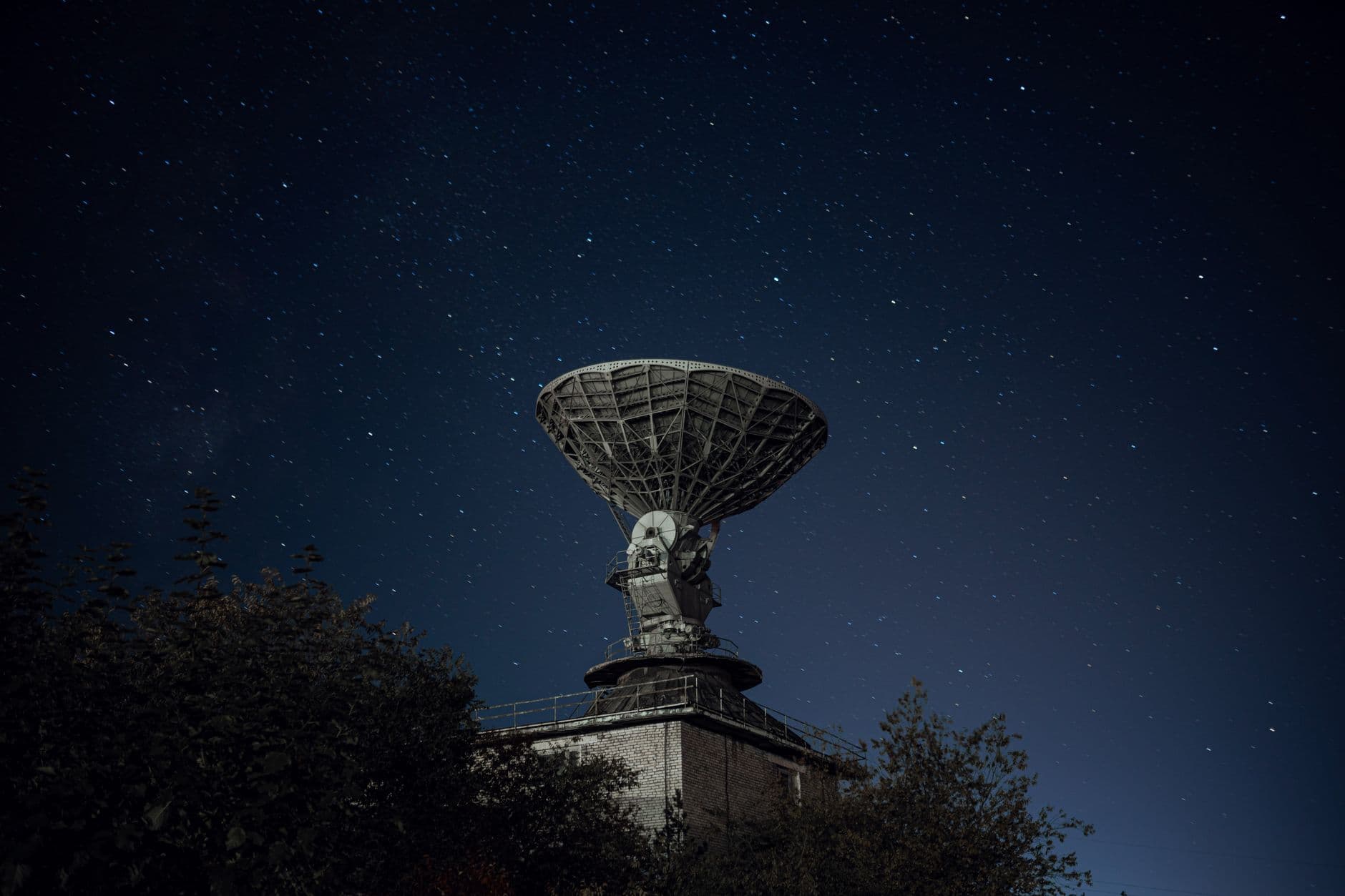
The sky has always been a repository for our greatest existential fears, but until recently, the data required to validate those fears was locked behind the gates of NASA’s Jet Propulsion Laboratory and the European Space Agency. We lived in an era of informational paternalism. If a rock the size of a football stadium was hurtling toward a specific coordinate in the Atlantic, we relied entirely on a press release to find out. Neo Radar, a browser-based orbital mechanics engine tracking over 41,000 real asteroids, has effectively ended that era. By moving high-fidelity orbital simulation from local supercomputers to the common web browser, we are witnessing the democratization of planetary defense.
This is not about hobbyist stargazing; it is about the decentralization of existential risk management. When a single entity controls the data and the interpretation of that data, they control the public narrative surrounding safety and urgency. By providing independent researchers and the technically literate public with the tools to visualize impact probabilities and kinetic deflection scenarios, we create a system of checks and balances for the cosmos. We are moving from a world where we are told to 'trust the experts' to one where we can verify the math ourselves.
The Technical Collapse of the Gatekeeper Model
In the late 1990s, simulating the n-body problem—the physics of how multiple celestial bodies interact gravitationally—required significant CAPEX in the form of specialized hardware. Today, WebGL and optimized JavaScript engines allow a standard laptop to calculate the trajectory of a Near-Earth Object (NEO) with staggering precision. Neo Radar leverages this to visualize 41,000 asteroids simultaneously, a feat that would have been a landmark achievement for a national laboratory twenty years ago. This technical leap removes the financial barrier to entry for orbital mechanics.
When the cost of high-level simulation drops to zero, the nature of scientific discovery changes. Independent researchers can now run thousands of 'what-if' scenarios regarding kinetic impactors—the primary method proposed for diverting dangerous asteroids. They can calculate the exact Newtons of force required to shift an orbit by a fraction of a degree, effectively peer-reviewing the deflection strategies of major space powers in real-time. This is a massive leap in public utility that renders the 'closed-door' model of space monitoring obsolete.
Geopolitics and the Transparency of Risk
Transparency is a double-edged sword for governments. For years, the precise tracking of certain objects remained obscured, sometimes to avoid public panic and sometimes to hide the capabilities of tracking hardware. However, Neo Radar utilizes the Small-Body Database (SBDB) and other open-source repositories to bring this data into a high-utility interface. This makes it impossible for any single nation to downplay a potential threat for political reasons or to monopolize the 'solution' to a looming impact scenario.
Photo by Kampus Production on Pexels
There is also the matter of the 'gray zone' in space—objects that are not quite asteroids but could be spent rocket stages or classified satellites. As the public becomes more adept at using tools like Neo Radar, the ability for governments to hide orbital assets diminishes. While the tool is currently focused on natural bodies, the underlying technology—the ability to visualize and predict complex orbital maneuvers in a browser—sets a precedent for a fully transparent orbital environment. We are entering an age where the vacuum of space is no longer a convenient place for state secrets.
The Responsibility of the Crowdsourced Watchtower
With this new power comes a significant burden of interpretation. The math of orbital mechanics is unforgiving, and while the tools are now public, the expertise to use them correctly is still being distributed. A minor error in an independent researcher’s simulation could lead to false alarms that spread through social media faster than a government agency can debunk them. This is the price of democratization: we trade the safety of a controlled narrative for the volatility of an open one.
However, the benefit of having ten thousand sets of eyes on the data far outweighs the risk of a few false positives. The history of science is defined by the amateur who spotted what the institution missed. By providing a platform where anyone can simulate a kinetic deflection—the act of hitting an asteroid with a spacecraft to change its path—we are crowdsourcing the survival strategies of the species. We are no longer passive observers of our own potential extinction; we are active participants in the calculation of our safety.
What This Actually Means
Neo Radar is a signal that the infrastructure of planetary survival is moving into the public domain. It represents a fundamental shift in how we perceive our place in the solar system—not as subjects waiting for news from on high, but as a technologically capable collective. The democratization of these tools ensures that no single government can claim a monopoly on the truth regarding what is coming toward us.
We are finally treating planetary defense as a global utility rather than a national security secret. This transparency forces a level of international cooperation that was previously optional. If the data is public and the simulations are reproducible by anyone with an internet connection, then the response to a threat must also be public and collaborative. The wall between the scientist and the citizen has been breached by a browser tab.
Ultimately, this is about the maturation of our species. A civilization that can track its own threats and simulate its own salvation without relying on a central authority is a civilization that is significantly harder to blindsident. We have taken the first step toward a permanent, decentralized watchtower for Earth. It is a serious tool for a serious reality: the rocks are out there, and now, we all know exactly where they are.
Quick Answers
Is the data in Neo Radar accurate enough to rely on?
Yes, it pulls from the same orbital element databases used by major astronomical institutions, though real-time precision always depends on the latest observational updates.
Can a browser really handle the physics of 41,000 asteroids?
Modern GPU acceleration allows browsers to handle massive datasets by offloading the math from the CPU, making complex visualizations possible on consumer hardware.
Does this replace NASA’s monitoring programs?
No, it complements them by providing a public interface for the data NASA collects, acting as a transparency layer and a secondary verification tool for the global community.


