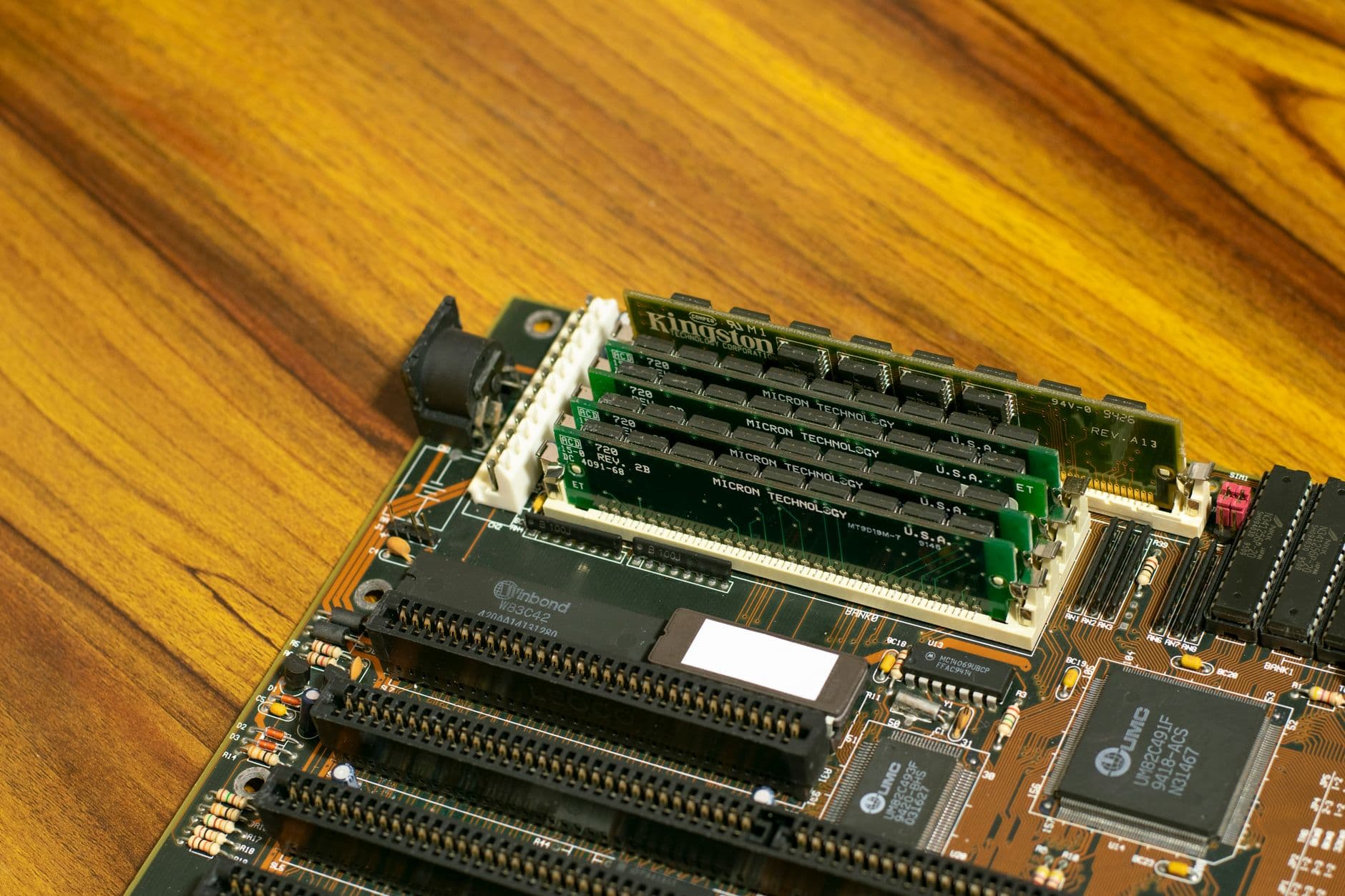
The $10 Billion Potato Chip
Micron just announced they are spending $10 billion on a research and development center in Boise, Idaho. Ten billion. That is not a 'we’re building a nice office' amount of money; that is a 'we are building a secret lair where we can definitely survive the collapse of society while playing 8K Minecraft' amount of money. They aren't just building a factory; they are building a temple to the god of High Bandwidth Memory (HBM), and they chose the land of famous potatoes to do it.
For decades, the tech industry treated manufacturing like a messy younger sibling they could ship off to a summer camp in another hemisphere and forget about. But now, thanks to the 'memory wall'—which sounds like a Pink Floyd cover band but is actually the reason your computer chokes when you open more than three Chrome tabs—the big brains have realized that the people designing the chips and the people making the chips need to be close enough to throw paper airplanes at each other.
Solving the Wall with a Really Big Hammer
We are currently hitting a literal physical limit where processors are screaming fast, but the memory holding the data is basically a DMV clerk with a clipboard and a bad attitude. AI models are getting so big they’re starting to act like my uncle at Thanksgiving: they have too much information, no way to process it quickly, and they keep hallucinating things that aren't there. To fix this, Micron has to invent ways to stack memory chips like a high-stakes game of Jenga where a single dust mote costs $50,000.
- Micron’s goal is to bridge the gap between 'I have a cool idea' and 'I have a physical object that doesn't melt when I plug it in.'
- By putting the R&D hub right next to their upcoming $15 billion manufacturing fab, they are cutting the travel time for a prototype from 'six weeks on a cargo ship' to 'a five-minute walk by a guy named Gary.'
- This is about sovereignty. If the next world war is fought over who has the smartest toasters, Idaho is officially our frontline defense.
Photo by Jeremy Waterhouse on Pexels
Why Boise is the New Palo Alto (But With Better Parking)
Let’s be honest: when you think of 'the center of the geopolitical struggle for technological supremacy,' you usually think of a neon-lit skyscraper in Taipei or a sprawling campus in Silicon Valley where everyone wears $400 hoodies. You don't think of a city where the primary cultural landmark is a football field the color of a Smurf’s bathwater. But that’s the genius of it. No one expects the revolution to be televised from a city where the biggest traffic jam is caused by a runaway sheep.
Boise is actually the perfect place for a $10 billion brain-drain. It’s quiet. It’s safe. There is nothing to do except stare at silicon wafers and try to figure out how to squeeze another 40 gigabytes into a space the size of a ladybug's fingernail. If you put this hub in San Francisco, the engineers would spend half their time debating the ethics of artisanal sourdough. In Boise, they’re just going to build the future of AI and then go fly-fishing.
What This Actually Means
This is a massive hedge against the fact that the world is currently one bad day away from a total supply chain cardiac arrest. By moving the 'brainpower' back onshore, Micron is signaling that the era of 'designed in California, made literally anywhere else' is dying. We’ve realized that if we want the AI that eventually replaces us to be efficient, we need to build its brain in-house where we can keep an eye on it.
Ultimately, this $10 billion bet is about speed. Not just the speed of the chips, but the speed of iteration. When your research lab is in the same time zone as your factory, you stop losing months to shipping delays and start losing hours to the fact that someone forgot to calibrate the extreme ultraviolet lithography machine because they were distracted by a particularly good huckleberry milkshake.
We are entering the 'Silicon Heartland' era. It sounds like a country music album, but it’s actually the only thing standing between us and a future where your AI personal assistant takes ten minutes to remember your name because the memory bus is clogged. Godspeed, Boise. Don't let the potatoes get in the circuits.
Quick Answers
Is $10 billion enough to fix the memory wall?
It’s a massive down payment, but physics is a stubborn jerk that doesn't care about your bank account. It’ll buy a lot of lasers and very smart people to point them at things.
Why Boise and not somewhere like Austin?
Micron was founded in Boise in 1978, and they’ve stayed there out of sheer loyalty or perhaps because they have a very favorable lease. Also, Austin is full.
Will this make my gaming PC cheaper?
Absolutely not. It will make your gaming PC significantly more powerful, which is a clever way for the industry to justify charging you the price of a used 2014 Honda Civic for a graphics card upgrade.


